

• Content type:

  • Topics:

  • Resource type:

  • Language:

  • Countries:

  • Regions:

  • Regional Hubs:

  • Regional Hub Themes:

  • Sort

Search within Latin America and the Caribbean

22 results found

Briefing

Epidemic/pandemic preparedness in Brazil amongst transnational migrants

This Fellows brief analyses the Brazilian response to COVID-19 regarding transnational migrants and considers how to build a preparedness considerate of migrants’ rights, cultures and political demands.
SSHAP
2024
Briefing

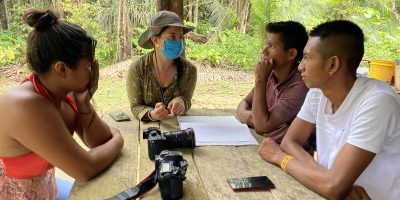
Engaging Young People in Latin American and the Caribbean in the COVID-19 Response ptes

This brief draws on academic and grey literature exploring how COVID-19 affects young people, as well as literature describing the pandemic response in Latin American and the Caribbean and other regions. It offers considerations on how to engage youth by…
SSHAP
2022
UNICEF/UN0431147/Ryan Cortés
Briefing

Key Considerations: Indigenous Peoples in COVID-19 Response and Recovery ptes

Key considerations for COVID-19 response and recovery in indigenous populations, with a particular focus on the Amazon region of South America

SSHAP
2021
UNICEF/UN029601/Libório

Action Ethnography on Care, Disability and Health Policy and Administration of Public Service for Women and Caretakers of Zika Virus Affected Children in Pernambuco, Brazil

In Brazil, the Zika epidemic, a national and public health emergency declared in 2015, and in effect until early 2016, caused severe neurological damage to over three thousand newborn children (3.179 confirmed cases up to the fifteenth week of 2018),…
PPGA UFPE
2019
UNICEF/UN011574/Ueslei Marcelino

Social Assistance Responses to Zika Virus Epidemic in Brazil

The complex and unprecedented characteristics of the Zika epidemic in Brazil demanded national and local coordination, the intersection of public policies (e.g., health, social assistance, education) and the creation of norms, procedures and protocols to attend the affected families. The…
Institute of Development Studies
2019
UNICEF/UN029601/Libório

The Implementation of Intersectoral Actions of Health and Social Assistance to Assist Children with Congenital Zika Syndrome in the State of Rio de Janeiro

This study is part of the set of projects supported by the ZIKAlliance Social Sciences Research Group, the Oswaldo Cruz Foundation, which was established to investigate various historical, social and political realms of the Zika epidemic in Brazil. The study…
Escola Nacional de Saúde Pública
2019
UNICEF/UN011564/Ueslei Marcelino

How do Women of Reproductive Age Perceive the Zika Virus, Future Vaccines, and Participation in Clinical Trials?

Field report of three funded research projects: a) FINATEC, the University of Brasília Research Foundation (2016-2017); b) Pro-IC, the University of Brasília’s scientific initiation fund (2016-2019); and c) CNPq (2016- 2019). The goals, activities and outcomes slightly changed and advanced.
University of Brasilia
2019
Briefing

Xenofobia y Discriminación Hacia Refugiados y Migrantes Venezolanos en Ecuador y Lecciones Aprendidas para la Promoción de la Inclusión Social

La crisis política y económica en Venezuela ha transformado al país desde 2010 de un país receptor de inmigrantes a un país emisor de emigrantes. Más de 4,000 venezolanos ingresan a Ecuador cada día, y actualmente la población de venezolanos…

SSHAP
2018
Andre Borges | Agência Brasília
Background report

Women’s Reproductive Health Knowledge, Attitudes and Practices in Relation to the Zika Virus Outbreak in Northeast Brazil

The objective of this report is to assess knowledge, pregnancy attitudes and contraceptive practices in relation to the Zika virus outbreak in Brazil. They interviewed 526 women 18 to 49 years old in primary health services in a Northeastern capital…
PLOS Neglected Tropical Diseases
2018
UNICEF | UN0211678 | Naftalin
Background report

Perceptions of Health Communication, Water Treatment and Sanitation in Artibonite Department, Haiti, March-April 2012

The international response to Haiti’s ongoing cholera outbreak has been multifaceted, including health education efforts by community health workers and the distribution of free water treatment products. Artibonite Department was the first region affected by the outbreak. Numerous organizations have…
PLOS Neglected Tropical Diseases
2015
Andre Borges | Agência Brasília
Briefing

Ethical Challenges for International Collaborative Research Partnerships in the Context of the Zika Outbreak in the Dominican Republic: A Qualitative Case Study

The establishment of international collaborative research partnerships in times of infectious disease outbreaks of international importance has been considered an ethical imperative. Frail health research systems in low- and middle-income countries can be an obstacle to achieve the goal of…
Health Research Policy and Systems
2017
UNICEF/UNI178349/La Rose

An Analysis of Community Perceptions of Mosquito-Borne Disease Control and Prevention in Sint Eustatius, Caribbean Netherlands

In the Caribbean, mosquito-borne diseases are a public health threat. In Sint Eustatius, dengue, Chikungunya and Zika are now endemic. To control and prevent mosquito-borne diseases, the Sint Eustatius Public Health Department relies on the community to assist with the…
2017
© UNICEF/UN0120005/Bradley
Background report
Field notes

Cholera Fears Rise Following Atlantic Hurricanes

As hurricanes barrel through some of the most impoverished communities in the Western Hemisphere, and as floods ravage Yemen, Sierra Leone, Bangladesh and India, now is the time to rethink and prioritize cholera epidemic prevention and response. In the aftermath…
Scientific American
2017
UNICEF/UN011574/Ueslei Marcelino
Background report

A Gendered Human Rights Analysis of Ebola and Zika: Locating Gender in Global Health Emergencies

This article analyses the particular relevance of gender for debates about global health and the role for international human rights law in supporting improved health outcomes during public health emergencies. Looking specifically at the recent Ebola and Zika outbreaks, what…
International Affairs
2016
UNICEF/UNI35374/DeCesar
Evidence review

Characteristics of the Colombian Armed Conflict and the Mental Health of Civilians Living in Active Conflict Zones

The fact that the Colombian armed conflict has continued for almost five decades there is still very little information on how it affects the mental health of civilians. Although it is well established in post-conflict populations that experience of organised…
BioMed Central
2012
UNICEF/UN035680/LeMoyne
Evidence review

Culture and Mental Health in Haiti

This paper reviews and summarizes the available literature on Haitian mental health and mental health services. This review was conducted in light of the Haitian earthquake in January 2010. We searched Medline, Google Scholar and other available databases to gather…
WHO
2010
UNICEF/UN038071/LeMoyne
Article

Hurricane Matthew: Haiti Needs Vaccines to Stop Deadly Cholera Spreading

9,000 people died in Haiti’s last cholera outbreak. We must act fast in disaster-affected hotspots to help prevent history repeating itself.
The Guardian
2016
UNICEF/UNI87970/LeMoyne
Background report

Rapid Monitoring in Vaccination Campaigns during Emergencies: The post-Earthquake Campaign in Haiti

The earthquake that struck Haiti in January 2010 caused 1.5 million people to be displaced to temporary camps. The Haitian Ministry of Public Health and Population and global immunization partners developed a plan to deliver vaccines to those residing in…
WHO
2013
UNICEF/UN034853/Abassi, UN-MINUSTAH
Evidence review

Determinants of the Lethality of Climate-Related Disasters in the Caribbean Community (CARICOM): A Cross-Country Analysis

Floods and storms are climate-related hazards posing high mortality risk to Caribbean Community (CARICOM) nations. However risk factors for their lethality remain untested. We conducted an ecological study investigating risk factors for flood and storm lethality in CARICOM nations for…
Nature
2015
UNICEF/UNI164951/Terdjman
Background report

Health through People’s Empowerment: A Rights-Based Approach to Participation

Analysis of the academic discourse on participation, empowerment, and the right to health since the 1978 Alma-Ata International Conference on Primary Health Care and the subsequent Alma-Ata Declaration shows that each phase of the evolution of these concepts added important…
Health and Human Rights Journal
2013
UNICEF/UN034849/Abassi, UN-MINUSTAH
Background report

Measuring the Way Forward in Haiti: Grounding Disaster Relief in the Legal Framework of Human Rights

This article provides results from an online survey of humanitarian workers and volunteers that was conducted in May and June 2010. The purpose of the survey was to understand how the humanitarian aid system adopts or incorporates human rights into…
Health and Human Rights Journal
2013
UNICEF/UN035982/LeMoyne
Background report

Prioritizing Health: A Human Rights Analysis of Disaster, Vulnerability, and Urbanization in New Orleans and Port-au-Prince

Climate change prompts increased urbanization and vulnerability to natural hazards. Urbanization processes are relevant to a right to health analysis of natural hazards because they can exacerbate pre-disaster inequalities that create vulnerability. The 2010 earthquake in Port-au-Prince and the 2005…
Health and Human Rights Journal
2014

Find emergency response resources

Curated collections of briefings, infographics, tools, blogs and other resources from SSHAP and other organisations working on social sciences in emergencies.
Share