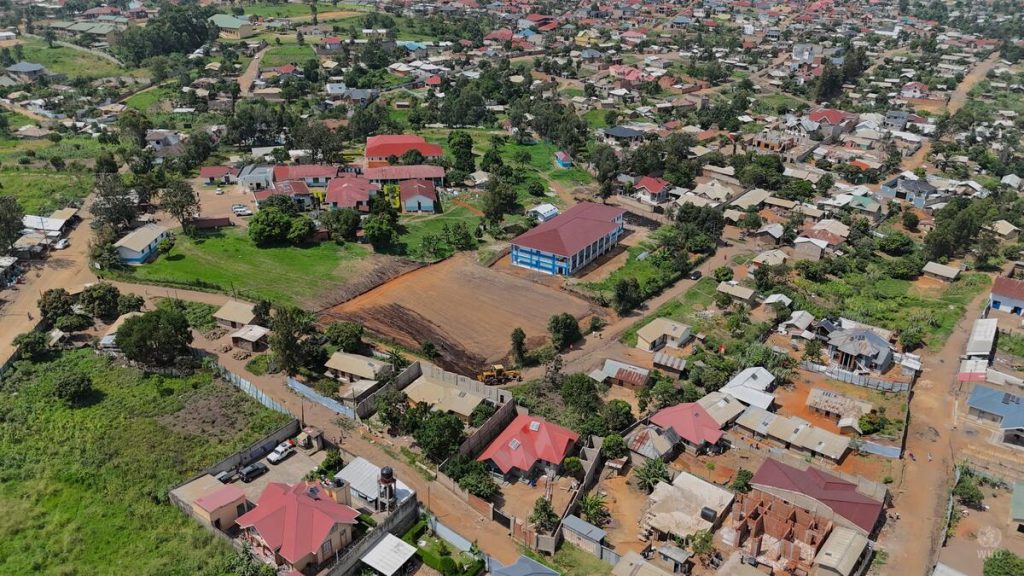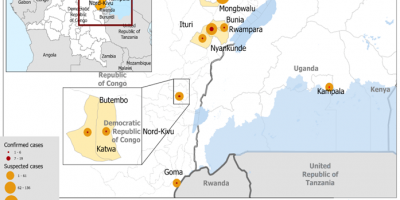
On 15 May 2026, an outbreak in Mongbwalu Health Zone, Ituri Province was identified as Ebola (Bundibugyo virus). With cases simultaneously reported in Uganda, the WHO declared the outbreak a Public Health Emergency of International Concern (PHEIC) on 17 May 2026.
Ituri Province is experiencing ongoing, intersecting security, economic, and health crises. (See the accompanying MHRN Ituri context brief for further details). A critical challenge is the complex conflict context (see the Ituri context brief). Another critical challenge is the absence of licensed vaccines or therapeutics for Bundibugyo virus, creating heightened fear and uncertainty. Effective response will depend on community trust, cooperation, and ownership, not coercion – and on well-established interventions: early detection, contact tracing, supportive case management, safe and dignified burials, and community engagement.
The brief is structured as follows: A two-page summary includes key considerations and recommendations drawn from a rapid synthesis of lessons learned from prior Ebola social and behavioural science (SBS) research. It highlights critical insights for locally adapted and contextually informed response efforts that take account of the broader humanitarian crisis. The full text (which follows directly below) comprises the literature synthesis of SBS research on Ebola.
تدابير الصحة العامة
- Context, ‘atmosphere of mistrust,’ and fear. Ebola interventions are interpreted through historical and everyday experiences of scarcity, violence, and survival. Trust is an outcome of how response resources, authority, and benefits are distributed and perceived. A fear-based, coercive, or historically blind response is likely to magnify people’s existing scepticism and practical concerns, and has the potential to be ineffective.
- Infection Prevention Control (IPC) guidance is vital in all health facilities, including at the most local levels, given the high fatalities amongst health workers. IPC guidance should also be extended to caregivers and high-risk occupations (بودا بودا drivers,[1] market vendors). Ideally guidance is actionable, tailored to these groups and is non-stigmatising.
- Contact tracing and isolation: Terms like ‘quarantine’ carry different connotations across languages and cultures (in French there is a connotation of rights infringement). Understanding diverse household and family compositions (e.g., not just the nuclear family), social norms around caregiving, and cultural practices is important. Linguistically, multiple languages are spoken with highly local variants. There is high mobility in this region.
- Points of entry: Border communities between DRC and neighbouring countries are deeply interconnected through daily activities. بودا بودا drivers operate across borders and may transport the sick. Health seeking is one driver of movement from DRC to Uganda. Messaging that simply tells people not to cross borders has pushed movement onto undetectable routes.
- المراقبة المجتمعية: Community networks were effective in improving early disease detection and expanding access to care, including in the 2018-2020 epidemic. However, SBS evidence underscores the importance of understanding community heterogeneity, the connotation of ‘surveillance,’ case definition, and engagement in surveillance design.
Case management
- Communities as partners. Approaches that treat families and communities as partners are more effective than top-down or coercive models. Key effective strategies from the 2018–2020 Ebola outbreak in DRC include: the Village d’Accompagnant model (allowing family members to stay near patients); ‘open door days’ at treatment centres with supervised family visits and public celebrations of survivors; and a wrap-around approach integrating primary healthcare, WASH, nutrition, mental health, and GBV services into the Ebola response.
- Decentralised care is also important – particularly in remote areas – to facilitate earlier access and reduce transmission.
Safe and dignified burials
- SDB protocols should be negotiated locally with families, communities and trusted leaders to ensure they are appropriate and acceptable.
- Christian, Islamic, and indigenous beliefs all require consideration; cremation and mass burials are not considered culturally appropriate.
- Burial is a multi-stage process – preparation, washing, movement, mourning, and burial – each carrying deep social, cultural, and spiritual significance, as well as transmission risks. Burial customs have been successfully adapted during past outbreaks and this approach should be followed again. Quantitative evidence from the 2018-2020 outbreak shows timely, successful SDBs reduced incidence by 7-40%, and when over 40% of SDBs were successful, transmission fell below epidemic extinction thresholds.
الإبلاغ عن المخاطر
- لغة. Multilingual, local communication is essential. It should clearly distinguish the Bundibugyo from the Zaire strain of Ebola. Technical terms like ‘vaccine,’ ‘disinfect,’ and ‘decontaminate’ do not translate easily and must be standardised in local languages, not just official/national ones. Using the word ‘resistance’ to describe community behaviour is unhelpful; focus instead on enabling factors that promote positive behaviours and overcome barriers.
- Actionable guidance. Tailored risk communication paired with concrete, feasible behavioural guidance empowers people to act. Generic guidance which is out of touch with local realities (e.g., ‘wash your hands’ in areas without clean water) drives frustration.
- Caregiving – at home and in facilities – is primarily performed by women, placing them at disproportionate risk. Ancillary and community health roles are also predominantly held by women. Multiple caregiving roles must be considered in the response.
المشاركة المجتمعية
- Ongoing insecurity. The armed groups’ presence and histories of civilian massacres shape whether communities perceive responders as being neutral.
- Communities are not homogenous; power and conflict dynamics mean the most vulnerable may have least access to information and resources. Consider people as active responders.
- Rapid power mapping is recommended. Key groups to engage include local, religious, and traditional leaders; youth and civil society groups; traditional healers; بودا بودا and transport leaders; and market vendor associations, and the networks of individuals who run the artisanal mines (see Ituri context brief). Notably, not all influential people hold formal roles.
- Indigenous population. Approximately 35,000 Mbuti live in Ituri’s forest regions and face discrimination and displacement which can lead to low trust in government and local authorities. The response should work with trusted intermediaries to ensure the needs of the indigenous communities are heard.
Experimental vaccines and therapeutics
- Community engagement and ‘rumour’/anxiety tracking should begin immediately. No licensed vaccines or therapeutics exist for BDBV, making rapid clinical trial establishment likely.
- Scenario planning is an effective tool for involving people in communications and trial design.
- Healthcare workers’ vaccine hesitancy (often driven by side effect concerns) must also be addressed, given their influence on patients.
Full Brief: Rapid Synthesis of Social and Behavioural Science learnings on Ebola for the Bundibugyo Virus Outbreak (2026) Ituri, DRC
On 15 May 2026, an outbreak in Mongbwalu Health Zone, Ituri Province was identified as Ebola (Bundibugyo virus). With cases simultaneously reported in Uganda, the WHO declared the outbreak a Public Health Emergency of International Concern (PHEIC) on 17 May 2026.
Ituri Province is experiencing ongoing, intersecting security, economic, and health crises (see the accompanying Ituri context brief for further detail). A critical challenge is the complex conflict context, lack of effective government control or monopoly of violence, inter-generational trauma and pre-existing deep community mistrust.
A primary concern is the current lack of medical countermeasures such as licensed vaccines (a candidate vaccine may take 9 months to develop) and therapeutics for the Bundibugyo strain, whilst diagnostics are in short supply and public health authorities are relying on national reference laboratories.1,2 This, and the lag time between disease spread and outbreak confirmation, has contributed to a sense of heightened uncertainty and public fear. Whilst these uncertainties may continue, well-established evidence exists from the Ebola SBS literature on what kinds of interventions and public health measures need to be thoroughly and appropriately implemented, including related to early disease detection and contact tracing, supportive care in treatment centres, safe and dignified burials, and community engagement. These measures will require public cooperation, engagement, and trust in response, rather than measures that are based on military enforcement, coercion, or intimidation.
SBS evidence from outbreaks in the last 12+ years demonstrate how building trustworthy response is often about giving actionable public health guidance, understanding the practical and contextual constraints that people have, and helping them to act in their own homes and communities. Even in complex, high-risk situations, there are lower cost/lower risk actions that responders and communities can take. However, the fragmented response in a context of funding cuts and staff turnover presents significant challenges.3-5 Even so, scaling back sustained funding for this kind of SBS-informed community-based surveillance, outreach and engagement, and risk communication, amongst other public health measures, will make it harder to mobilise appropriate interventions in a timely way. There are also specific aspects of the context that need to be taken into account to understand disease dynamics and develop locally appropriate responses.
This rapid synthesis includes lessons learned from prior Ebola social and behavioural science (SBS) research and highlights critical insights for response efforts.
تدابير الصحة العامة
Context, ‘atmosphere of mistrust,’ and fear. Past SBS research in eastern DRC on Ebola outbreaks has shown an ‘atmosphere of mistrust’ in interactions between responders and communities, which shows up, for example, in the popular notion that ‘Ebola is a business.’6 SBS research has shown that this is deep-rooted and based on real and understandable grievances: 1) histories of colonial and post-colonial violence which still shape contemporary power 2) frustration with humanitarian actors and peacekeepers to provide adequate safety, 3) the rapid influx of attention and resources that flow in during an Ebola outbreak and the disconnect between that and a lack of attention/resources during normal times, including times of conflict, and 4) a context of political and military factionalism where leaders’ motivations may be seen as suspicious because public authority is contested (public authority refers to how in some areas, including conflict-affected areas, multiple institutions or groups might hold authority) and trust is low.6–9 Distrust also stems from experiences of perceived exploitation – at a macro-level through international resource extraction, at a more local level through perceived international and NGO ‘profiteering’ from delivering aid.
The notion of ‘Ebola as a business’ was a critical commentary by communities on the distortions and unequal political economy created by the billion-dollar response during the 2018-2020, which created an industry of inflated rental contracts, job-kickback schemes, security contractors and political side payments.10 When elections were postponed during the Ebola epidemic in affected regions, the virus came to be seen as a political invention to suppress the opposition stronghold.10
This political context is important, including the history of conflict, M23 control over territory in parts of the East, recurrent Ebola outbreaks, artisanal and exploitative resource extraction, and poor access to healthcare. During past Ebola outbreaks in eastern DRC, there was a sense that people only matter during epidemics.6 This was fuelled by the fact that since 2013, massacres committed by an opaque network of armed actors against civilians have continued in the region but failed to attract the same international or national attention as the Ebola response in 2018-2020. Ebola response efforts cannot be separated from the broader humanitarian emergency; the short-lived community engagement efforts that targeted the epidemic in 2018-20, and not the broader humanitarian crisis, were too limited and have further eroded trust.6
Response efforts that are fear-based, or that ignore this historical and political-economic context, are likely to fail or face ‘resistance.’ SBS research has shown how there are measurable actions that can be done, at very local levels, tailored to context. For example, to humanise the response, SBS research showed that during the West Africa epidemic, staff at Ebola Treatment Centres (ETCs) could create a more welcoming environment, enabling families to cook for patients, enabling respectful burials, supplying mobile phones to those in isolation, treating suspicions seriously, linking up with trusted public authorities in affected regions, and creating media programmes that give air time to these figures.6
Infection prevention and control guidance needs to be strengthened in community level health facilities, where there have been health worker fatalities. Guidance can be extended to caregivers and people in vulnerable occupations. In eastern DRC, current reports demonstrate a climate of heightened fear and risk perception for groups that are in contact with the general public, and so these fears must be taken seriously in response efforts.11,12 IPC guidance that is actionable and tailored should consider specific high-risk occupations, like بودا بودا drivers and market vendors and what they can do to make their work safer, while taking care not to create stigma against these groups.
Contact tracing and isolation: SBS research in Guinea showed that terms like الحجر الصحي have different value meanings in French and English (in French – there is a connotation of rights infringement).13–15 SBS research in Senegal and Guinea during the West African Ebola epidemic showed that health teams that spent more time trying to understand ’family‘ composition (e.g., not just the nuclear family) had more accurate understanding of contacts within a household and appreciation of how ’household‘ means different things in different contexts.16 Social and biological logics must both be considered in decisions around contact tracing and isolation: understanding the contextual specificity of social networks, including things like circular migration, care responsibilities, and trading activities, can help provide more accurate contact tracing and potentially also more precise modelling.4 However, contact tracing will be more difficult in insecure areas.
Points of entry: SBS research in border regions (DRC-Uganda, DRC-Rwanda) have shown how interconnected these communities are – with people moving across the border for basic, daily functions like tending to farms, collecting water, going to the market, and health facilities.17–20 Health seeking is one driver of movement from DRC to Uganda, where health facilities are perceived to be easier to access in the western border region (this was the case with the 2 imported cases in Kampala). Past work showed that messaging around ‘not crossing‘ led people to seek riskier/undetectable routes (بانيا routes) rather than stop. بودا بودا taxi drivers also work across the border and in some cases, may be transporting the sick or dead.17,18 There is also significant smuggling across the border to Uganda, ranging from small-scale ‘informal cross-border trade’ to smuggling that involves national armies and armed groups, in addition to middlemen and small traders. Lake Albert is also a major trade corridor, linking Uganda, Kenya, and Tanzanian markets, with longstanding fishing economies and cross-border trade networks (including competition over fisheries, land and oil). Uganda has shut down lake border crossings, though past SBS research has shown that this will continue at least to some degree informally, at night, and via unregulated crossing points.
المراقبة المجتمعية: SBS evidence points to the effectiveness of community networks to improve early disease detection and expand access to care, including in the 2018-2020 epidemic.21,22 In one study, community-based surveillance was rolled out in phases with robust supervision and a lighter reporting burden, whilst cases were referred to an integrated treatment centre with EVD testing and isolation and free PHC services, referral services, and an ambulance network.21 Importantly, these activities provided a continuum of care that addressed community health needs. However, other SBS evidence underscores the importance of understanding community heterogeneity (see note about communities in this brief), the connotation of ‘surveillance,’ and the importance of engagement and flexibility in surveillance design. See more in this موجز SSHAP. Past SBS research in Senegal during the West Africa epidemic also showed that over-reliance on case criteria like ‘fever’ led to overidentification of EVD cases.23
Case management
SBS evidence has shown that case management strategies that see families and communities as partners are more effective than top-down or coercive approaches. The ‘Village d’Accompagnant’ model, which allowed people who travelled long distances to accompany sick family members and stay close to them, was found to be effective in the 2018-2020 epidemic.24 This promoted community acceptance of facility-based case management. ETCs that allowed supervised family visits during ‘open door days’ also included public ceremonies celebrating patients who have recovered, which helped counter widespread perceptions that ETCs are places where people are taken to die.25 Another effective tactic was a wrap-around approach in the response, which included integrating primary healthcare, WASH infrastructure, nutrition, MHPSS and GBV services into the Ebola response – rather than doing Ebola case management in isolation. This was useful in increasing community buy-in for activities (screening, contact tracing). It also helps prevent a collapse of routine services where mortality could rise unrelated to Ebola (e.g., cholera has become endemic in this region).24,26,27 Other SBS research has pointed to a need to consider decentralised care especially in remote and hard-to-reach areas to facilitate earlier access to care and contain viral shedding.28 This might include bolstering community-based surveillance efforts (whilst ensuring community health workers have sufficient PPE) or, if appropriate, community case management.21,22,29
Safe and dignified burials
Safe and dignified burial protocols must be tailored to the local context to ensure that the symbolic and emotional significance of social practices remains intact. Given recent incidents of violence, linked to burials, this is best negotiated at the local level with communities and trusted leaders, and tailored to family and cultural needs. Past evidence shows that burial procedures, like other aspects of local culture, are flexible and can be adapted.30 Amongst Lese communities, for example, they keep the body of the deceased between 2-3 days before burial to ensure that ‘it won’t come back to life.’ Amongst the Ngiti, they do not use coffins, but wrap the body of the deceased in cloth and blankets to move the body.31 Bira communities integrate an Mbuti as a chief mourner in their burial rites, and the Mbuti mourner handles the body and can speak on the dead person’s behalf. Mbuti burials are less ‘formal,’ with no coffin, shallow graves, and few rituals.32
Burials may not be one single event, but are often a series of events to prepare/wash the body, move, mourn, and bury people. Experience has shown that these processes are highest risk in terms of contagion, but also social, cultural, and spiritual risks if done incorrectly (e.g., the dead person’s spirit will not be properly settled). This needs to be treated with great care and sensitivity, and to see these social/spiritual concerns as a priority for local communities. There is also substantial SBS evidence that these customs can be adapted and have been adapted during Ebola outbreaks.33-35
Specific considerations for SDBs might include:
- Supporting communities to lead in the adaptation of rituals and allowing for the personalisation of burials and status recognition.
- Involving community/family members in different parts of the ritual (washing, etc.), and working with religious and community leaders.
- Seeing the dead, which is important in certain contexst. In the 2018-2020 epidemic, in Equateur people were given alternatives (e.g., photos of the dead loved one, etc.). Seeing and knowing accurately what happens (and is expected to happen) helps to maintain trust in SDBs. This includes proactive and transparent communication with families and communities.
- Reducing the delay between death and the arrival of the burial teams (and where possible, include local people as part of those burial teams).
- Providing psychosocial support for mourning families if they need it. First responders and burial teams should be trained in compassionate communication and psycho-social support approaches, and be able to appropriately negotiate with the grieving family.
- Cultural practices must be incorporated in the development of local safe and dignified burial guidelines, including not only Christian (multiple Christian denominations are represented here) and Islamic traditions, but local religious beliefs.36,37 Cremation and mass burials are not culturally appropriate, especially given overlapping and diverse systems of belief.38 A mass burial event was thought to have led to families hiding their sick in Liberia.39
الإبلاغ عن المخاطر
لغة. Local, multilingual communication is vital, including to communicate differences between Ebola Bundibugyo and Zaire. There is a need for national and international organisations and authorities involved in the response to better support local communicators.40
- Past research in eastern DRC has shown that highly complex terms like ‘vaccine’, ‘disinfect’, ‘decontaminate’ do not easily translate into local languages and can easily be mistranslated; whereas ‘suspect case’ has connotations of wrongdoing and criminality.
- SBS evidence points to how standard translations of information and concepts are critical and should be shared with health and community outreach workers in local languages, not just official and national languages.40
- SBS work points to how communication within the response is also important, and the kind of language used can establish discourses which are unhelpful, e.g., the use of the word ‘resistance’ to describe community inability or reticence to adhere to control measures.10,36 It has been more effective to focus on enabling factors and understanding what is limiting people’s adherence.
- SBS research in Guinea showed that terms like الحجر الصحي have different value meanings in French and English (in French – there is a connotation of rights infringement).16
Guidance by Translators without Borders/CLEAR Global is directly relevant to this outbreak.
Actionable guidance. Early reports are highlighting a ‘climate of fear’ in affected areas of eastern DRC and cities in the area. Past SBS work has shown that tailored risk communication guidance (e.g., for taxi drivers or market vendors) paired with actionable IPC measures enables people to feel more empowered to take action on their own.17 Past outbreaks with guidance like ‘hand washing’ in areas where no clean water is available can inadvertently contribute to, rather than mitigate, people’s frustrations or disillusionment with response.41 Past work has also shown that some transport workers have lower risk perception of Ebola, but this is highly context dependent and should be assessed through further SBS research.17
Caregiving is gendered. As is so often said, Ebola is a disease of love, and caregiving and gender roles are intertwined. Past research on Ebola in western Uganda has shown how caregiving both at home and at the hospital is done primarily by women, placing them at higher risk of disease.42 Many ancillary health workers, community- and facility-based, are also women, though health workers generally have a very high risk of contracting Ebola, and so multiple caregiving roles must be considered.43
المشاركة المجتمعية
Conflict dynamics should also be considered since this is a region with multiple armed groups, including the ADF, and it could shape community engagement more than in previous outbreaks, though the current epicentre is in a relatively less insecure area. There is a history of civilian massacres in anti-ADF military-led action, including in 2013.9 These dynamics can limit safe opportunities for community engagement and could also influence whether community members view responders doing clinical and RCCE work as neutral and legitimate, or aligned with particular authorities. Response efforts should be careful not to feed into existing tensions and dynamics (see below).
Communities are not homogenous units,44 as SBS research has shown, and conflict and power dynamics within communities mean that those less connected to local leaders or others in power may be less able to access resources, including health information. Consider ways to reach the most vulnerable and socially isolated within communities, and know the dynamics of a particular place, through insights from local health workers and other trusted local actors/intermediaries. Rapid power mapping, even through discussions with locals, can help.45 SBS research on Ebola in Mathaineh, Sierra Leone found that though biomedical efforts were notably lacking, both informal and formal community efforts were taken to provide care and mitigate infection.46 In eastern DRC, to further the point that communities are not homogenous units – armed networks have become increasingly ethnicised over time, and that humanitarian employment of locals can feed into and reflect existing tensions and conflicts, influencing access and security.47 This is particularly relevant for Ituri.
Key groups and constituencies to engage include: local, religious, and traditional leaders; Jeunesse groups, civil society and political pressure groups; traditional healers and herbalists; بودا بودا (motorcycle taxi) drivers and other public transportation leaders; market vendor association leaders. Past SBS research has shown how بودا بودا drivers act as ‘emergency vehicles,’ transporting the sick or dead to hospitals or home villages for burials.18 There is heightened fear amongst market vendors who interact with the general public. These are also individuals who are not able to change jobs or stop work, as they often operate with limited savings and safety nets. Equipping their association leaders with actionable guidance and engaging them in response efforts is important. Not all people who are trusted or have influence have formal roles – identifying who people trust through dialogue with communities can go a long way to ensure that the right people are being engaged and certain sections of the populations are not being left out.
Indigenous populations. Vulnerable groups include the indigenous Bambuti in Ituri forest regions in northeast DRC, numbering about 35,000. The Bambuti have experienced extremely high levels of discrimination, violence, and displacement and lower trust in government.48 Make sure to find people who are trusted within this group, who can help articulate the needs and experiences of this group that would otherwise be silenced.
Experimental vaccines and therapeutics
The Bundibugyo strain of Ebolavirus does not currently have licensed vaccines or therapeutics.49 It is therefore likely that rapid clinical research will need to be established.50,51 Two WHO sponsored clinical trials may begin soon, pending approval by DRC and Uganda, for experimental treatments, whilst options for vaccines may be further out. Scenario planning is an effective tool to involve community members in the design of a trial and rollout.52
Influence of context on future trials. Social science research in clinical trials can offer crucial insights into participant experience, the influence of context in determining perceptions of the candidate product and decisions to take part, as well as highlighting broader community experiences of and perspectives on clinical research taking place in their localities. Eastern DRC has been the site of two large Ebola (EBOV) trials in the past and much can be learned from this experience, though North Kivu and Ituri are very different contexts. Social science research in these trials revealed that anxieties about vaccine trials are situated in political context: in particular, collective histories of colonial extraction, medical experimentation and violence, as well as political neglect.7 After two trials in the same epidemic in eastern DRC, there was particular concern that vaccines were simply being tested as a form of profit-making for pharmaceutical companies and national elites, whilst local people were being used as ‘guineapigs.’7 Indeed, Ebola vaccine trials became the subject of international bioethical debate as well as national political debate and disagreement in Congo, with a high-profile resignation from the Minister of Health that referenced his objections to the second trial.53 Rumours and concerns expressed during the Ebola trials also represented more generalised concern about medical interventions, mistrust of government and external actors and heightened anxiety in times of uncertainty rather than misunderstandings of the actual intervention.7,9,10 Among healthcare workers a common reason for vaccine hesitancy was side effects. Considering the influence they may have on patients’ willingness to take a vaccine, it would be important to address hesitancy in HCWs as well and to offer a vaccine more than once.54,55
Clinical trial participation and communication. Recent SBS evidence from North Kivu found that Ebola vaccine uptake was high in this population, although mixed attitudes and vaccine delays were common. For the second Ebola vaccine when people could volunteer, for instance, existing research shows that people volunteers in order to access protection, free healthcare or because of concerns about mobility.56 Communicating positive vaccine information, emphasizing the efficacy of the Ebola vaccine, and engaging religious leaders to promote vaccination may aid in increasing Ebola vaccine uptake during future outbreaks.57
Community engagement and rumour tracking. Given that licensed vaccines now exist for the EBOV strain, including the Merck and Janssen vaccines that were tested in Eastern DRC, there may also be some additional concerns and confusion around why another disease also referred to as Ebola requires more experimentation. Therefore, community engagement and rumour tracking for Bundibugyo virus vaccine and therapeutics can begin as soon as possible, and certainly before a clinical trial starts (see guidance هنا). The period before clinical research starts also offers a strategic opportunity to involve community members in consultations around clinical research design and co-production of protocols.58 This can ensure that relevant aspects of local context can be effectively integrated (e.g., as local livelihood strategies may affect optimal timing or mode of vaccine delivery) and that locally meaningful ethical deliberations can be taken seriously and access is equitable. SBS evidence from the mpox vaccine rollout in eastern DRC, points to strategies for engagement in a context of contested public authority.59
[1] بودا بودا (motorcycle taxi) drivers.
شكر وتقدير
This brief was written by Megan Schmidt-Sane (IDS) with input from Annie Wilkinson (IDS), Luisa Enria (LSHTM), Myfanwy James (LSE), Jules Villa (Institut Pasteur), Santiago Ripoll (IDS), Juliet Bedford (Anthrologica), Jennifer Majer (IMC), and Hayley MacGregor (IDS).
Funding Acknowledgement: This brief has been produced for the Multi-Hazard Research Network (MHRN). This material has been funded by UK aid from the UK Government; however, the views expressed do not necessarily reflect the UK Government’s official policies.

[1] بودا بودا (motorcycle taxi) drivers.
مراجع
- Ebola disease caused by Bundibugyo virus, Democratic Republic of the Congo & Uganda. (n.d.). Retrieved 19 May 2026, from https://www.who.int/emergencies/disease-outbreak-news/item/2026-DON602
- Scientists play catch-up to startling Ebola outbreak. (n.d.). Retrieved 19 May 2026, from https://www.science.org/content/article/scientists-play-catch-startling-ebola-outbreak
- Nichols, M. (2025, February 11). Congo humanitarian operations hit hard by Trump aid pause, says UN official. رويترز. https://www.reuters.com/world/africa/congo-humanitarian-operations-hit-hard-by-trump-aid-pause-says-un-official-2025-02-11/
- Financials | Democratic Republic of the Congo | Humanitarian Action. (n.d.). Retrieved 20 May 2026, from https://humanitarianaction.info/plan/1187/financials
- Democratic Republic of the Congo 2026 | Financial Tracking Service. (n.d.). Retrieved 20 May 2026, from https://fts.unocha.org/countries/52/summary/2026
- بارك، إس.-جيه، براون، إتش، ويما، كيه إم، جوبات، إن، بورشرت، إم، كالوبي، جيه، كوماندا، جي، وموريشو، إن (2023). "الإيبولا تجارة": تحليل لأجواء عدم الثقة في وباء الإيبولا العاشر في جمهورية الكونغو الديمقراطية. الصحة العامة الحرجة, 33(3)، 297-307. https://doi.org/10.1080/09581596.2022.2128990
- James, M. V., & Lees, S. S. (2022). "هل أنت متأكد من أنه ليس لقاح "كورونا"؟ تجربة لقاح الإيبولا خلال كوفيد-19 في جمهورية الكونغو الديمقراطية. الأنثروبولوجيا الطبية, 41(5)، 503-517. https://doi.org/10.1080/01459740.2022.2097908
- Key considerations: The context of North Kivu province, DRC. (n.d.). منصة العلوم الاجتماعية في العمل الإنساني. Retrieved 20 May 2026, from https://www.socialscienceinaction.org/resources/key-considerations-the-context-of-north-kivu-province-drc/
- سويت، ر.، وكاسالي، ن. (2024). تدخل الصحة العامة في ظل النزاع: العنف والسياسة وأطر المعرفة في وباء الإيبولا 2018-20 في جمهورية الكونغو الديمقراطية. العلوم الاجتماعية والطب, 350، 116854. https://doi.org/10.1016/j.socscimed.2024.116854
- بيسوكا، آن، فلاسينروت، ك.، ورمازاني، إل. (2021). من الشرعية البيولوجية إلى مناهضة الإنسانية: فهم مقاومة الناس للاستجابات للإيبولا في جمهورية الكونغو الديمقراطية. https://orbi.umons.ac.be/bitstream/20.500.12907/18346/1/from-biolegitimacy-to-antihumanitarianism-understanding-people-s-resistance-to-ebola-responses-in-the-democratic-republic-of-the-congo.pdf
- ‘Ebola has tortured us’: Fear grips eastern DR Congo as deadly virus spreads. (2026, May 19). https://www.bbc.com/news/articles/cvgzj0pqpyyo
- Flanagan, J. (2026, May 21). Fear takes over in the DRC — the ebola outbreak in pictures. https://www.thetimes.com/world/africa/article/ebola-outbreak-2026-drc-virus-photos-pictures-6j6n9mc5b
- Desclaux, A., Malan, M. S., Egrot, M., Akindes, F., & Sow, K. (2018). [Neglected patients, unexpected effects. Ebola virus disease suspected case experience.]. Patients Negliges, Effets Imprevus. L’experience Des Cas Suspects de Maladie a Virus Ebola., 30(4), 565–574. Ovid MEDLINE(R) <2018>. https://doi.org/10.3917/spub.185.0565
- Pellecchia, U., Crestani, R., Decroo, T., Bergh, R. V. den, & Al-Kourdi, Y. (2015). Social Consequences of Ebola Containment Measures in Liberia. بلوس واحد, 10(12), e0143036. https://doi.org/10.1371/journal.pone.0143036
- Pellecchia, U. (2017). Quarantine and Its Malcontents. https://doi.org/10.3167/aia.2017.240203
- Desclaux, A., Diop, M., & Doyon, S. (2017). Fear and containment. Contact follow up perceptions and social effects in Senegal and Guinea (pp. 209–234).
- Blanco-Penedo, M. J., Brindle, H., Schmidt-Sane, M., Bowmer, A., Iradukunda, C., Mfitundinda, H., Rwemisisi, J., Mukiibi, G. N., Fricke, C., Carter, S., Kaawa-Mafigiri, D., & Lees, S. (2023). Risk perception of Ebola virus disease and COVID-19 among transport drivers living in Ugandan border districts. الحدود في الصحة العامة, 11. https://www.frontiersin.org/articles/10.3389/fpubh.2023.1123330
- Schmidt-Sane, M. M., Nielsen, J. O., Chikombero, M., Lubowa, D., Lwanga, M., Gamusi, J., Kabanda, R., & Kaawa-Mafigiri, D. (2020). Challenges to Ebola preparedness during an ongoing outbreak: An analysis of borderland livelihoods and trust in Uganda. بلوس واحد, 15(3), e0230683. https://doi.org/10.1371/journal.pone.0230683
- Uganda-DRC Cross-Border Dynamics. (n.d.). منصة العلوم الاجتماعية في العمل الإنساني. Retrieved 20 May 2026, from https://www.socialscienceinaction.org/resources/uganda-drc-cross-border-dynamics/
- Rwanda – DRC cross border dynamics. (n.d.). منصة العلوم الاجتماعية في العمل الإنساني. Retrieved 20 May 2026, from https://www.socialscienceinaction.org/resources/rwanda-drc-cross-border-dynamics/
- OKeeffe, J., Takahashi, E., Otshudiema, J. O., Malembi, E., Ndaliko, C., Munihire, N. M., Caleo, G., & Martin, A. I. C. (2023). Strengthening community-based surveillance: Lessons learned from the 2018–2020 Democratic Republic of Congo (DRC) Ebola outbreak. الصراع والصحة, 17, 41. https://doi.org/10.1186/s13031-023-00536-7
- راتناياكي، آر، تمارو، إم، تيفاني، إيه، كونجلف، إيه، بولونسكي، جيه إيه، وماكليلاند، إيه (2020). المراقبة التي تركز على الناس: مراجعة سردية للمراقبة المجتمعية بين السكان المتأثرين بالأزمات. لانسيت صحة الكواكب, 4(10)، e483-e495. https://doi.org/10.1016/S2542-5196(20)30221-7
- Desclaux, A., Malan, M. S., Egrot, M., Sow, K., & Akindès, F. (2018). Surveillance in the field: Over-identification of Ebola suspect cases and its contributing factors in West African at-risk contexts. الصحة العامة العالمية, 14(5), 709–721. https://doi.org/10.1080/17441692.2018.1534255
- International Medical Corps. (2020). After Action Review: KAP EVD Program—IMC Response to the 10th Ebola Outbreak, North Kivu and Ituri Provinces, DRC, October 2018–April 2020. [Workshop Report [Internal Document]].
- International Medical Corps. (2021). The 11th Ebola Outbreak—Lessons from the Field. Rapid Response Team operations in Equateur Province, DRC. [[Internal Document]].
- Democratic Republic of Congo: Cholera Epidemic 2026 – DREF Operation (MDRCD049) – Democratic Republic of the Congo | ReliefWeb. (2026, March 16). https://reliefweb.int/report/democratic-republic-congo/democratic-republic-congo-cholera-epidemic-2026-dref-operation-mdrcd049
- Kayembe, H. C. N., Bompangue, D., Linard, C., Muwonga, J., Moutschen, M., Situakibanza, H., & Ozer, P. (2022). Modalities and preferred routes of geographic spread of cholera from endemic areas in eastern Democratic Republic of the Congo. بلوس واحد, 17(2), e0263160. https://doi.org/10.1371/journal.pone.0263160
- Lampaert, E., Nsio Mbeta, J., Nair, D., Mashako, M., De Weggheleire, A., Sprecher, A., M. Coulborn, R., & Ahuka-Mundeke, S. (2024). Evaluation of centralised and decentralised models of care during the 2020 Ebola Virus Disease outbreak in Equateur Province, Democratic Republic of the Congo: A brief report. F1000 للأبحاث, 13, 642. https://doi.org/10.12688/f1000research.150755.2
- Mwamba, D. K., Akilimali, P. Z., Manianga, C., Kapanga, S., Ngombe, N. K., Shonganye, J., Angendu, K. B., Moullec, G., & Zarowsky, C. (2026). Current Experiences and Practices of Surveilling and Managing Ebola Virus Disease Outbreaks in the Democratic Republic of Congo by Involving the Community in a “One Health” Approach. Pandemics, 1(1), 3. https://doi.org/10.3390/pandemics1010003
- Moran, M. H. (2017). Missing Bodies and Secret Funerals: The Production of ‘Safe and Dignified Burials’ in the Liberian Ebola Crisis. الأنثروبولوجية الفصلية, 90(2)، 399-421.
- Burial, Funeral and Mourning Practices in Équateur Province, DRC. (n.d.). منصة العلوم الاجتماعية في العمل الإنساني. Retrieved 26 May 2026, from https://www.socialscienceinaction.org/resources/key-considerations-burial-funeral-mourning-practices-equateur-province-drc-2/
- Bitton, D. (n.d.). Death, Discipline and Domination in the Ituri Rainforest. Retrieved 26 May 2026, from https://www.academia.edu/1031841/Death_Discipline_and_Domination_in_the_Ituri_Rainforest
- Social Science in Epidemics: Ebola Epidemics Lessons Learned (Evidence Summary). (n.d.). منصة العلوم الاجتماعية في العمل الإنساني. Retrieved 20 May 2026, from https://www.socialscienceinaction.org/resources/social-science-lessons-learned-ebola-epidemics-evidence-summary/
- Bedford, J., & Platform, S. S. in H. A. (2018). Key considerations: Health beliefs and health seeking behaviours, Équateur Province, DRC. 7(1162), 1162.
- Checchi, F., Eamer, G., Katshitshi, J., Dios, L. R., Kai, A., & Warsame, A. (2025). Effect of a safe and dignified burial intervention on Ebola virus transmission in the eastern Democratic Republic of the Congo, 2018–19: A propensity score analysis. لانسيت للصحة العالمية, 13(9), e1617–e1626. https://doi.org/10.1016/S2214-109X(25)00220-7
- Fairhead, J. (2016). Understanding Social Resistance to the Ebola Response in the Forest Region of the Republic of Guinea: An Anthropological Perspective. مراجعة الدراسات الأفريقية, 59(3)، 7-31. https://doi.org/10.1017/asr.2016.87
- Anoko, J. N., & Henry, D. (2019). Removing a Community Curse Resulting from the Burial of a Pregnant Woman with a Fetus in Her Womb. An Anthropological Approach Conducted During the Ebola Virus Epidemic in Guinea. In D. A. Schwartz, J. N. Anoko, & S. A. Abramowitz (Eds), Pregnant in the Time of Ebola: Women and Their Children in the 2013-2015 West African Epidemic (pp. 263–277). Springer International Publishing. https://doi.org/10.1007/978-3-319-97637-2_18
- Moran, M. H. (2017). Missing Bodies and Secret Funerals: The Production of ‘Safe and Dignified Burials’ in the Liberian Ebola Crisis. الأنثروبولوجية الفصلية, 90(2)، 399-421.
- Wilkinson, A., & Leach, M. (2015). Briefing: Ebola–myths, realities, and structural violence. الشؤون الأفريقية, 114(454), 136–148. https://doi.org/10.1093/afraf/adu080
- Localized communication minimizes the impact of Ebola in DRC. (n.d.). مترجمون بلا حدود. Retrieved 19 May 2026, from https://translatorswithoutborders.org/resource/localized-communication-minimizes-the-impact-of-ebola-in-drc/
- Hamuli, R. P., Mayhew, S. H., & Sahani, M. K. (2023). Humanitarian sector (international non-governmental organisations) support to the community in Goma city/DRC during the COVID-19 pandemic period: Expectations and reality. PLOS الصحة العامة العالمية, 3(10), e0002086. https://doi.org/10.1371/journal.pgph.0002086
- Schmidt-Sane, M., Nielsen ,Jannie, Chikombero ,Mandi, Lubowa ,Douglas, Lwanga ,Miriam, Gamusi ,Jonathan, Kabanda ,Richard, & and Kaawa-Mafigiri, D. (2022). Gendered care at the margins: Ebola, gender, and caregiving practices in Uganda’s border districts. الصحة العامة العالمية, 17(6)، 899-911. https://doi.org/10.1080/17441692.2021.1879895
- Harman, S. (2017). Ebola, gender and conspicuously invisible women in global health governance. In The International Politics of Ebola. روتليدج.
- ويلكنسون، أ.، باركر، م.، مارتينو، ف.، وليتش، م. (2017). إشراك "المجتمعات": رؤى أنثروبولوجية من وباء الإيبولا في غرب أفريقيا. المعاملات الفلسفية للجمعية الملكية ب: العلوم البيولوجية, 372(1721), 20160305.
- Niederberger, E., & Glanville-Wallis, T. (2019). Community Engagement in WASH Emergencies: Understanding Barriers and Enablers Based on Action Research from Bangladesh and the Democratic Republic of Congo (DRC). ماء, 11(4), 862. https://doi.org/10.3390/w11040862
- Parker, M., Hanson, T. M., Vandi, A., Babawo, L. S., & Allen, T. (2019). Ebola and Public Authority: Saving Loved Ones in Sierra Leone. الأنثروبولوجيا الطبية, 38(5), 440–454. https://doi.org/10.1080/01459740.2019.1609472
- Pottier, J. (2006). Roadblock Ethnography: Negotiating Humanitarian Access in Ituri, Eastern Dr Congo, 1999–2004. أفريقيا, 76(2), 151–179. https://doi.org/10.3366/afr.2006.76.2.151
- Forgie, E. M. E., Masumbuko Claude, K., & Hawkes, M. T. (n.d.). Perceptions of ebola virus disease among the bambuti hunter group: A mixed-methods study. Pathogens and Global Health, 116(4), 244–253. https://doi.org/10.1080/20477724.2021.1970909
- Callaway, E. (2026). Race begins to trial Ebola drugs amid current outbreak. طبيعة. https://doi.org/10.1038/d41586-026-01607-4
- Q&A: Bundibugyo Ebola outbreak in DRC and Uganda – where are the vaccines? (2026, May 20). https://www.lshtm.ac.uk/research/centres/vaccine-centre/news/490891/qa-bundibugyo-ebola-outbreak-drc-and-uganda-where-are-vaccines-2
- Schmidt-Sane, M., Vanderslott, S., Rohan, H., & Enria, L. (2025). Key Considerations: Using Social and Behavioural Science to Inform the Use of Vaccines During Health Emergencies [Report]. The Institute of Development Studies and Partner Organisations. https://doi.org/10.19088/SSHAP.2025.013
- مانسراي، أ.، بانجورا، إم.، واتسون-جونز، د.، غرينوود، ب.، بيرنز، آر.، سوزان ليز، إس.، فاي، إف.، لي، بي.، وإنريا، إل. (2024) ). إشراك الجمهور في القرارات المتعلقة باستراتيجيات نشر اللقاحات في حالات الطوارئ: الدروس المستفادة من المناقشات القائمة على السيناريوهات في سيراليون. الصحة العامة العالمية, 19(1)، 2334887. https://doi.org/10.1080/17441692.2024.2334887
- Monrad, J. T. (2020). Ethical considerations for epidemic vaccine trials. مجلة أخلاقيات الطب, 46(7), 465–469. https://doi.org/10.1136/medethics-2020-106235
- Kallay, R., Muhoza, P., Tchoualeu, D. D., Fleming, M., Garbern, S., Makali, S. L., Perera, S. M., Fraterne‐Muhayangabo, R., Ombeni, A. B., Tuttle, A., Aberle-Grasse, E., Ortiz, N., Doshi, R., Levine, A. C., & Mbong, E. N. (2026). Perceptions of factors influencing Ebola vaccine acceptance among community members, healthcare workers, and response personnel in Eastern Democratic Republic of the Congo. بلوس واحد, 21(4), e0346572. https://doi.org/10.1371/journal.pone.0346572
- Doshi, R. H., Garbern, S. C., Kulkarni, S., Perera, S. M., Fleming, M. K., Muhayangabo, R. F., Ombeni, A. B., Tchoualeu, D. D., Kallay, R., Song, E., Powell, J., Gainey, M., Glenn, B., Mutumwa, R. M., Hans Bateyi Mustafa, S., Earle-Richardson, G., Gao, H., Abad, N., Soke, G. N., … Mbong, E. N. (2023). Ebola vaccine uptake and attitudes among healthcare workers in North Kivu, Democratic Republic of the Congo, 2021. الحدود في الصحة العامة, 11. https://doi.org/10.3389/fpubh.2023.1080700
- James, M., Kasereka, J. G., Kasiwa, B., Kavunga-Membo, H., Kambale, K., Grais, R., Muyembe-Tamfum, J.-J., Bausch, D. G., Watson-Jones, D., & Lees, S. (2023). Protection, health seeking, or a laissez-passer: Participants’ decision-making in an EVD vaccine trial in the eastern Democratic Republic of the Congo. العلوم الاجتماعية والطب, 323، 115833. https://doi.org/10.1016/j.socscimed.2023.115833
- Perera, S. M., Garbern, S. C., Mbong, E. N., Fleming, M. K., Muhayangabo, R. F., Ombeni, A. B., Kulkarni, S., Tchoualeu, D. D., Kallay, R., Song, E., Powell, J., Gainey, M., Glenn, B., Mutumwa, R. M., Mustafa, S. H. B., Earle-Richardson, G., Fukunaga, R., Abad, N., Soke, G. N., … Doshi, R. H. (2024). Perceptions toward Ebola vaccination and correlates of vaccine uptake among high-risk community members in North Kivu, Democratic Republic of the Congo. PLOS الصحة العامة العالمية, 4(1), e0002566. https://doi.org/10.1371/journal.pgph.0002566
- مانسراي، أ.، بانجورا، إم.، واتسون-جونز، د.، غرينوود، ب.، بيرنز، آر.، سوزان ليز، إس.، فاي، إف.، لي، بي.، وإنريا، إل. (2024) ). إشراك الجمهور في القرارات المتعلقة باستراتيجيات نشر اللقاحات في حالات الطوارئ: الدروس المستفادة من المناقشات القائمة على السيناريوهات في سيراليون. الصحة العامة العالمية, 19(1)، 2334887. https://doi.org/10.1080/17441692.2024.2334887
- Risk communication and community engagement for mpox vaccination in eastern DRC. (n.d.). منصة العلوم الاجتماعية في العمل الإنساني. Retrieved 21 May 2026, from https://www.socialscienceinaction.org/resources/key-considerations-risk-communication-and-community-engagement-for-mpox-vaccination-in-eastern-drc/