ملخص الاعتبارات الرئيسية
- تصور الحدود: تعامل مع الحدود كشبكات من الأشخاص، والأسواق، والمعالجين، والعيادات، والطرق التي تتحرك عبرها المخاطر، بدلاً من اعتبارها مجرد حدود إقليمية.
- الحركات من جمهورية الكونغو الديمقراطية إلى جنوب السودان: الاستعداد لزيادة الحركة من جمهورية الكونغو الديمقراطية عبر المعابر الحدودية الرسمية وغير الرسمية في جنوب السودان إلى أوغندا بينما يظل الحدود بين جمهورية الكونغو الديمقراطية وأوغندا مغلقة.
- حركات اللاجئين: الإقرار بأن اللاجئين يعبرون الحدود بانتظام استجابة لانعدام الأمن الغذائي وللحفاظ على سبل العيش، والمطالبات بالأراضي، والروابط الأسرية، والتزامات الدفن.
- تصورات النقاط الحدودية: تفسير الاستخدام الواسع النمط غير الرسمي بانيا طرق يسلكها أشخاص يسعون لتجنب الرسوم أو الضرائب أو السلطات العسكرية أو غيرها من المخاطر المرتبطة بالمعابر الرسمية.
- تجارة مسيسة ضمان أن تأخذ أي تدابير حدودية متعلقة بفيروس إيبولا بعين الاعتبار أهمية وحساسية ممر جوبا-نيمولي التجاري والتوترات الحالية التي تؤثر على سائقي الشاحنات في شرق أفريقيا.
- الاستيلاء على الأراضي عند الحدود: تأمل كيف تسهم عمليات الاستيلاء على الأراضي من قبل الجهات الحكومية المسلحة في جنوب السودان، فضلاً عن قوات الدفاع الشعبية الأوغندية (UPDF) حول نمولي وكاجوكيجي، في التشريد وانعدام الأمن.
- المناطق الحدودية الحرجية: أدرك أن المناطق الحدودية الحراجية تسهل التنقل عبر الحدود والتجارة والاتجار، بينما تدعم الروابط العرقية واقتصادات الجماعات المسلحة.
- تجارة الذهب دمج فهم التنقل، والموسمية، وديناميكيات النوع الاجتماعي (الجندر)، والسيطرة المسلحة المرتبطة بالتعدين الأهلي للذهب وتجارته في التخطيط للاستعداد والاستجابة للإيبولا.
- الأسواق عبر الحدود: حماية سبل عيش النساء وإمكانية حصولهن على الغذاء من خلال معالجة مخاوف الإصابة بإيبولا والاضطرابات في الأسواق عبر الحدود التي تعتمد عليها العديد من الأسر التي تقودها نساء.
- مخاوف الإيبولا: معالجة مخاوف الإيبولا وتفاعلهم مع المعتقدات المحلية من خلال إشراك الزعماء التقليدية، والمعالجين، والعرافين، وغيرهم من الجهات الفاعلة المحلية الموثوقة.
- إشراك السكان عبر الحدود: العمل مع الشيوخ الموثوقين، ولجان اللاجئين، والفرق الصحية، والمنظمات التجارية، واللجان عبر الحدود لدعم التواصل والترصد، مع تجنب المحاولات غير الآمنة لتتبع الجماعات المسلحة.
- تكيف ممارسات الدفن: العمل محلياً مع العائلات والقادة الدينيين والسلطات العرفية لتحديد تعديلات آمنة تحافظ على العناصر المهمة ثقافياً للدفن اللائق.
- مراقبة: بالنظر إلى ضعف الاتصال ومحدودية نطاق المراقبة الرقمية، يُرجى استكمال الفحص على الحدود وفي المرافق الصحية بالاستماع المجتمعي المنظم وغير المتصل بالإنترنت.
- التواصل بشأن المخاطر والمشاركة المجتمعيةتصميم تواصل مراعٍ للنوع الاجتماعي لمجموعات محددة وإعطاء الأولوية للأساليب الشخصية واللغات المتاحة للسكان الذين يعانون من انخفاض معدلات الإرشاد القراءة والكتابة.
- تتبع المخالطين: توظيف متعقبين للمخالطين موثوقين ومحايدين بشكل واضح، قادرين على تبديد المخاوف من احتمال مشاركة المعلومات الشخصية مع جهات مسلحة أو سياسية.
- التعاون مع الجهات المسلحة وأفراد الأمانة: عدم إشراك الجهات الفاعلة المسلحة في تحديد مكان الحالات، أو تتبع المخالطين، أو فرض عمليات الدفن الآمن أو نقل الأشخاص، لأن ذلك قد تقوض الثقة وتعزز التصورات التي تزيد من اعتبار إيبولا سلاحاً من أسلحة الحرب.
- تعزيز النظام الصحي: مواءمة التأهب للإيبولا مع الاستراتيجيات الإنسانية طويلة الأجل واستخدام الاستثمارات لتعزيز نظام صحي يواجه النزاعات، والانكماش الاقتصادي، وتقليص المساعدات، والأزمات المتداخلة.
- مزيد من أبحاث العلوم الاجتماعية: مواصلة البحث في تغير التنقل، وتصورات الفحص الحدودي، وآثار سبل العارضة، الحماية الاجتماعية، والهياكل المتغيرة للسلطة والسلطة العامة في المناطق الحدودية.
حول هذه الموجزة
ي and يُمثل تفشي فيروس إيبولا بونديبيغيو الحالي، الذي تأكد في إقليم إيتوري بجمهورية الكونغو الديمقراطية في 15 أيار/مايو 2026، مخاطر على البلدان المجاورة. وأبلغت أوغندا عن حالات في اليوم نفسه لدى مسافرين قادمين من جمهورية الكونغو الديمقراطية، مما يسلط الضوء على خطر انتقال العدوى عبر الحدود بسبب الحدود المسامية، والنزوح، والصرف، والروابط الاجتماعية والتجارية القوية. وعلى الرغم من أن جنوب السودان لم يسجل أي حالات وقت كتابة هذا التقرير (13 آب/أغسطس 2026)،,1 لقد عززت جهود الجاهزية، لا سيما في منطقة الإكواتور الكبرى الجنوبية (ولايات شرق الإكواتور، ووسط الإكواتور، وغرب الإكواتور في جنوب السودان)، نظراً لمشاركتها الحدود مع المناطق المتضررة في جمهورية الكونغو الديمقراطية وأوغندا.2,3
تؤكد المراكز الإفريقية لمكافحة الأمراض والوقاية منها ومنظمة الصحة العالمية على نهج حساس للتنقل وعابر للحدود، مستوحى من تفشيات إيبولا السابقة العابرة للحدود.4 يهدف النهج إلى دمج تحركات السكان وحماية الاحتياجات لدعم التدخلات المستهدفة والمراعية للسياق عند المعابر الحدودية، وعلى طول طرق النقل، وغيرها من المواقع شديدة الخطورة.
يُقدِّم هذا الموجز تحديثات للتحليلات السابقة الصادرة عن منصة العلوم الاجتماعية في العمل الإنساني (SSHAP)،,5–7 ويستند إلى مشاورات مع المؤلفين المشاركين والمراجعين، وعمليات البحث على شبكة الإنترنت ومراجعات التغطية الصحفية تسليط الضوء على الاعتبارات الاجتماعية والاقتصادية والسياسية الرئيسية في المناطق الحدودية بين جنوب السودان وجمهورية الكونغو الديمقراطية والتي تشكل الاستعداد للإيبولا والاستجابة لها. وهو يركز على سبل العيش عبر الحدود، والقدرة على التنقل، والأمن، والبحث عن الرعاية الصحية مع ايلاء اهتمام خاص للاستعداد والتبعات الاجتماعية والاقتصادية للتدابير الصحية عبر الحدود، على جانب جنوب السودان من الحدود. وتوفر البحوث التكميلية الصادرة عن تجمع إيتوري وشبكة الاستجابة للمخاطر المتعددة سياقاً إضافياً حول جمهورية الكونغو الديمقراطية.8–11
الاعتبارات الرئيسية
- تصور الحدود: استفادت جنوب السودان من التخطيط القاري الكبير الجاهزية منذ مايو 2026. المفهوم الرئيسي الذي يوجه مناقشات الجاهزية خلال الاجتماعات والتدريبات في البلاد يتعلق بما يمثل ‘الحدود’. وبدلاً من اعتبار الحدود مجرد خط أو فاصل، ينبغي لأغراض الجاهزية اعتبارها بشكل أكثر معناً على أنها شبكة من الناس، والأسواق، والمعالجين، والعيادات، والطرق التي ينتقل من خلالها الخطر.
- الحركات من جمهورية الكونغو الديمقراطية إلى جنوب السودان: اعتباراً من أغسطس 2026، أُغلقت الحدود بين جمهورية الكونغو الديمقراطية وأوغندا للمساعدة في السيطرة على انتقال مرض إيبولا، لكن حدود أوغندا وجمهورية الكونغو الديمقراطية مع جنوب السودان تظل مفتوحة. وفي حين تشير الأدلة إلى أن إغلاق الحدود بين جمهورية الكونغو الديمقراطية وأوغندا لم يقضِ على حركة التنقل، فإن الجهات الفاعلة في مجال الاستجابة في جنوب السودان تفترض أن المزيد من الأشخاص القادمين من جمهورية الكونغو الديمقراطية يسافرون الآن عبر جنوب السودان للوصول إلى أوغندا عبر نقاط العبور الرسمية وغير الرسمية. وفي نهاية مايو 2026، بُعيد إغلاق أوغندا لحدودها، قُدر أن نحو 1000 شخص يومياً كانوا يسافرون براً بين بونيا، عاصمة مقاطعة إيتوري، عبر منفذ كينغيزي بايس/موروبو إلى جنوب السودان على الطريق المؤدي إلى ياي.
- حركات اللاجئين: هناك تجمعات صغيرة من اللاجئين طويلدي الأجل من جنوب السودان في جمهورية الكونغو الديمقراطية (90,000 في مقاطعتي أو أويلي وإيتوري) ومن جمهورية الكونغو الديمقراطية في جنوب السودان (15,000 في غرب الاستوائية). وغالباً ما يكون انعدام الأمن الغذائي هو الدافع وراء التدفقات البندولية عبر الحدود. ومع ذلك، فإن معظم اللاجئين من غرب الاستوائية يفضلون الآن الانضمام إلى أكثر من مليون نازح آخر من جنوب السودان في أوغندا، بسبب سهولة الوصول إلى التعليم باللغة الإنجليزية. يحتاج اللاجئون في جميع المواقع إلى الانتقال بشكل دوري عبر الحدود المشتركة لاستكشاف فرص سسب العيش، أو للحفاظ على المطالبات بالأراضي، أو لأسباب اجتماعية مثل حضور الجنازات أو إعادة الأقارب المتوفين إلى الوطن لدفنهم بشكل لائق.
- تصورات نقاط الحدود في جنوب السودان: الحدود بين جنوب السودان، وجمهورية الكونغو الديمقراطية، وأوغندا مسامية والعديد من المسافرين يستخدمون بانيا طرق (طرق غير رسمية في الأدغال). غالباً ما يُنظر إلى مراكز الحدود الرسمية بعين الريبة باعتبارها جزءاً من الجهاز السياسي والاقتصادي للسياسيين والدولة لجمع الضرائب. تُستخدم هذه الطرق غير الرسمية من قبل الأشخاص الذين يخشون السلطات العسكرية في المراكز الحدودية، والتجار الصغار الذين لا يستطيعون تحمل رسوم الحدود، والأشخاص الذين يتاجرون بسلع غير مشروعة، ومن قبل جماعات المعارضة المسلحة.
- التجارة المسيسة: تجارة جنوب السودان مع أوغندا وكينيا عبر معبر نمولي الحدودوي الرسمي في ولاية شرق الاستوائية وعلى طول ممر جوبا-نمولي تُعد حيوية لإمدادات الغذاء في البلاد، لا سيما أن حرب السودان قد حدت من طرق الإمداد الشمالية، إلا أن هذا الممر أصبح مسيساً بشكل متزايد. فقد تركزت المحادثات رفيعة المستوى بين حكومتي كينيا وجوب السودان، فضلاً عن المحادثات بين السياسيين والإداريين الأوغنديين والجنوب سودانيين، على الشكاوى طويلة الأمد لسائقي الشاحنات في شرق أفريقيا الذين تعرضوا لعنف متكرر ابتزاز من قبل أفراد الأمن الحدودي والجماعات المسلحة. وعليه، فإن أي قيود حدودية تتعلق بإيبولا ستحدث في سياق تجاري مسيس بالفعل.
- استولي الأراضي على الحدود: تخضع الحدود حول نمولي وكاجوكيجي أيضاً لأعمال الاستولي على الأراضي من قبل جهات حكومية مسلحة في جنوب السودان فضلاً عن قوة دفاع شعب أوغندا (UPDF)، مما يسهم في التهجير القسري.
- مناطق حدودية غابات: توفر هذه المناطق الواقعة في غرب ووسط الاستوائية (المحاذية لمقاطعتي أو أويلي وإيتوري في جمهورية الكونغو الديمقراطية) مزيجاً من الأمان، وحرية الحركة عبر الحدود دون قيود، وفرص التجارة والتهجم (التهريب). تمتد العديد من المجموعات العرقية على جانبي الحدود. وتشير التقارير إلى أن الجماعات المسلحة هنا تمول عملياتها من خلال التصدير غير المشروع للموارد الطبيعية بما في ذلك الأخشاب والذهب والصيد الجائر.
- تجارة الذهب: يعتقد أن تفشي المرض الحالي في إيتوري، جمهورية الكونغو الديمقراطية، بدأ في بلدة مونغبوالو لتعدين الذهب. إن هياكل تعدين الذهب الحرفي تنظم الاقتصاد الإقليمي في جميع أنحاء إيتوري وتولد تدفقات كبيرة من الناس من وإلى مواقع التعدين، لذا فإن فهم الاقتصاد السياسي لهذه التجارة يعد أمراً حيويّاً للاستجابة لإيبولا. تتمتع تجارة الذهب في جنوب السودان ببعض أوجه التشابه مع إيتوري مثل موسميته، وتقسيم العمل بين الجنسين، والسيطرة عليها من قبل الجهات الفاعلة المسلحة والنخب السياسية. ومع ذلك، فهي على نطاق أصغر ويبدو أن هناك القليل من الروابط المباشرة بين الأشخاص المشاركين في تجارة الذهب حتى تصل التدفقات وتجتمع في شمال غرب أوغندا. ينتقل الذهب القادم من ياي ومواقع أخرى في الاستوائية الوسطى عبر معبر نيموله الرسمي بتعاون الجهات الفاعلة العسكرية على جانبي حدود جنوب السودان وأوغندا، فضلاً عن مروره عبر عدد كبير من نقاط الحدود غير الرسمية و بانيا الطرق في الاستوائية الوسطى والغربية من قبل تجار أفراد يسعون لتجنب الجماعات المسلحة.
- الأسواق عبر الحدود: تقع العديد من الأسواق عبر الحدود في المناطق الحدودية بين جنوب السودان وجمهورية الكونغو الديمقراطية وأوغندا. معظم التجار الصغار هن نساء من أسر ترأسها نساء يعتمدن على التجارة عبر الحدود كمصدر رئيسي لدخلهن. تشير الأدلة الواردة من يامبيو في غرب الاستوائية إلى تعليق سوق أسبوعي واحد، حيث تخشى التجار الإناث الذهاب بسبب مخاطر إيبولا، مما أدى إلى زيادة أسعار المواد الأساسية المستوردة.
- مخاوف الإيبولا: يُخشى مرض إيبولا في منطقة الاستوائية الكبرى، وهناك سوابق لتعاون المجتمعات المحلية مع السلطات بشأن تدابير الصحة العامة الخاصة بالإيبولا خلال تفشي المرض في السابق، لا سيما في مجال الدفن الآمن والكريم. لقد كانت السلطات المحلية في ياي آلات فعالة في التعامل بفعالية مع الشائعات وطمأنة الجمهور، مثلما حدث عندما رُئي جندي مصاب بقرحات وهو يتقيأ دمًا. وفي الوقت نفسه، تسود أفكار الشعوذة والتسمم في المناطق الحدودية الجنوبية، وقد أدت تاريخيًا إلى أعمال عنف. ويُقال إن بعض أشكال الشعوذة قد جُلبت من أوغندا وجمهورية الكونغو الديمقراطية، وهناك احتمال أن تتفاعل سرديات إيبولا مع هذه التصورات والمعتقدات المحلية. لذا، سيكون إشراك السلطات العرفية والعرافين والمعالجين و‘دجالي السحر’ أمرًا مهمًا أيضًا لمعالجة المخاوف لدى عامة الجمهور.
- التفاعل عبر الحدود السكانية:
- أثناء الأوبئة في جنوب السودان، يتوقع الزعماء التقليديون أن يتم تدريبهم من قبل السلطات الحكومية والشركاء بشأن المواضيع الصحية ليكونوا قادرين على العمل كpunkt اتصال أساسي لمجتمعاتهم وتنظيم العمل المجتمعي. ومع ذلك، في بعض مناطق إقليم الاستوائية الكبرى، يواجه الزعماء مخاطر أمنية أثناء التنقل بين البلدات الخاضعة لسيطرة الحكومة والريف الخاضع لسيطرة المتمردين، وبالتالي قد تكون لهم علاقات مختلفة بين هذه المجموعات المختلفة من الناس.
- في مخيمات اللاجئين، يجب أن تتم الاتصالات من خلال السلطات غير التقليدية مثل لجان رفاه اللاجئين وفرق الصحة في القرى.
- يمكن الوصول إلى التجار عبر الحدود من خلال قادة المنظمات التجارية التي تتواجد عادةً في مناطق الأسواق في جميع البايام والمراكز الحضرية الرئيسية. وينبغي اشراكهم لنقل المعلومات إلى زملائهم، فضلاً عن العمل كجزء of نظام ترصد مجتمعي يربط بين المناطق الحضرية والريفية.
- يمكن أيضاً طلب انضمام الأشخاص في المناطق الحدودية إلى لجان عبر الحدود لتقديم المشورة بشأن استراتيجيات المراقبة والاستجابة.
- حركة الجماعات المسلحة عبر الحدود غير متوقعة وتتسم بالسرية. إن محاولات تتبع أو السيطرة على مثل هذه التحركات، حتى في سياق الاستعداد للإيبولا، ستكون على الأرجح غير آمنة وستكون لها تداعيات سياسية مباشرة.
- تكييف ممارسات الدفن:
- لدى شعب جنوب السودان خبرة تمتد لعقود في ضرورة تكييف أو تعليق طقوس الدفن بسبب الحرب، والفيضانات، والهجرة، والتمدن، والطوارئ الصحية العامة بما في ذلك إيبولا. إن حشد الزعماء الدينيين والتقليديين والعمل مع العائلات لمناقشة التعديلات المحتملة يمكن أن يقلل من الاحتكاك حول الجنازات ويضمن شعور المجتمعات بأن المتوفى حظي بدفن لائق.
- يُنظر إلى الدفن اللائق على أنه أمر بالغ الأهمية لكل من الأحياء والأموات. ومن بين أمور أخرى، غالبًا ما يُبت في رعاية الأرامل والأطفال والمعالين المستضعفين والدعم المالي لهم في الجنائز، لذا فمن المهم دعم المجتمعات لتتمكن من مواصلة عمليات الدفن بطريقة آمنة.
- تختلف ممارسات الدفن، بدءاً من نقل الجثث وغسلها وصولاً إلى تحريك الأطراف لتأخذ وضعيتها الصحيحة، بشكل كبير بين الجماعات في المناطق الحدودية، بما في ذلك السكان النازحون من مناطق أخرى. لذلك، يجب تقييم هذه الممارسات محلياً وبالتعاون مع جماعات محددة فهم الأنشطة التي تشكل خطر انتقال العدوى ومن هم الأكثر عرضة للمشاركة فيها.
- مراقبة: تأتي المصادر الرئيسية للبيانات المتعلقة بالأشخاص الذين تظهر عليهم أعراض شبيهة بأعراض إيبولا من طواقم الفحص العاملة جنباً إلى جنب مع ضباط الأمن والجمارك في نقاط الحدود، والعاملين الصحيين في المرافق، و‘العاملين الصحيين في القرى’ على مستوى المجتمع المحلي في المقاطعات ذات الأولوية العالية. وب مقارنةً بجمهورية كونغو الديمقراطية وأوغندا، فإن منشورات وسائل التواصل الاجتماعي على الإنترنت من جنوب السودان تُعتبر أكثر تقييداً بسبب الاتصالات السلكية واللاسلكية، مما يشير إلى محدودية الفرص المتاحة للتقنيات الرقمية لتحديد إشارات الإنذار المبكر. وهناك حاجة إلى الاستماع الميداني المنظم دون اتصال بالinternet وغيرها من النهج لدعم الترصد القائم على الأحداث للإيبولا ولإبراز السرديات المجتمعية حول الاستجابة بشكل عام.
- التواصل بشأن المخاطر والمشاركة المجتمعية: يجب الاستمرار في تصميم مواد التواصل وجهود المشاركة لتلائم مجموعات أصحاب المصلحة المحددة وأن تكون مراعية للنوع الاجتماعي. يعاني العديد من الأشخاص، ولا سيما النساء، من انخفاض معدلات الإيجاد (حوالي 29 بالمائة) ويفضلون طرق التواصل الشخصي المباشر. وغالباً ما تعجز أفراد المجتمع عن فهم المواد المكتوبة باللغة الإنجليزية أو عربية جوبا بشكل جيد، حتى لو كنَّ أو كانوا يستطيعون التحدث بتلك اللغات بدرجة ما.
- تتبع المخالطين: بين المجتمعات التي عانت مؤخراً من خسائر واسعة النطاق وانتهاكات على يد فصائل مسلحة مختلفة، يُرجَح أن يُنظر إلى طلب تفاصيل حول تحركات الناس وعلاقاتهم الاجتماعية كجزء من جهود تتبع المخالطين بعين الريبة. سيكون لدى العديد من الأشخاص مخاوف من احتمال تمرير هذه المعلومات إلى الحكومة، والمعارضة، والجماعات المسلحة لاستخدامها كجزء من الأعمال العدائية الجارية. لذلك، من المهم أن يكون الموظفون المُستقطبون لتتبع المخالطين موثوقين من قِبل المجتمعات التي يعملون فيها ويُنظر إليهم على أنهم محايدون، دون وجود صلات نشطة لهم بالجماعات المسلحة.
- التعاون مع الجهات المسلحة والأفراد الأمنيين: على الرغم من أن بعض الأفراد المسلحين (القوات الحكومية الموالية، والميليشيات والقوات المنظمة بما في ذلك شرطة وخدمات الإطفاء، وحراس السجون وموظفو الحياة البرية) قد اضطلعوا بالفعل بأدوار في أنشطة التأهب، فإنه في حالة حدوث إيبولا مؤكد، يجب عدم استخدام العناصر المسلحة لتتبع حالات الإيبولا المشتبه بها أو المشاركة في جهود تتبع المخالطين، لا سيما في الأراضي التي كانت تسيطر عليها سابقاً قوات الجيش الشعبي لتحرير السودان في المعارضة، أو جبهة الخلاص الوطني، أو ميليشيات أخرى. إن مشاركة الجهات الفاعلة المسلحة في فرض دفن آمن أو نقل الأشخاص إلى مراكز علاج إيبولا يمكن أن تقوض الثقة على المستوى المحلي وتثير المخاوف من أن إيبولا هو سلاح حرب تستخدمه الحكومة لإكراه السكان المتضررين والسيطرة عليهم وتجويعهم وتهجيرهم ومراقبتهم.
- تعزيز النظام الصحي: أدت سنوات الصراع والانهيار الاقتصادي وتقليص المساعدات إلى تآكل النظام الصحي في جنوب السودان، والذي يجب أن يستجيب لأزمات متعددة ومتداخلة يواجهها السكان. ومن ثم، فمن المهم للجهات المستجيبة والعاملين الصحيين والجمهور على حد سواء، أن تساهم جهود الاستعداد للإيبولا في تعزيز النظام الصحي على نطاق أوسع وأن تتوافق مع الإستراتيجيات الإنسانية طويلة الأجل.
- مزيد من أبحاث العلوم الاجتماعية: هناك حاجة إلى المزيد من الأبحاث المستمرة حول الديناميكيات الحالية عبر الحدود، بما في ذلك تصورات السكان المتنقلين لإجراءات الفحص عند المعابر الحدودية، وكيف تغيرت التنقلات وكيف تأثرت سبل العيش، فضلاً عن خيارات الحماية الاجتماعية المتاحة. علاوة على ذلك، فإن رسم الخرائط التفصيلية لديناميكيات السلطة وكيف تأثرت السلطة العامة بالصراع الحالي وغيره من ديناميكيات الأزمات يمكن أن يوفر رؤى أكثر دقة لإعلام مشاركة المجتمع المحلي في مناطق الحدود في ولايتي استوائية الوسطى والغربية.
الحدود: الخصائص الاجتماعية والاقتصادية
جغرافيا
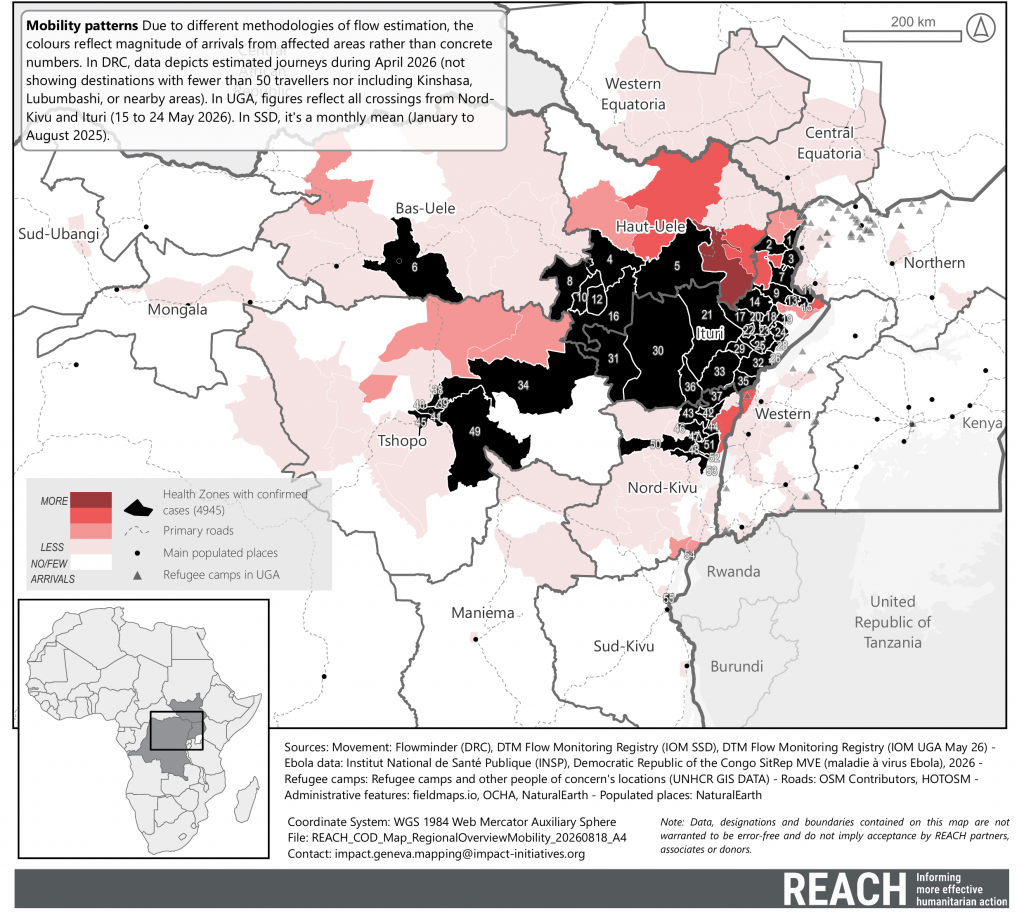
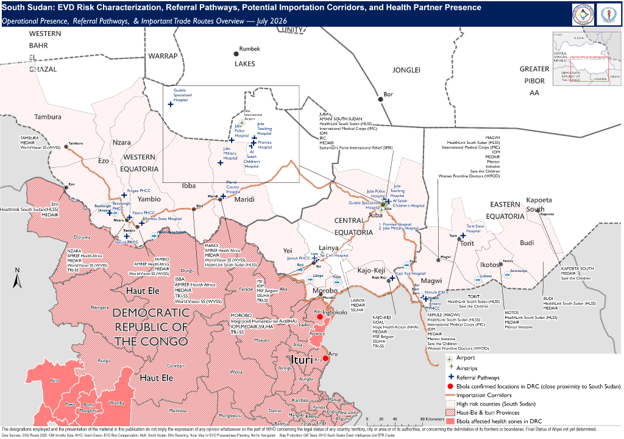
حددتي وزارة الصحة في جنوب السودان ومنظمة الصحة العالمية 15 مقاطعة تعتبر عالية الخطورة لاستيراد إيبولا (الشكلان 1 و2). وتقع أربع عشرة مقاطعة على طول الحدود الجنوبية لجنوب السودان عبر ولايات الاستوائية الشرقية والوسطى والغربية (المشار إليها مجتمعة باسم الاستوائيين أو منطقة الاستوائية الكبرى). وتشمل هذه المقاطعات، من الغرب إلى الشرق: تمبورا، وإزو، ونزارا، ويامبيو، وإيبا، وماريدي (ولاية الاستوائية الغربية، وتحدها جمهورية أفريقيا الوسطى وجمهورية الكونغو الديمقراطية)، ويهي، وموروبو، وكاجوكيجي (ولاية الاستوائية الوسطى، وتحدها جمهورية الكونغو الديمقراطية وأوغندا)، وماغوي، وتوريت، وإيكوتوس، وبودي، وكابويتا الجنوبية (ولاية الاستوائية الشرقية، وتحدها أوغندا وكينيا).12 تعتبر العاصمة جوبا، الواقعة في شمال وسط الاستوائية، عالية الخطورة أيضاً لأنها مركز نقل رئيسي على مسافة 200 كيلومتر من حدود جمهورية كونغو الديمقراطية وأوغندا. تشير خرائط المخاطر التي أعدتها منظمة "ريتش" والتي تدمج أعداد المصابين مع أنماط تنقل مشتري خطوط الهواتف المحولة المسافرين وإلى المناطق المتضررة في جمهورية كونغو الديمقراطية إلى أن أنشطة الاستعداد للإيبولا يجب أن تعطي الأولوية لولاقتي الاستوائية الوسطى والغربية (الشكل 1).2,13 اعتباراً من أواخر يوليو 2026، تم أيضاً توسيع نطاق بعض تدابير الاستعداد لتشمل مدينة بور في ولاية جونقلي، نظراً لكونها مركزاً رئيسياً للنقل خارج جوبا.14
تشكل غرب الاستوائية والجزء الجنوبي من وسط الاستوائية الحزام الأخضر للبلاد حيث تعد الزراعة مصدر الرزق الرئيسي، بينما تصبح المناطق الحدودية في شرق الاستوائية جبلية ثم رعوية، حيث يسود تربية المياه وتعد جزءاً هاماً من التبادل والتعاون الاجتماعي. وفي حين تتبع بعض أجزاء الحدود الجنوبية الجبال أو متنزهات الصيد أو الطرق، فإن ترسيم حدود الأراضي على طول معظم الحدود غير واضح.
النيل الأبيض، الذي يتدفق شمالاً من بحيرة ألبرت الأوغندية الواقعة على الحدود مع جمهورية الكونغو الديمقراطية، يدخل جنوب السودان عند نمولي، ثم يتدفق شمالاً عبر جوبا وبور، وعبر أراضي السدود الرطبة الكبيرة، وصولاً إلى السودان. وفي حين أن النهر مهم لنقل الإمدادات الإنسانية وبعض التجارة شمال بور، فإنه بين بحيرة ألبرت وبور لا يكون قابلاً للملاحة إلا بواسطة الزوارق. وبدلاً من ذلك، تنتقل التجارة التجارية عن طريق البر.15
ظهرت جميع تفشيات إيبولا السابقة في جنوب السودان في أعوام 1976 و1979 و2004 في الغابات الاستوائية لولاية الاستوائية الغربية، وتحديداً في نزارا وماريدي وتابورا ويامبيو، مع انتقال بعض الحالات وتحديدها في العاصمة الوطنية جوبا.16,17 ولاية الاستوائية الغربية والاستوائية الوسطى هي أيضاً الولايتان الأكثر تأثراً بتفشي جدري القردة الحالي، في حين تركزت الحالات الناتجة عن تفشي الكوليرا وشلل الأطفال والحصبة والتهاب الكبد الوبائي (إي) المستمرة بشكل أكبر في شمال وسط وشرق جنوب السودان، بما في ذلك جونقلي؛ وتتأثر هذه المناطق أيضاً بفيضانات شديدة، ونزوح، وانعدام الأمن الغذائي.14,18 تشهدเกือบทั้งประเทศการแพร่ระบาดสูงของโรคมาลาเรียตลอดทั้งปี.
الشكل 1: المناطق الصحية (جمهورية الكونغو الديمقراطية) والمقاطعات (جنوب السودان) المعرضة لخطر الإصابة بإيبولا، استناداً إلى أنماط التنقل التاريخية
الشكل 2: مواقع المقاطعات في جنوب السودان المعرضة لخطر كبير لتوافد مرض الإيبولا، إلى جانب ممرات السفر ووجود الشركاء التشغيليين
الروابط الاجتماعية عابرة الحدود، والانتماء العرقي واللغة
تتميز المناطق الحدودية بروابط تاريخية وثقافية واجتماعية واقتصادية وتجارية مهمة. يُعد جنوب السودان موطناً لنحو 70 مجموعة عرقية. ومن بين أكبر هذه المجموعات في مناطق الحدود الجنوبية: توبوسا، وديدينجا، ووتوكو، ولوكويا، وأشولي، ومادي (في شرق الاستوائية)؛ وباري، وبوجولو، ونْيانغوارا، ومانداري، وكوكو، وكاكوا (في وسط الاستوائية)؛ ومورو، وبأكا، وزاندي (في غرب الاستوائية)، فضلاً عن العديد من المجموعات التي يمتد وجودها إلى أوغندا وجمهورية الكونغو الديمقراطية وبلدان مجاورة أخرى (الجدول 1).10,11 تنقسم بعض هذه الجماعات، لا سيما الأكولي، والماضي، والكاكوا، والأزاندي، بفعل الحدود الدولية، حيث يعيش أفرادها في أجزاء من البلدان المجاورة.
لذلك فإن هذه الهويات ليست ثابتة أو منفصلة بصرامة. وهناك تاريخ طويل من التبادل والتنقل والاختلاط بين الجماعات، مع لغات وثقافات وممارسات مشتركة. ويحدث التزاوج المختلط بشكل مكواسع بين الجماعات العرقية وكذلك فيما بينها في المناطق الحدودية. تعيش العائلات عبر الحدود الوطنية الرسمية، ويقسم البعض حياتهم بين البلدان كاستراتيجية للبقاء آمنين.12 على سبيل المثال، غالباً ما يتزوج أزاندي في جنوب السودان وجمهورية الكونغو الديمقراطية وفوسط أفريقيا ويحافظون على شبكات اجتماعية واسعة النطاق.
الحركة السكانية عبر المناطق الحدودية كبيرة ومتاحة بسلاسة، حيث ينتقل الناس لزيارة العائلات، ولأسباب اقتصادية، وإلى الأراضي الزراعية، والالتحاق بالمدارس، وطلب الرعاية الصحية التقليدية والطبية الحيوية، فضلاً عن السلامة. ولذلك، يُفضل اعتبار هذه المنطقة الحدودية الثلاثية كمنطقة حدودية، بدلاً من خط حدودي سيكون من المستحيل السيطرة عليه ومراقبته بفعالية عبر الغابات الكثيفة.
بينما بحثت العديد من مجتمعات جنوب السودان عن اللجوء في جمهورية الكونغو الديمقراطية خلال فترات عدم الاستقرار السابقة، وما زال بعضهم هناك حتى الآن، فإن غالبية لاجئي جنوب السودان، بما في ذلك أولئك القادمين من مناطق قريبة من حدود جمهورية الكونغو الديمقراطية، يلجؤون الآن إلى أوغندا نظراً لكونها تُعتبر أكثر استقراراً وتتمتع بنظام تعليمي قوي يستخدم اللغة الإنجليزية.13 أصبحت اللغة الإنجليزية اللغة الرسمية الوحيدة المستخدمة في الحكومة والتعليم بعد الاستقلال في عام 2011، ولكن اللغة العربية في جوبا تعمل باعتبارها لغة التواصل المشترك الأكثر انتشاراً للتواصل اليومي وهي اللغة المستخدمة من قبل الجيش. ومع ذلك، فإن استخدام اللغات المحلية يعد أمراً بالغ الأهمية للتواصل المباشر مع المجتمعات النائية المتضررة والمعرضة للخطر. في غرب الاستوائية، اللغات المحلية هي الزاندي، والأفوكايا، والبكا، والموروكودو، والموندو، وحول تامبورا تشمل البلندا بور والبلندا فيري. على جانب جمهورية الكونغو الديمقراطية من الحدود، يتم التحدث بلغة الأفوكايا أيضاً (ولها عدد من اللهجات)، وتقتصر لغة اللينغالا على المراكز الحضرية الأكبر، وتُستخدم البانغالا على نطاق واسع للتجارة.7
الجدول 1: أماكن تواجد الجماعات العرقية الرئيسية في إستوائية الكبرى وعلاقاتها العرقية اللغوية في أوغندا وجمهورية الكونغو الديمقراطية
| التصنيف اللغوي (البلدان التي توجد فيها) | مجموعة عرقية (موجودة في الاستوائية، جنوب السودان) | الموقع الرئيسي | ||
| جنوب السودان | أوغندا | جمهورية الكونغو الديمقراطية | ||
| اللغات السورمية (جنوب السودان، إثيوبيا) | ديدينغا | بودي | ||
| أتكير-لوتوكو
لغات ما (جنوب السودان، إثيوبيا، أوغندا، كينيا، تنزانيا) |
لوتكو، لوكويا، توبوسا/جيي | توريت، إيكوتوس، جوبا، لافون، كابويتا، أجزاء من ولاية جونقلي | كاراموجا | |
| لغات لو (جنوب السودان، أوغندا، جمهورية الكونغو الديمقراطية، إثيوبيا، كينيا، تنزانيا) | أشولي | ماجوي | جولو، كیتغوم، أمورو، لاموو، أغاجو، نْویا، أومورو، پادیر | |
| لهجات باري (جنوب السودان، أوغندا، جمهورية الكونغو الديمقراطية) | كاكوا | يei، موروبو | كوبوكو، يومبي | |
| كوكو | كاجوكيجي | مويو | ||
| باري، بوجولو، نيانغوارا، مانداري | جوبا، تيريكيسا، لاينيا | |||
| لغات مورو-مادي (جنوب السودان، أوغندا، جمهورية الكونغو الديمقراطية) | مادي، أولوبو | مغوي، جوبا | أدجوماني، مويو | |
| أفوكايا، لوغو | ماريدي | فارادجي (أوات-ويليه) | ||
| مورو/موروخودو | ماريدي | |||
| كيلكو، أومي | موروبو | إيتوري | ||
| لوغبارا، أرينغا | أروا، ماراشا، تيريجو، مادي-أوكولو، يومبي، كوبوكو | إيتوري | ||
| لغات بونغو-باكا-باجيرمي (جمهورية أفريقيا الوسطى، تشاد، جنوب السودان، السودان) | غبي | ماريدي، يей | ||
| لغات الزاندي (جمهورية أفريقيا الوسطى، جنوب السودان، جمهورية الكونغو الديمقراطية) | أزاندي | ييه، مريدي، يامبيو، تامورا، أجزاء من غرب بحر الغزال | باس-أويلي، هوت-أويلي، تشوبو | |
إعداد المؤلفين. أُنشئت باستخدام بيانات من ماكولكا (2013)19.
مجتمعات اللاجئين
ارتفع العدد الإجمالي للاجئين وطالبي اللجوء من جنوب السودان المقيمين في البلدان المجاورة بشكل كبير بين عامي 2014 و2018 بسبب الصراعات السياسية التي بدأت في جوبا وانتقلت إلى شمال شرق البلاد وإلى مناطق الاستوائية. وفي أعقاب اتفاق سلام عام 2018، استقرت أعداد للاجئي جنوب السودان المقيمين في البلدان المجاورة عند نحو مليوني شخص منذ أواخر عام 2018 وحتى منتصف عام 2024، لكنها تشهد زيادة بطيئة منذ ذلك الحين.
تستضيف أوغندا النسبة الأكبر من اللاجئين وطالبي اللجوء من جنوب السودان، الذين يعيشون في مستوطنات تقع بالقرب من الحدود أو كأفراد مستقرين ذاتياً في المناطق الحضرية. يوجد أكثر من 1,056,000 لاجئ وطالب لجوء من جنوب السودان في أوغندا.20 ومع ذلك، يحتاج بعض هؤلاء اللاجئين وطالبي اللجوء إلى العودة بشكل دوري عبر الحدود المشتركة للبحث عن فرص لكسب الرزق، أو للحفاظ على حقوقهم في الأراضي، أو لأسباب اجتماعية مثل حضور الجنازات أو إعادة جثث الأقارب إلى ديارهم لدفنهم بطريقة لائقة. ومن الأمثلة المؤثرة على النزوح المستمر ما يحدث لمئات من سكان جنوب السودان من المناطق الحدودية في مقاطعة كاجوكيجي، والذي نتج عن هجمات مزعومة شنتها قوات الدفاع الشعبية الأوغندية (UPDF) في الأراضي التي تطالب بها كل من أوغندا وجنوب السودان.21 بالإضافة إلى ذلك، بعد سقوط حكومة الخطوم في أبريل 2023، اضطر العديد من جنوب السودان الذين استقروا في السودان إلى الفرار، لكنهم لم يشعروا بالآمان في العودة إلى مناطقهم الأصلية. على سبيل المثال، اختار العديد من أبناء شعب النوير من شمال جنوب السودان إعادة الاستقرار في أوغندا. هذا مثال على مجموعة من اللاجئين الذين قد يُتوقع منهم الانخراط في حركة أقل عبر الحدود.
في جمهورية الكونغو الديمقراطية، يوجد حوالي 90,000 لاجئ وطالب لجوء من جنوب السودان، يتواجدون بشكل رئيسي في مستوطنات في شماء أوت أويلي (مستوطنة واحدة، أبا) ومقاطعتي إيتوري (أربع مستوطنات)، بما في ذلك تدفق صغير ولكنه مستمر إلى مشيخة كاكوا في أرو، بجمهورية الكونغو الديمقراطية، على الحدود مع أوغندا، عبر أوغندا.22 تدفع انعدام الأمن الغذائي في الغالب الحركات البندولية عبر الحدود بين جنوب السودان وجمهورية الكونغو الديمقراطية، بينما تواجه المساعدات الإنسانية في كلا البلدين تحديات تتمثل في المواقع النائية، والبيئات التشغيلية غير الآمنة، وتخفيضات تمويل المساعدات.
تستضيف جنوب السودان أعداداً أقل بكثير من اللاجئين القادمين من البلدان المجاورة في الجنوب، بما في ذلك حوالي 15,000 من جمهورية كونغو الديمقراطية، و5,000 من جمهورية أفريقيا الوسطى، و500 من أوغندا، ويعيش نحو 64,000 لاجئ وطالب لجوء في مجموعهم في منطقة الاستوائية.23,24 توجد ست مستوطنات للاجئين في ولاية الاستوائية الغربية (بما في ذلك مكباندو التي تضم نحو 14,000 شخص بالقرب من يامبيو) وثلاث مستوطنات في ولاية الاستوائية الوسطى (بما في ذلك غوروم التي تضم نحو 17,000 شخص بالقرب من جوبا)، فضلاً عن تجمعات أخرى للاجئين الذين استوطنوا بأنفسهم وطالبي اللجوء في جوبا (نحو 20,000) وماريدي.24 تعتمد المرافق الصحية التي تخدم هذه التجمعات بشكل كبير على دعم المفوضية السامية للأمم المتحدة لشؤون اللاجئين والمنظمات غير الحكومية للحصول على الإمدادات الطبية والكوادر. وعادة ما تضم مخيمات اللاجئين هياكل قائمة للترصد المجتمعي من خلال عامل صحي مجتمعي من اللاجئين يتم تدريبهم ويمكن حشدهم للاستجابة لإيبولا.
سبل العيش التجارة عبر الحدود
أدت سنوات من عدم الاستقرار وضعف الحوكمة إلى أن يعاني جنوب السودان من ضعف في القدرات الإنتاجية المحلية والاعتماد على واردات السلع الاستهلاكية والخدمات. وتأتي الغالبية العظمى من الواردات الرسمية من الدولتين المجاورتين أوغندا وكينيا، إلى جانب التجارة غير الرسمية المتدفقة أيضًا من جمهورية الكونغو الديمقراطية والسودان. وقد ازدادت أهمية المصادر الشرق أفريقية بشكل أكبر منذ أن عطلت الحرب في السودان طرق التجارة الشمالية اعتبارًا من عام 2023. ولذلك، فإن أي قيود حدودية متعلقة بفيروس إيبولا ستأتي في سياق تجاري مُسيّس بالفعل.
يتم التجارة التجارية واسعة النطاق والتجارية بشكل أساسي عبر معبر نمولي على حدود أوغندا، وهو أيضاً موقع معظم الاهتمام السياسي. ومع ذلك، أدت إضرابات سائقي الشاحنات في شرق إفريقيا على مدار السنوات الست الماضية بشكل متكرر إلى تعطيل حركة البضائع هنا، مما أثر على إمدادات الغذاء والوقود وغيرها من السلع الأساسية التي يعتمد عليها الناس في جوبا. شاركت وزارة شؤون EAC التابعة للحكومة الكينية مؤخراً جنوب السودان في محادثات رفيعة المستوى لمعالجة الشكاوي المستمرة لجمعية سائقي الشاحنات بشأن الاعتداءات وإطلاق النار وقطع الطرق غير القانونية والابتزاز من قبل ضباط الأمن والجماعات المسلحة العاملة على طول ممر نمولي-جوبا.22 كما كان هذا المعبر الحدودي مسرحًا لأزمة تجارية مع أوغندا في عام 2023، عندما قام المكتب الوطني للمعايير في جنوب السودان بحجز 70 شاحنة محملة بالحبوب بقيمة $2.7 مليون دولار أمريكي لمدة شهرين، بسبب مخاوف من احتواء هذه المواد الغذائية على مستويات عالية من الأفلاتوكسينات السامة الناتجة عن العفن.25 يعد طريق معبر نمولي أيضاً مهمّاً للعديد من أبناء الطبقة المتوسطة والأثرياء في جوبا الذين لديهم عائلات في كمبالا.
كما تجري التجارة عبر المعابر الحدودية الرسمية في ولاية الاستوائية الوسطى في لاسو (التي تقع على الحدود مع مقاطعة أو-ويلي في جمهورية الكونغو الديمقراطية) وكايا (التي تقع على الحدود مع أوغندا، وترتبط بطريق مباشر بمقاطعة إيتوري في جمهورية الكونغو الديمقراطية)، فضلاً عن نابياباي في ولاية الاستوائية الغربية (التي تقع أيضًا على الحدود مع أو-ويلي). وتبيع التاجرات بضائعهن في العديد من الأسواق الحدودية الصغيرة. وتتم معظم التجارة غير الرسمية مع جمهورية الكونغو الديمقراطية في شكل سلع صغيرة تُباع من على دراجات نارية أو دراجات هوائية. وعادةً ما يدفع صغار التجار ضريبة شهرية ثابتة ويتجنبون الرسوم الجمركية الإضافية ما لم يتم إيقافهم عند حاجز طريق.
هناك أيضاً نطاق واسع من التجارة غير المشروعة في الأخشاب، والذهب، والبترول، والماشية وغيرها من السلع، والتي تتركز حول المناطق الحدودية بين جمهورية كونغو الديمقراطية، ومنطقة غرب النيل في شمال غرب أوغندا، وجنب السودان. كما يعمل في المنطقة صيادون غير شرعيين مدججون بالسلاح، يصطادون أجزاء الحيوانات البرية (العاج، حשف آكل النمل السقلي) بالإضافة إلى لحوم الطرائد، ويتنقلون عبر الحدود بين جنوب السودان، وأفريقيا الوسطى، وشمال شرق جمهورية كونغو الديمقراطية، بما في ذلك متنزه غارانبا الوطني.7 تفيد التقارير بأن الجماعات المسلحة في المنطقة تُمول عملياتها إلى حد كبير من خلال التصدير غير المشروع للموارد الطبيعية.26
يتم عادةً تصدير الذهب المستخرج في مناطق جوبا، لوبونوك، ويي جواً من جوبا، أو إلى كامبالا في أوغندا عبر معبر نيمولي. كما يتم نقل الذهب من ويي إلى أروا في أوغندا عبر معبر كايا ليُدمج مع التدفقات القادمة من جمهورية الكونغو الديمقراطية.27 يتم تهريب كمية صغيرة أيضاً عبر مركز لاسو الحدودي (غرب ياي) إلى جمهورية الكونغو الديمقراطية باتجاه أبا (أوت أويل) حيث تسهل الجماعات المسلحة من جنوب السودان وجمهورية الكونغو الديمقراطية حركة نقله إلى أروا. يذهب الذهب القادم من كابويتا إلى كينيا. داخل جنوب السودان، يميل التعدين الحرفي واسع النطاق إلى أن يمارسه السكان المحليون، حيث يكون الرجال مسؤولين عن الحفر والنساء عن غسل الذهب.27 يتم التعدين بشكل رئيسي في موسم الجفاف، عندما يكون حفر الحفر في قيعان الأنهار أكثر أماناً.28 تخضع مواقع التعدين شبكات النقل لسيطرة النخب السياسية والجماعات المسلحة مع اندلاع أعمال عنف سابقة حول المواقع في لينيا، لوبونوك، ياي ومنطقة نهر كايا (الاستوائية الوسطى) وتمبورا (الاستوائية الغربية) مما قد يبعد المعدنين المحليين.29 يتعاون الجهات الفاعلة العسكرية على جانبي الحدود بين جنوب السودان وأوغندا لنقل الذهب عبر نقاط التفتيش الرسمية، بينما تميل الجهات التجارية صغيرة النطاق إلى استخدام بانيا الطرق. تضم الحدود الثلاثية بين جمهورية الكونغو الديمقراطية وججنوب السودان وأوغندا عددًا كبيرًا من نقاط الحدود غير الرسمية أو نقاط التفتيش، بما في ذلك في أورابا، وساليا موسابا، وبوسيا، وكوبوكو، والتي قد تستضيف أسواقًا، ويتم الوصول إليها بشكل أساسي عن طريق الدراجات النارية، ويتم التفاوض على رسوم العبور غير الرسمية بين الجنود والتجار.29
تجارة الماشية عبر الحدود الجنوبية شائعة وغالباً ما تتم بشكل غير رسمي. يقوم رعاة الفلاتر/النبورو الرحل من السودان بالهجرة خلال موسم الجفاف مع قطعان كبيرة إلى غرب ووسط الاستوائية ويبيعون الماشية للتجار الذين ينقلونها بعد ذلك إلى حديقة غارامبا الوطنية في جمهورية الكونغو الديمقراطية. وغالباً ما يقيم الفلاتر/النبورو مخيماتهم في الغابات لتجنب الصراعات مع المزارعين، لكن النساء قد يأتون إلى الأسواق لبيع منتجات الألبان وشراء المواد الغذائية الأساسية الأخرى.30 غالباً ما تكون علاقاتهم متوترة مع السلطات التي تصف وجودهم غير القانوني وتحاول فرض غرامات على المجموعة.
لحوم الطوئم تُعد مصدرًا مهمًا وشائعًا بروتين الحيوان في غرب الإكواتوريا، وتجارة لحوم الطوئم تجمع بين السكان الريفيين والحضريين، مما يُمثل مساراً محتملاً لانتقال العدوى من إنسان إلى إنسان.7
حدود جمهورية الكونغو الديمقراطية وأوغندا مغلقة حالياً، لكن الحدود مع جنوب السودان لا تزال مفتوحة. تشكل ديناميكيات التجارة بين جنوب السودان وجمهورية الكونغو الديمقراطية وأوغندا عامل خطر من حيث انتشار إيبولا، ولكنها توفر أيضاً فرصة محتملة لجهود التأهب والوقاية من خلال التجار. هذا أمر بالغ الأهمية، ليس فقط من أجل سلامتهم، بل لأن بإمكانهم الوصول إلى مناطق يجد العديد من الفاعلين في مجال التأهب صعوبة في العمل فيها بسبب ديناميكيات انعدام الأمن، كما يمتلكون معرفة متعمقة حول الترابط عبر الحدود، ويمكنهم نقل المعلومات إلى مجتمعات متعددة.
السلطة العامة في المناطق الحدودية
يُعدّ مسؤولو الهجرة، التابعون لوزارة الشؤون الداخلية في جنوب السودان، مسؤولين عن نقاط الدخول إلى البلاد، في حين يتعامل الجيش الوطني أو قوات دفاع شعب جنوب السودان مع القضايا الأمنية. ومع ذلك، فإن السلطات المحلية في ولايات الاستوائية الشرقية والوسطى والغربية هي المسؤولة عن إدارة مناطق الحدود المحلية. ويلعب مسؤولو الحكومة المحلية والسلطات العرفية (الشيوخ و‘كبار السن’) أدواراً نشطة في إدارة النزاعات فضلاً عن ضمان تقديم الخدمات، بما في ذلك الرعاية الصحية.
تختلف تاريخ وشكل ووظيفة الزعماء بشكل كبير في مختلف أنحاء جنوب السودان. ففي غرب الاستوائية، ينتمي العديد من زعماء زاندي إلى عشيرة أفونغارا الملكية ويمكنهم تتبع أصولهم إلى ملوك أو أمراء ما قبل الاستعمار.31 هناك وفي أماكن أخرى من منطقة «إكواتوريا» التي تخلو من الممالك، يرث بعض الزعماء مناصبهم، بينما يُنتخب البعض الآخر من قبل الشعب أو يُختارون من قبل شيوخ مجتمعاتهم أو من قبل الحكومة. ويُعدُّ الشيوخ فئةً متغيرةً من الأشخاص الذين يتمتعون بالمعرفة الثقافية والخبرة والسلطة؛ وقد شغل العديد منهم مناصب مؤثرة داخل الحكومة أو الكنيسة أو منظمات الإغاثة. وفي بعض المناطق، مثل نيمولي، توجد أعداد كبيرة من النازحين داخلياً منذ فترة طويلة، والذين ينظمون أنفسهم بشكل غير رسمي في إطار هياكل عشائرية خاصة بهم، ويطبقون أنظمة قضائية عرفية منفصلة. وبالنسبة للعديد من الزعماء، يُفهم التخلي عن الأراضي الأصلية أو عبور الحدود الدولية على أنه يعني فقدان السلطة.31 بالمقارنة، يتعرض الكبار لوصمة أقل لمغادرتهم البلاد. بالإضافة إلى ذلك، في بعض مناطق غرب ووسط الاستوائية، يواجه الشيوخ مخاطر أمنية أثناء التنقل بين البلدات الخاضعة لسيطرة الحكومة والريف الخاضع لسيطرة المتمردين (خاصة المناطق الحدودية)، ونتيجة لذلك قد يكونون أقل اتصالاً وفقدوا سلطتهم بين مجموعات معينة من شعوبهم.
تلعب وكالات الأمم المتحدة (UN) والمنظمات غير الحكومية الدولية (INGOs) ومنظمات المجتمع المدني الوطنية (CSOs)، ولا سيما المنظمات الدينية، دورًا مهمًا في تقديم الخدمات، وخاصة الرعاية الصحية، وبناء السلام المحلي والمصالحة على المستوى الشعبي. وتتألف اللجان الصحية القروية من متطوعين من المجتمع المحلي يدعمون المرافق الصحية والعاملين في مجال الصحة في منطقتهم؛ وهي موجودة في جميع القرى والأحياء في المناطق الحضرية، مع وجود أنظمة مماثلة في مخيمات اللاجئين والنازحين داخلياً. وأثناء تفشي الأوبئة، يتوقع الزعماء أن يتلقوا تدريباً من السلطات الحكومية والشركاء حول المواضيع الصحية ليتمكنوا من العمل كنقطة اتصال أولية لمجتمعاتهم. وفي إكواتوريا الغربية، لم ينضم سوى عدد قليل من السلطات العرفية إلى تدفقات النزوح عبر الحدود، ولا يُسمح لمن انضموا منها بتشغيل محاكمهم الخاصة. ومع ذلك، ظهرت أشكال أخرى من السلطات غير العرفية في مخيمات اللاجئين في أوغندا، بما في ذلك «مجالس رعاية اللاجئين»، التي أنشأتها واعترفت بها سلطات توطين اللاجئين، والمنظمات المجتمعية «فوق العرقية»، التي نظمها اللاجئون أنفسهم.31
الصراعات الإقليمية على المناطق الحدودية
لقد بنى عدد كبير من الفاعلين، بما في ذلك الحكومة والوكالات الحكومية المختلفة، سلطتهم من خلال محاولاتهم لحكم الحدود والمناطق الحدودية المحيطة بها.32 إن استرداد الأراضي (أو المطالبة بها من جديد)، على سبيل المثال، يكتسي طابعاً حاداً بشكل خاص حول معبر نيمولي الحدودى، حيث يرفع عديد من الجهات الفاعلة الحكومية المسلحة تقاريرها إلى سلطات مختلفة في الحكومة المركزية في جوبا. ويُذكر أيضاً أن أوغندا منخرطة في الاستولي على الأراضي بالقرب من نيمولي وبوجي، وهناك توترات مستمرة تتعلق بتعدي ثكنات قوات الدفاع الشعبية الأوغندية في بيبيا على أراضي جنوب السودان.33,34 لا تزال حدود كاجوكجي مع مقاطعتي مويو ويومبي غير واضحة ومحل نزاع. وكما ذكر سابقاً، هناك نزوح مستمر للمدنيين أثاره هجوم قوات الدفاع الشعبي الأوغندية في مقاطعة كاجوكجي، التي تطالب بها جنوب السودان. وفي حين توجد تحديات تتعلق بتنظيم الحدود في مناطق أزاندي الحدودية بين جمهورية كونغو الديمقراطية وجنب السودان وجمهورية أفريقيا الوسطى، إلا أنها أقل عرضة للصراعات الإقليمية.35 تُعدُّ السودان وأوغندا ضامنين رئيسيين لاتفاق سلام عام 2018 الحساس، وهو اتفاق سلام جنوب السودان المنشط (R-ARCSS)، الذي يعتمد على كونِه ذا فائدة سياسية واقتصادية لهذين البلدين الجارين. تاريخياً، لم تكن الحدود الشمالية الغربية مع جمهورية الكونغو الديمقراطية (وجمهورية أفريقيا الوسطى) موضع اهتمام سياسي كبير لجوبا، ونتيجة لذلك هناك تأكيد أقل لسلطة الدولة على المناطق الحدودية. يكمن الحل لننزاعات الأراضي عبر الحدود في المبادرات على المستوى المحلي، ولكن يجب على الجهات الفاعلة الخارجية أن تكون على دراية بالطريقة التي يمكن بها تقديم التدخلات الإنسانية، بما في ذلك تلك المتعلقة بالصحة والجاهزية للإيبولا -لا سيما إذا يُنظر إليها على أنها تُقاد من جuba- على أنها مرتبطة بالسياسات الأوسع للمناطق الحدودية، ولديها القدرة على استخدامها كجزء من النزاعات الحدودية المستمرة.
أنماط التنقل عبر الحدود
نقاط العبور الرسمية وغير الرسمية والطرق الرئيسية
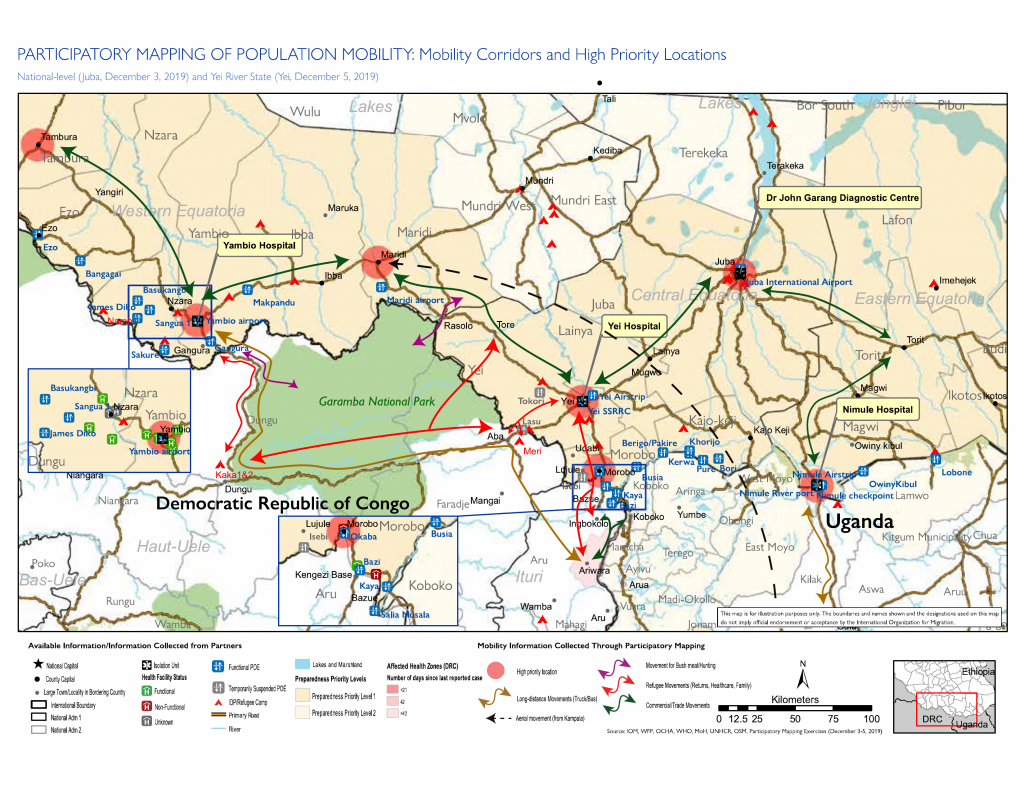
تتم معظم الحركة الرسمية بين جنوب السودان وجمهورية الكونغو الديمقراطية عبر أوغندا (انظر موجز أُوغندا وجمهورية الكونغو الديمقراطية للتعرف على ديناميكيات عبر الحدود الحالية وتأثيرات إغلاق الحدود المرتبط بإيبولا). ومع ذلك، فإن عددًا كبيرًا من المسافرين يعبرون الحدود أيضًا بشكل مباشر من جمهورية الكونغو الديمقراطية، بما في ذلك من مقاطعتي هَوت أويلي وإيتوري (واللتان أبلغتا، وقت كتابة هذا التقرير، عن انتقال نشط لفيروس إيبولا). الحدود بين جنوب السودان وجمهورية الكونغو الديمقراطية وأوغندا مسامية للغاية، والعديد من المسافرين يتجنبون الطرق الرسمية ونقاط العبور، ويختارون بدلاً من ذلك استخدام بانيا الطرق (طرق غير رسمية في الأدغال) وعبور الحدود ليلاً لتفادي عمليات التفتيش ودفع الضرائب. غالباً ما يُنظر إلى مراكز الحدود بعين الريبة باعتبارها جزءاً من الجهاز السياسي والاقتصادي للسياسيين والدولة لجمع الضرائب. كما تُستخدم هذه الطرق غير الرسمية من قبل جماعات المعارضة المسلحة، والأشخاص الذين يتاجرون في السلع غير المشروعة، وأولئك الذين يخافون السلطات العسكرية في المراكز الحدودية بسبب الاعتداءات الأخيرة.36 بالنسبة للكثيرين في المناطق الحدودية، يُنظر إلى الحدود الرسمية التي تفصل بين جنوب السودان والدول المجاورة على أنها عائق أمام التنقل غير الرسمي، وغالبًا ما تكون غير ذات أهمية في الحياة اليومية. ومن المعروف أن هناك العديد من نقاط الدخول غير الرسمية على الحدود بين مويو (أوغندا) وكاجوكيجي (جنوب السودان)، والمناطق المكتظة بالسكان على الحدود مع جمهورية الكونغو الديمقراطية بين موروبو ولاسو، جنوب شرق وجنوب غرب يي، على التوالي (جنوب السودان) (الشكل 3). ولفهم حركة التنقل وأنماط التجارة ونقاط العبور المستخدمة فهماً كاملاً، من الضروري الاستفادة المستمرة من المعرفة المحلية، حيث إن أنماط التنقل تتغير باستمرار وتميل إلى التحول بسرعة استجابةً لمجموعة متنوعة من العوامل.
الشكل 3: مواقع نقاط عبور الحدود غير الرسمية بالقرب من المناطق المعرضة لخطر كبير لدخول مرض إيبولا وممرات التنقل الرئيسية
مراقبة الحدود والسيطرة عليها
في حين أن حدود أوغندا وجمهورية الكونغو الديمقراطية كانت مغلقة لإبطاء انتقال مرَض إيبولا، واعتباراً من منتصف أغسطس 2026، ظلت حدود جنوب السودان مع أوغندا وجنوب السودان مع جمهورية الكونغو الديمقراطية مفتوحة أمام طالبي اللجوء، فضلاً عن الهجرة المنتظمة. يفترض الجهات الفاعلة في الاستجابة أنه مع إغلاق الحدود بين أوغندا وجمهورية الكونغو الديمقراطية، فإن المزيد من الناس من جمهورية الكونغو الديمقراطية يسافرون الآن عبر جنوب السودان للوصول إلى أوغندا، باستخدام نقاط عبور غير رسمية.37 في نهاية مايو/أيار 2026، بُعيد إغلاق أوغندا لحدودها، قُدّر أن نحو 1,000 شخص يومياً كانوا يسافرون براً على طول الطريق الممتد لمسافة 510 كيلومترات من بونيا، عاصمة إقليم إيتوري، مروراً بأرو، وصولاً إلى نقطة دخول كينغيزي بيز/מורوبو في جنوب السودان على الطريق المؤدي إلى يي.38 يُستخدم الطريق بشكل أساسي لتجارة الوقود والمركبات، بينما تشكل زيارات العائلات ما يقرب من 10 في المائة من حركة التنقل.
تجري المنظمة الدولية للهجرة (IOM) رصد تدفقات الهجرة وتقدم الدعم لأنشطة الترصد والوقاية من العدوى ومكافحتها في نقاط الدخول على طول الحدود الجنوبية، بما في ذلك سورس يوبو (بالقرب من تامبورا)، وجانغورا (إلى الجنوب الشرقي من يامبيو على الطريق المؤدي إلى دونغو، وهوت أويلي)، ونابانغا (بين يامبيو وماريدي على حدود حديقة غارامبا الوطنية)، وبازي (بالقرب من موروبو ويي)، ولاسو-ليبوجو (يي)، وأبايا وكايا (بالقرب من كاجوكيجي)، ونيمولي وبوجي (مقاطعة ماغوي)، وناپادال (كابويتا)، فضلاً عن مطاري جوبا ويي.39,40
تتمثل إحدى النتائج الهامة للدراسة المتعلقة بتصورات المجتمع خلال أنشطة التأهب للإيبولا في عام 2019 في ولاية نهر يي في أن الأشخاص الذين يعبرون الحدود بشكل متكرر أفادوا بأنهم ‘سئموا من تدابير الإيبولا’ وكانوا يتجنبون بانتظام عمليات الفحص وغسيل الأيدي.41 دعا آخرون بدلاً من ذلك إلى آليات ‘أكثر عملية’ لرصد الأمراض لتشجيع المجتمعات على مراقبة حركة السكان ذاتياً، واقترحوا التواصل مع الأسواق والمدارس والكنائس ومخيمات اللاجئين على جانبي الحدود، بدلاً من التركيز على نقاط العبور الحدودية الرسمية.
أسواق
تتوزع أسواق حدودية عديدة عبر المناطق الحدودية بين جنوب السودان وجمهورية الكونغو الديمقراطية وأوغندا، حيث تستفيد المجتمعات المحلية من علاقات التجار التاريخية، وقواعد التجارة المطبقة بمرونة، وتوفر مجموعة من المنتجات التي قد لا تتوفر على نطاق واسع في جنوب السودان، مثل أنواع معينة من الملابس ومواد البناء والمواد غير الغذائية. ويحظى سوق الحدود الأسبوعي عند معبر نابיאباي (Nabiapai) بشعبية بين سكان يامبيو، حيث يتضاعف عدد الأشخاص العابرين من جمهورية الكونغو الديمقراطية بأكثر من النضع في أيام السوق في عطلة نهاية الأسبوع (تشير بيانات الفحص الحدود لشهر أغسطس 2026 إلى أنไ 200 إلى 500 شخص يعبرون يومياً خلال أيام الأسبوع، بينما يعبر 800 إلى 1000 شخص يومياً في عطلات نهاية الأسبوع).7,42 غالبية التجار الصغار هن نساء من أسر ترأسهن نساء، ويُعتمدن على التجارة عبر الحدود كمصدر رئيسي للدخل.27 يجب أن تركّز التجمّعات مع التجار العابرين للحدود على سلوكيات الوقاية، وينبغي تطوير تدفق ثنائي الاتجاه للمعلومات بسرعة. وعادة ما يتواجد قادة المنظمات التجارية في مناطق الأسواق في جميع البايامات والمراكز الحضرية الرئيسية. وينبغي اشراكهم لنقل المعلومات إلى زملائهم، فضلاً عن العمل كجزء من نظام ترصد مجتمعي يربط بين المناطق الحضرية والريفية.
التجمعات الحاشدة
عادة ما يحضر عدة آلاف من الأشخاص الاحتفالات الوطنية والسياسية طوال العام في مدن في جميع أنحاء البلاد بما في ذلك ياي وجوبا. على سبيل المثال، يُحتفل بيوم الشهيد سنويًا في 30 يوليو/تموز. وقد جذبت هذه الأحداث المواطنين المقيمين أو المقيمين مؤقتًا عبر الحدود ومن مناطق أخرى في غرب ووسط الاستوائية.
حركة الجماعات المسلحة
تجفيف التجنيد، والتعبئة، وتدفق الموارد لصالح الجماعات المسلحة عبر الحدود بين جنوب السودان، وجمهورية الكونغو الديمقراطية، وأوغندا، وجمهورية أفريقيا الوسطى، حيث تسعى الجماعات المسلحة الناشطة في ولايات الاستوائية في جنوب السودان مراراً وتكراراً للحصول على المأوى والدواء والتعزيزات من البلدان المجاورة.43,44 الجيش الشعبي لتحرير السودان - المعارضة تاريخياً في اللجوء إلى المناطق الحرجية في جمهورية الكونغو الديمقراطية. كما احتمت وحدات جبهة الخلاص الوطني في المناطق الحدودية، حيث تشن هجمات متفرقة على المواقع التي تسيطر عليها قوات الدفاع الشعبي لجوب السودان التابعة للحكومة وأهداف تتحرك على طول الطرق المؤدية إلى الدول المجاورة. وتستمد جماعة "أزاندي أني كبي غبي" مقاتليها من مناطق زاندي في جمهورية الكونغو الديمقراطية وجمهورية أفريقيا الوسطى، وتحارب الجيش الشعبي لتحرير السودان - المعارضة نيابة عن الحكومة في ولاية غرب الاستوائية.44 لقد تفاقم انعدام الأمن، لا سيما في تامبورا، وسط تدهور العلاقات بين الجيش الشعبي لتحرير السودان في المعارضة وقوات الدفاع الشعبية جنوب السودان في أعقاب احتجاز والمحاكمة اللاحقة لنانائب الرئيس الأول الموقوف الدكتور ريك مشار وبعض مواليه. وقد أُبرز الحاكم السابق ألفريد فوتويو، وهو حليف للدكتور ريك مشار، على العودة إلى الأدغال لقتال جيش الحكومة. إن تحركات هذه الجماعات غير متوقعة وسرية، وبمجرد أن تصبح الطرق مرئية، يتم تغييرها عمداً لضمان استمرار بقاء التحركات غير مرئية. إن محاولات تتبع أو السيطرة على مثل هذه التحركات، حتى في سياق الاستعداد للإيبولا، يُرجح أن تكون لها تداعيات سياسية مباشرة.
ثغرات أمنية
الأشخاص الذين تعتمد استراتيجيات بقائهم على التنقل عبر الحدود سيصبحون أكثر عرضة للخطر اقتصادياً إذا تم فرض قيود على الحدود أو إذا خاف الناس من عبور الحدود إلى جمهورية الكونغو الديمقراطية أو الاختلاط بآخرين في مناطق الحدود ذات الحركة المرورية الكثيفة. ففي إحدى نقاشات المجتمع المحلي الأخيرة التي أجرتها منظمة "ريتش" (REACH) في يامبيو، على سبيل المثال، ذكرت النساء أن أحد الأسواق الحدودية الأسبوعية قد تم تعليقه بسبب إيبولا، وأن بعض النساء التاجرات توقفن عن الذهاب، مما أدى، حسب التقارير، إلى ارتفاع أسعار المواد الأساسية المستوردة في المنطقة المحلية.
بالإضافة إلى ذلك، إذا قررت أوغندا إغلاق حدودها مع جنوب السودان كما فعلت مع جمهورية الكونغو الديمقراطية، فقد يُضطر الأشخاص الذين يحتاجون إلى عبور الحدود إلى استخدام نقاط عبور أكثر عشوائية وغير رسميّة، والتي قد تكون أكثر خطورة وأصعب في المراقبة لربط الأفراد بالخدمات الصحية. قد يتأثر الرجال بشكل خاص، نظراً لأنهم عادةً ما يكونون المعيلين الذين تعتمد عليهم العصور النازحة للحفاظ على مطالباتهم بالأراضي والماشية ومنع الاستيلاء عليها من قبل المسؤولين الحكوميين أو الجنود.
غالبًا ما تكون النساء هنَّ المقدمات الرئيسيات للرعاية على مستوى الأسرة المعيشية، ولهردنَّ قد يكونب معرضاتٍ لخطر أكبر للإصابة بفيروس إيبولا. يأتي هذا التفشي في سياق يتسم بالفعل بالنزوح، وانعدام الأمن، والفقر المنتشر على نطاق واسع، والاحتياجات الإنسانية الملحة، مما يفاقم نقاط الضعف القائمة أصلاً لدى النساء والفتيات ويقلل من فرص حصولهن على الخدمات الأساسية. وهؤلاء الذين غالباً ما يكونون نقطة الاتصال الأولى خارج الأسرة للحصول على المشورة بشأن المرض، بما في ذلك خبراء الأعشاب، والمعالجون التقليديون، والقادة الدينيون وغيرهم، قد يكونون أيضاً معرضين بشكل خاص للإصابة.45 قد يكون الأشخاص الذين يعيشون في مخيمات النازحين المكتظة ومواقع العبور الخاصة بالعائدين واللاجئين، حيث تعاني خدمات المياه والصرف الصحي والنظافة الصحية من ضغط شديد، معرضين أيضاً لخطر أكبر.
ديناميكيات الصراع والعسكرة
ديناميكيات الصراع
نالت جنوب السودان استقلالها في عام 2011 بعد عقود من الحرب الأهلية، ثم انزلقت إلى الحرب مرة أخرى في عام 2013 إثر اقتتال داخلي حاد بين النخبة السياسية والعسكرية. وأدى ذلك إلى انقسام الجيش إلى فصائل: الحركة الشعبية لتحرير السودان الحاكمة (SPLM) والحركة الشعبية لتحرير السودان - المعارضة (SPLM-IO). وامتد النزاع إلى الولايات الجنوبية المتاخمة لجمهورية الكونغو الديمقراطية وأوغندا في أواخر عام 2015. وبدعم من البلدان المجاورة والإقليمية والجهات الفاعلة الدولية، وقع الأطراف المتحاربون اتفاقية تسوية النزاع في جمهورية جنوب السودان المنشطة (R-ARCSS) لعام 2018. ومع ذلك، استمر النزاع في العديد من أنحاء جنوب السودان منذ عام 2018، مما أدى إلى نزوح كبير للمدنيين.
منذ اندلاع القتال بين جيش الحكومة (SSPDF) والجيش الأبيض (الذي يُعتقد أنه متحالف مع الحركة الشعبية لتحرير السودان - المعارضة) في ناصر ولاية أعالي النيل في مارس 2025، تصاعدت التوترات بشكل كبير بين الحركة الشعبية لتحرير السودان - المعارضة وقوات الجيش الشعبي لتحرير السودان (SSPDF)، مدعومة بقوات الدفاع الشعبية الأوغندية (UPDF). تم تعليق مهام زعيم الحركة الشعبية لتحرير السودان - المعارضة، الدكتور رياك مشار، من منصبه كنائب أول للرئيس، وفرض الإقامة الجبرية عليه، ومحاكمته أمام محكمة خاصة في جوبا، إلى جانب عدد من حلفائه الرئيسيين. وتم قصف معسكرات التجميع وتشتيت مقاتلي المعارضة الذين كانوا ينتظرون إعادة التدريب والدمج في الجيش الوطني. وفي أعقاب ذلك، استأنف بعض مقاتلي الحركة الشعبية لتحرير السودان - المعارضة الأعمال العدائية ضد الجيش الشعبي لتحرير السودان (SSPDF) في مناطق الاستوائية. وانضموا إلى عدة جماعات معارضة أصغر في الاستوائية لم تكن موقعة على الاتفاقية بسبب مظالم مستمرة مع الحكومة. ونتيجة لذلك، تأثرت بعض المناطق على طول الحدود بانعدام أمن كبير، بما في ذلك كابويتا، ماغوي، كاجوكيجي، ماريدي، يامبيو، وتامبورا. وأدى القتال في موروبو إلى نزوح نحو 6,000 مدني باتجاه مقاطعة جوبا.46
أدت تخفيضات الميزانية إلى إغلاق القواعد التشغيلية المؤقتة لبعثة الأمم المتحدة في جنوب السودان (يونميس) في ياي وتامبورا، مما أدى إلى الحد بشكل أكبر من حماية المدنيين جهود بناء السلام.46 أدى النزاع الممتد إلى تدمير الاقتصاد، وأصاب التماسك الاجتماعي بالتصدع، وأضعف المؤسسات، مما قد يؤثر سلباً على جهود الاستعداد.
إمكانية وصول الجهات الفاعلة الإنسانية
تصاعدت حوادث العنف ضد الرعاية الصحية أو عرقلتها بين عامي 2023 و2025 في ولايات الاستوائية الشرقية والوسطى والغربية، مما يعكس تدهور الحالة الأمنية الأوسع نطاقاً في هذه المناطق.34,35 حدث نهب لمرافق الرعاية الصحية، بما في ذلك في موروبو (استوائية الوسطى)، واختطاف لعمال الإغاثة في مقاطعتي ياي ريفر وموروبو، مما أدى إلى فقدان بعض المجتمعات المحلية إمكانية الوصول إلى الرعاية الصحية. وفي عام 2026، يظل الوصول إلى بعض مناطق الحدود في استوائية الوسطى حول ياي ريفر يمثل تحدياً خاصاً. وغالباً ما تواجه المنظمات الدولية، التي يُنظر إليها على أنها متحالفة مع الحكومة في جوبا، تحديات في بناء الشرعية والعمل في المناطق الخاضعة لسيطرة جماعات المعارضة المسلحة المتعاطفين معها.7 بالإضافة إلى ذلك، يمكن أن يؤدي وقوع عمليات السطو المسلح، واختطاف السيارات، والكمائن (على سبيل المثال على الطرق المؤدية من ياي إلى موروبو ولاثو، فضلاً عن ياي إلى ماريدي) إلى توقفت مؤقت لحركة الجهات الفاعلة الإنسانية. وفي وقت كتابة هذا التقرير، كانت الجماعات المسلحة في استوائية الوسطى تواصل تنفيذ كمائن متفرقة من قواعدها الريفية مما يعرض تقديم الخدمات الإنسانية للخطر. وفي 11 آب/أغسطس 2026، اختُطف ثلاثة من عمال الإغاثة الذين كانوا يحملون إمدادات إيبولا مؤقتاً في ليبوغو، وهي مدينة حدودية تقع جنوب غرب ياي.47
التعاون مع الجهات المسلحة وجهات الدولة لمكافحة إيبولا
يجب التعامل مع التعاون مع الأفراد المسلحين في جهود الاستعداد في جنوب السودان (القوات الحكومية الموالية، والميليشيات، والقوات المنظمة بما في ذلك الشرطة وخدمات الإطفاء، وحراس السجون، وموظفو الحياة البرية) بحذر شديد. وعلى الرغم من أن بعض الجهات الفاعلة المسلحة قد قامت بالفعل بأدوار في أنشطة الاستعداد، فإنه في حالة وقوع حدث مؤكد للإيبولا، يجب عدم الاستعانة بالجهات الفاعلة المسلحة لتتبع حالات الإيبولا المشتبه بها أو المشاركة في جهود تتبع المخالطين، لا سيما في الأراضي التي كانت تسطر عليها سابقاً قوات الجيش الشعبي لتحرير السودان ـ في المعارضة (SPLA-IO)، أو جبهة الخلاص الوطني (NAS)، أو غيرها من الميليشيات. إن تورط الجهات الفاعلة المسلحة وغيرها من الأفراد الأمنيين في تدخلات الاستجابة الحرجة للإيبولا مثل تتبع المخالطين والدفن قد تقوض الثقة على المستوى المحلي وتؤدي إلى تصاعد المخاوف من أن إيبولا هو سلاح حرب تستخدمه الحكومة لإكراه السكان المتضررين والسيطرة عليهم وتججيرهم ومراقبتهم. يجب تجنب عسكرة أنشطة الاستجابة بشكل مفرط، بما في ذلك توفير الأمن للجهات الفاعلة الإنسانية، لأن ذلك قد يجذب انتباه الجماعات المسلحة.
صحة
البنية التحتية الصحية والتعددية الطبية
في جميع أنحاء جنوب السودان، تُقدم خدمات الرعاية الصحية العِلمية الحيوية إلى حد كبير من خلال شبكة متفرقة من المنظمات غير الحكومية الدولية والمحلية، حيث استمر الصراع والانهيار الاقتصادي في تقويض تقديم الرعاية الصحية الأساسية المدعومة من الحكومة. وبشكل عام، يواجه تقديم الرعاية الصحية اختناقات خطيرة تشمل البنية التحتية المحدودة؛ ونقص الإمدادات الطبية والخبرات والمهارات؛ والعاملين الصحيين المنهكين الذين قد يمر عليهم عدة أشهر دون تقاضي رواتبهم. ومع تخصيص 3 بالمائة فقط من الميزانية الوطنية للرعاية الصحية وتحمل الأفراد لأكثر من نصف تكاليف الرعاية الصحية، يظل الوصول إلى الرعاية محدوداً بشكل خطير، مما يترك العديد من الناس يعتمدون على الخدمات الإنسانية التي تقيدها المخاطر الأمنية والتي غالباً ما يتم استهدافها.48 أدت التفيضات الحادة في المساعدات في السنوات الأخيرة إلى التأثير بشكل خاص على قطاع الصحة وأدت إلى إغلاق المرافق. وبدوره، كانت اضطرابات الخدمات الصحية محاور للاحتجاجات العامة للفت الانتباه إلى غياب الحلول الحكومية.49
غالبًا ما يكون لدى الجماعات العرقية المختلفة التي تعيش معًا في المناطق الحضرية أنماط مختلفة لطلب الرعاية الصحية. ففي نيومول، على سبيل المثال، يفضل النازحون داخلياً من قبيلة الدينكا مقدمي الرعاية الصحية الخاصة الذين يستطيعون التحدث بلغتهم ومشاركة المعلومات حول أسهل الطرق للوصول إلى خدمات المستشفيات دون المرور عبر قسم العيادات الخارجية الذي يعمل به موظفون من الاستوائيين.50 تشترك المجموعات العرقية المختلفة أيضاً في خطابات متباينة حول الأمراض الفردية، والتي قد تعتمد على تواريخها الخاصة المتعلقة بالتعرض والتهجير والتعليم وإدراك المخاطر.51
الرعاية المنزلية ومصادر الرعاية البديلة (بما في ذلك الصيادلة، والعشابون، والمعالجون الروحانيون وغيرهم من المعالجين) شائعة في كل من المناطق الريفية والحضرية. في السنوات الأخيرة، مع تصاعد الصراع والضائقة الاقتصادية، تم الإبلاغ عن زيادة ملحوظة في الاستعانة بالمعالجين المحليين. لا تزال أفكار الشعوذة والتسمم سائدة في هذه المناطق الحدودية وأدت تاريخياً إلى العنف. تميل الأمراض الغامضة والموت المفاجئ إلى اثارة شكوك خاصة، وتدفع الناس إلى طلب المشاهدة من العرافين أو المعالجين أو ‘مشعذي السحر’. يُذكر أن الناس في يي وكاجوكجي ونيمولي يعتقدون أيضاً أن بعض أشكال الشعوذة قد تم استيرادها من أوغندا وجمهورية الكونغو الديمقراطية، وهناك احتمال لتفاعل سرديات الإيبولا مع هذه التصورات والمعتقدات المحلية.50,52,53
الطلب على الرعاية الصحية عبر الحدود
إن عبور الحدود بين جنوب السودان، وجمهورية الكونغو الديمقراطية، وأوغندا بحثاً عن الرعاية الصحية أمر شائع، لا سيما من قبل أولئك الذين لا يفتقرون إلى إمكانية الوصول إلى الرعاية الطبية الحيوية الرسمية في المناطق التي يعيشون فيها. ومن المعروف أن نسبة من الأشخاص الذين يعبرون من جمهورية الكونغو الديمقراطية إلى جنوب السودان يواصلون رحلتهم إلى أوغندا، حيث يُنظر إليها، بشكل عام، على أن لديها نظاماً صحياً أقوى وأكثر تطوراً بكثير من كل من جنوب السودان وجمهورية الكونغو الديمقراطية (على الرغم من أنه في الواقع لا تزال بعض المناطق الحدودية في أوغندا تمتلك بنية تحتية صحية ضعيفة).54 أولئك الذين لا تستطيع ميزانيتهم تحمل تكاليف الرعاية الطبية الحيوية في جنوب السودان قد يعبرون أيضاً إلى أوغندا للوصول إلى الرعاية الصحية في مخيمات اللاجئين أو إلى جمهورية الكونغو الديمقراطية للوصول إلى الرعاية الصحية غير الطبية الحيوية. لذا ينبغي تضمين المصادر المحلية أو مقدمي الرعاية (الصيادلة، والمعالجون الروحيون وأنواع أخرى من المعالجين) عمداً في جهود الاستعداد للإيبولا نظراً لكونهم غالباً نقطة الاتصال الأولى للعديد من الناس.
أنماط الرعاية والمخاطر المرتبطة بالنوع الاجتماعي
غالباً ما يتم تقييم الأعراض داخل الأسر المعيشية في المقام الأول من قبل النساء، بالاعتماد على المعرفة بالأعراض وخبرة العلاجات التي أثبتت نجاحها في الماضي؛ وعند طلب المشورة الطبية خارج الأسرة المعيشية، غالباً ما تتم استشارة النساء الخبيرات محلياً أولاً. كما أن النساء هن عادةً القائمات بالرعاية الأساسية على مستوى الأسرة، وبالتالي قد يكون هن أكثر عرضة لخطر الإصابة بالأمراض، بما في ذلك إيبولا. وينبغي بذل جهود محددة لتزويد النساء بتدريب أساسي لا سيما فيما يتعلق بالوقاية من العدوى ومكافحتها للرعاية المنزلية وتحديد الأعراض.
ممارسات الدفن
ممارسات الدفن
يعد الدفن المناسب لأقارب المتوفين أمرًا مهمًا للغاية في جنوب السودان، ويُنظر إليه على أنه أمر بالغ الأهمية لكل من الأحياء والمتوفين.55,56 من بين أمور أخرى، غالبًا ما يُبت في الجنازات في أمور رعاية الأرامل والأطفال والمعالين المستضعفين ودعمهم المالي.45
كما هو الحال في العديد من مناطق القارة الأخرى، فإن الدفن في جنوب السودان هو عملية متعددة المراحل - التحضير، والغسيل، والنقل، والحداد، والدفن - ولكل منها دلالة اجتماعية وثقافية وروحية عميقة، فضلاً عن مخاطر انتقال العدوى.8 تختلف ممارسات الدفن بشكل كبير بين الجماعات والأديان، ويجب تقييمها محلياً لفهم الممارسات التي قد تشكل خطراً لانتقال العدوى ومن هم الأكثر عرضة للمشاركة في الأنشطة التي تعرضهم للخطر. وتشمل الممارسات الشائعة بين العديد من الجماعات غسل الجسد وتجهيزه، وإلباسه أفضل ملابس المتوفى، وتحريك الأطراف إلى الوضع الصحيح للدفن، ونقل الجسد -إذا كان ذلك ينطبق- إلى مسقط رأس المتوفى.55 قد يساعد آخرون العائلة الثكلى في حفر القبر، ونقل وحمل النعوت، وتنظيم الصلوات الخاصة، واستضافة التوابيت في المنازل، وتقديم الضيافة لأولئك الذين يحضرون الجنازة. تميل ممارسات الدفن في جميع أنحاء منطقة الاستواء لأن تكون أطول وأكثر تفصيلاً من تلك الخاصة بالمجموعات العرقية الأخرى من الولايّات الشمالية مثل الدينكا والنوير، الذين عادة ما يتعين عليهم دفن المتوفى في غضون 24 ساعة.,55 على الرغم من أن الالتزامات العائلية تجاه روح الشخص المتوفى قد تستمر لعقود.56
يكتسي موقع الدفن أهمية بالغة أيضاً. فأرواح الأجداد ذات مغزى كبير بالنسبة للعديد من الجماعات العرقية، وترغب العديد من العائلات في دفن أحبائها بالقرب من منازلهم لضمان عدم نسيان المتوفى، والقدرة على الاعتناء بالقبر، واستشارة الأجداد عند الحاجة. ومن بين قبائل الزاندي والدينكا وغيرها من الجماعات في جنوب السودان، هناك اعتقاد شائع بأن الطفل إذا توفي، فيجب دفنه بجوار منزل الأم وإلا فلن تتمكن من الإنجاب مرة أخرى.57 إذا توفي شخص في مخيم للاجئين، أو في مكان آخر في بلد مجاور، أو في ساحة معركة، فإن أفراد الأسرة يسعون جاهدين لنقل الجثمان إلى الوطن الأصلي لدفنه دفناً لائقاً، ويعتمد ذلك إلى حد كبير على القدرة المالية للمعنيين وأحياناً على الوضع الاجتماعي للمتوفى. تعكس الجنازات التقليدية علاقات القوة في مجتمع جنوب السودان، حيث غالباً ما تكون جنازات الرجال المتوفين أطول وتتضمن مراسم أكثر مقارنة بالنساء والأطفال، خاصة إذا كانت أسرة المتوفى فقيرة.55
تكييف ممارسات الدفن
ممارسات الدفن ليست ثابتة، فقد أحدثت الأوبئة، والحروب، والفيضانات، والهجرة، والتمدن معضلات ونقاشات جديدة حول ما يُشكل دفناً جيداً.58,59 هناك سوابق واضحة قامت فيها مجتمعات جنوب السودان بتغيير ممارسات الدفن التقليدية الخاصة بها استجابةً للنزاعات وغيرها من حالات طوارئ الصحة العامة بما في ذلك إيبولا. على سبيل المثال، خلال تفشي مرَض إيبولا في يامبيو في عام 2004، وُثِّق أنه تم إجراء عمليات الدفن وفقاً للتقاليد المحلية وأنه أُقيمت ‘مراسم جنازة حقيقية’ مع ضمان استخدام طرق دفن آمنة ومريحة.37
كجزء من الاستجابات للأوبئة التي تقودها المجتمعات المحلية، قد يتم تعديل الفعاليات بما في ذلك حفلات الزفاف والجنازات (من خلال تقليص حجمها أو تطبيق التباعد الاجتماعي، على سبيل المثال)، ولكن يرجى ألا يتم تعليقها نظراً لأن حفلات الزفاف والجنازات تؤدي أدواراً بالغة الأهمية في الأسر والمجتمعات. وإذا ظلت النزاعات دون حل، فقد تتعطل مراسم الدفن وقد يغضب الناس من فرق الاستجابة التي لا تتسم بالحساسية تجاه هذه القضايا. وفي مثل هذه الحالات، قد لا تكون الاستجابة نفسها هي ما يتم الطعن فيه، بل التحديات المجتمعية المستمرة والصعبة أو النزاعات العائلية السابقة.10 في سياق مناطق الحدود حيث غالباً ما واجه الناس النزوح القسري وحالات الطوارئ المتتقاطعة، ترتبط المخاوف المحيطة بالدفن أيضاً باجتماعية أكبر لضمان البقاء المستقبلي لشبكات القرابة الخاصة بالناس ومجتمعهم الأوسع.59
يجب تكييف الإجراءات التشغيلية القياسية للدفن الآمن والكريم لتناسب السياقات المحلية التفصيلية، كما يجب اشراك أفراد المجتمع الذين يشاركون عادة في عمليات الدفن بشكل كامل. إن الوقت والواردات التي تُصرف في الاتفاق على تغييرات في ممارسات الدفن خلال مرحلة الاستعداد وقبل وقوع الحدث ستكون استثماراً قيماً. وكذا سيكون الحال بالنسبة لتطوير استراتيجيات مراعية للنزاعات لتجنيد أعضاء فرق الدفن الآمن والكريم. ولضمان قدرة فرق الدفن على العمل بفعالية في جميع المجتمعات المعرضة للخطر، يجب أن يكون تجنيد الأعضاء متنوعاً عرقياً، وذو صلة اجتماعية، ومُنظراً إليه على أنه عادل. إن اشراك العائلات بدلاً من تجاوزهم يجب أن يكون مبدأ توجيهياً للعمل.10 إن السماح لأفراد العائلة برؤية جثمان المتوفى بصرياً مع الحفاظ على مسافات آمنة، وأخذ الوقت للتشاور مع العائلات لشرح الموقف، وتحشد القيادات الدينية والتقليدية، هي أيضاً خطوات ملموسة يمكن أن تقلل الاحتكاك المحيط بالجنازات. يجب تجنب إشراك الجيش أو الجهات الأمنية الأخرى أثناء عمليات الدفن الآمنة والكريمة في جميع الأوقات.
تسييس مواقع الدفن
دور الأجداد مهم لجميع الجماعات العرقية في جميع أنحاء جنوب السودان، وتُعتبر مواقع الدفن علامة مهمة على ملكية الأراضي في المحاكم العرفية بسبب الارتباط الذي تمنحه هذه المواقع لأجداد الشخص.55,57 هناك خطر من أن تُستخدم التغيرات في ممارسات الدفن للإيحاء بتغيرات في حقوق الأراضي، لا سيما في المناطق الحدودية المتنازع عليها. في السنوات الأخيرة، تم الإبلاغ عن حالات اتهمت فيها مجتمعات أوغندية مجتمعات جنوب سودانية بإجراء عمليات دفن في مناطق استراتيجية من أجل تعزيز مطالبات الأراضي.41
الاستعداد للإيبولا
الاستعداد الوطني
استفادت جنوب السودان، إلى جانب بلدان أخرى ذات أولوية (1ب) تُشارك الحدود مع بلد متأثر بانتقال العدوى المجتمعي (بوروندى ورواندا)، من التخطيط القاري الجوهري للجاهزية منذ مايو 2026.4 ولا سيما أن جنوب السودان قد أُدرجت في اجتماعات رفيعة المستوى عابرة للحدود عُقدت مع وزيري الصحة في جمهورية الكونغو الديمقراطية وأوغندا منذ وقت مبكر من تفشي المرض لدعم التنسيق عبر الحدود الاتفاق بشكل مشترك على الأولويات الفورية ومتوسطة الأجل.60 تم وضع أذويات العمل للبلدان في كل تصنيف للمخاطر ووفقاً لجميع ركائز التأهب والاستجابة الأربع عشرة.4
تحت الركيزة الأولى (التنسيق والقيادة والحكم) والركيزة العاشرة (الجهوزية والاستعداد)، يتمثل أحد التوقعات الرئيسية للبلدان المعرضة لخطر إيبولا في إجراء تقييمات للجهوزية بانتظام توجيه تعزيز القدرات和خطط العمل. وفي جنوب السودان، ارتفعت الجهوزية الوطنية الإجمالية لتصل إلى 65 في المائة في يوليو (من 45 في المائة في يونيو و29 في المائة في مايو)، متجاوزة متوسط منظمة الصحة العالمية لمنطقة إفريقيا البالغ 55 في المائة، مما يعكس الجهود المستمرة التي تبذلها حكومة جنوب السودان والشركاء لإعداد السكان.14 تم قياس مكاسب كبيرة في مجالات التنسيق (83 في المائة)، والوعي العام (75 في المائة)، وإدارة الحالات (73 في المائة)، بينما لا تزال هناك فجوات رئيسية في الاستعداد المختبر (60 في المائة)، وترصد نقاط الدخول (40 في المائة)، والوقاية من العدوى ومكافحتها (33 في المائة).61
مع ذلك، يرى العديد من المراقبين داخل عملية الاستجابة أن هذه النتائج لا تعكس الواقع الأكثر صعوبة على الأرض.62 هناك تباينات كبيرة بين مستوى الاستعداد على الصعيد الوطني والمستوى دون الوطني؛ فعلى سبيل المثال، يؤدي النهج البطيء والمسيّس في صنع القرار، الذي يركز على جوبا، إلى صعوبة مشاركة المستويات دون الوطنية في تصميم الاستجابة. كما أن هناك صراعات مستمرة على السلطة السياسية بين وزارة الصحة والمعهد الوطني للصحة العامة (NPHI) حول من يقود الاستجابة، حيث يعمل المعهد كوكالة مستقلة تابعة للوزارة ومكلفة بقيادة الاستجابات للطوارئ الصحية، مما يجعل هياكل التنسيق صعبة الفهم بالنسبة للجهات الفاعلة في مجال الاستجابة. بالإضافة إلى ذلك، لم يتم تأمين سوى US$2 مليون للاستجابة لفيروس إيبولا في البلاد، وهو ما يمثل حوالي نصف المبلغ اللازم لتمويل أنشطة التأهب في سيناريو لا توجد فيه حالات مؤكدة؛ وفي سيناريو ينتشر فيه الفيروس محلياً، من المتوقع أن تكون الحاجة إلى حوالي US$11.8 مليون.63 في أوائل يونيو 2026، زارت المبعوثة الرئاسية الخاصة، معالي أدوت سلفا كير، المعهد الوطني للصحة العامة وتبرعت عشر مركبات لتعزيز الاستعداد للإيبولا،,64 مع ذلك، هناك حاجة لمزيد من الدعم المالي للقطاع الصحي من ميزانيات الحكومة. ففي أواخر يوليو/تموز، دعت سبع سفارات أجنبية استثمرت في الاستجابة لإيبولا حكومة جنوب السودان إلى ضمان دفع أجور العاملين في مجال الصحة العامة في الوقت المناسب.65
يتمثل أحد التحديات الشاملة والأساسية لجميع الركائز في أن القدرات التشغيلية والطارئة للشركاء قد تأثرت بشدة بسبب تخفيضات التمويل في السنوات الأخيرة، مما أدى إلى تأخيرات تشغيلية. على سبيل المثال، في يي، جُهِّزت جميع مكاتب الأمم المتحدة أو أُغلقت بسبب تخفيضات التمويل، في حين احتفظ البعض الآخر بمكاتب ميدانية في يامبيو. بالإضافة إلى ذلك، هناك حاجة إلى جهود الشركاء وأموالهم لتعزيز التأهب والاستجابة للأولويات الصحية التي تتجاوز إيبولا، نظراً لأنه ليس المشكلة الأكبر في جنوب السودان في الوقت الحالي. واعتباراً من يوليو 2026، تم تمويل نحو 40 في المائة فقط من استجابة قطاع الصحة التابع للأمم المتحدة.66
الاستعداد على مستوى المقاطعة
قادت منظمة الصحة العالمية والبعثة في جنوب السودان (يونميس) بشكل مشترك بعثات تقييم إلى عدة مقاطعات عاليةリスク بما في ذلك ياي، وموروبو، ومَّاغوي. تعقد بعض إدارات الصحة في المقاطعات الآن بانتظام اجتماعات للركيزة الفرعية للاستعداد لتبادل المعلومات ودعم التخطيط. كما بدأت وزارة الصحة نشر قوة عاملة صحية إضافية للترصد، وتدبير الحالات، والوقاية من العدوى ومكافحتها في مواقع عالية المخاطر بما في ذلك نيمولي، وكايا، ويامبيو. غالباً ما تفتقر المرافق الصحية، بما في ذلك تلك الموجودة في المناطق الحدودية، إلى إمدادات المياه الآمنة والتخزين أو أنظمة إدارة النفايات الكافية، مما قد يزيد من خطر الانتقال. وبشكل أعم في المجتمعات، تعتبر البنية التحتية للمياه والصرف الصحي والنظافة محدودة للغاية، مع نقص مزمن في الصابون، وتخزين المياه الآمنة، ومرافق غسيل الأيدي العاملة. ويتم توفير التدريب لهؤلاء الموظفين من قبل عدد من الشركاء بما في ذلك منظمة أطباء بلا حدود (مثل تدبير الحالات في ياي)، وجمعية الصليب الأحمر في جنوب السودان (الوقاية من العدوى ومكافحتها، والدفن الآمن والكريم، وملاحظات المجتمع، والترصد المجتمعي في ثمانية مواقع في الاستوائية الوسطى والغربية)،,67 بينما تتولى المنظمة الدولية للهجرة ومنظمة اليونيسف التعاون مع المنظمات المحلية لأنشطة التواصل المجتمعي والترصد في عدة مواقع.68 هناك خطط لتحويل يامبيو إلى مختبر إحالة إقليمي. وخصصت حكومة ولاية غرب الاستوائية أراضٍ لبناء مختبر مرجعي حديث عالي التقنية، بدعم من الاتحاد الأفريقي بالشراكة مع المراكز الأفريقية لمكافحة الأمراض والوقاية منها (CDC).69 بمجرد اكتماله، سصبح المختبر ‘مركزاً تشخيصياً رئيسياً للإيبولا وجدري القرود والأمراض المعدية الأخرى، مما يعزز الأمن الصحي في غرب الاستوائية وعموم جنوب السودان’.
مراقبة
المفهوم الأساسي الذي يوجه الترصد، والمشاركة المجتمعية، وغيرها من إجراءات الاستعداد في جنوب السودان، والذي تعممه منظمة الصحة العالمية وغيره من الجهات الفاعلة في دورات التدريب، يدور حول ما يشكل الحدود. فبينما تُعرف الحدود تقليدياً بأنها الفاصل بين البلدان، فإنه لأغراض الجاهزية، ‘الحدود ذات المعنى هي شبكة الأشخاص والأسواق والمعالجين والعيادات والطرق التي تنتقل من خلالها المخاطر’.61 لذا فإن الحدود ليست مجرد خط، بل هي مجتمع حي.
تشمل المصادر الرئيسية لبيانات الترصد الخاصة بالاستجابة لفيروس الإسهال البقري ما يلي:
- تقارير الفحص في نقطة الدخول عند المعابر الحدودية الرسمية: اعتباراً من 19 يوليو 2026، تم فحص 570,599 مسافراً، ولم يتم تحديد أي حالات.14 حدد المعهد الوطني للصحة العامة 22 نقطة دخول عالية المخاطر وهي: ساكورا، وبازيكانغبي، ونابيا-أباي يامبيو، ونابيا-أباي إيزو، ومطار يامبيو (ولاية الاستوائية الغربية)؛ ومطارات كايا، وسلاموسالا، وليبوغو، وبازي، ولاسو، وأبا، وجوبا، ويهي (ولاية الاستوائية الوسطى)؛ ونيمولي، وأوليكوي، وميناء نهر ري، وسيرينتينيا، ولوبوني، وبوك، وجالي (ولاية الاستوائية الشرقية)؛ ومطار واو (ولاية بحر الغزال الغربي)؛ وناقلو الأسماك من بور إلى جمهورية الكونغو الديمقراطية (ولاية جونغلي). ويجري إجراء الفحص المنهجي في بعض نقاط الدخول هذه وليس كلها، بدعم من شركاء التنمية الذين يعملون جنباً إلى جنب مع ضباط مراقبة الحدود. وفي أواخر آب/أغسطس 2026، أشارت وزيرة الصحة في ولاية الاستوائية الغربية، ناما بوكولو، إلى وجود ثغرات مستمرة في الترصد، داعية إلى تعزيز الترصد في نقاط التفتيش الحدودية، بما في ذلك ورديات الليل لفحص المسافرين الواصلين خارج ساعات العمل العادية.42 أشار مفوض مقاطعة إيزو بالوكالة أيضاً إلى أن نقطة عبور محلية واحدة فقط من أصل ثلاث كانت تحت أي نوع من المراقبة.70 يمكن أن تصبح نقاط دخول المسافرين (PoEs) مواقع استراتيجية للتواصل بشأن المخاطر والمشاركة المجتمعية (RCCE).
- بيانات نظام الإنذار المبكر والتنبيه والاستجابة (EWARS): يتم الإبلاغ عن بيانات مجموعة من الأمراض ذات الأولوية، بما في ذلك إيبولا، أسبوعياً من المرافق الصحية لدعم ترصد الأمراض والاستجابة لها؛;
- ‘بيانات ’نظام الإبلاغ الصفري": تم introduced هذا النظام للاستجابة لفيروس مرض فيروس ماربورغ (BVD) ويتضمن قيام موظفي منظمة الصحة العالمية بالاتصال بمسؤولي الصحة في جميع المقاطعات ذات الخطورة العالية على أساس يومي للتحقق مما إذا كانت هناك أي تقارير عن أشخاص يعانون من أعراض شبيهة بأعراض إيبولا وتنظيم التحقيقات لأي تنبيهات. تتلقى إدارات الصحة في المقاطعات بياناتها من المرافق الصحية وشبكة من عمال صحة المجتمع في بوما الذين قد يرون أشخاصًا يعانون من أعراض شبيهة بأعراض إيبولا في عملهم اليومي، أو أثناء أنشطة المشاركة المجتمعية الخاصة بإيبولا أو الاستجابة، أو من خلال الإبلاغ من أنظمة الترصد المجتمعي المفعلة. في الوقت الحالي، يتم إجراء الإبلاغ الصفري في 14 من أصل 15 مقاطعة ذات أولوية، بدعم من 313 من أصل 1,605 من عمال صحة المجتمع في بوما (19.5 في المائة) عبر 12 مقاطعة.14
- مركز الاتصال الوطني: أُنشئ هذا الخط الساخن للإجابة على الأسئلة التي يطرحها الجمهور وتلقي بلاغات الإصابة بالأمراض شبيهة الإيبولا.
لا تزال هناك حاجة ماسة لتعميم الأنشطة، بما في ذلك التدريب من جوبا إلى المقاطعات، وبناء القدرات المستمر، وأنشطة ترصد الأمراض الأكثر اندماجاً مع رصد الصحة الروتينية. ونظراً لطبيعة المناطق الحدودية المسامية، وما يرتبط بذلك من تحديات تدابير الفحص الرسمي، وحقيقة أن الرقابة على حركة عبر الحدود محدودة بسبب استخدام بانيا الطرق، يجب أن يكون الترصد المجتمعي مكوناً حاسماً لجميع أنشطة التأهب ومرتبطاً باستراتيجيات الاتصال والمشاركة الحالية.4
من المرجح أن تكون الجاهزية لحالات الطوارئ الصحية المجتمعية ناجحة ومستدامة في المجتمعات المشاركة بنشاط في تصميم وتنفيذ مجموعة من حلول الصحة العامة المنتجة بشكل مشترك.50 بالنسبة للسكان المتنقلين وعبر الحدود، قد يعني هذا تجنيد متطوعين للرصد المجتمعي من داخل المجموعات المتنقلة بانتظام (مثل التجار، سائقي الدراجات النارية) لتحويل الأشخاص الذين تظهر عليهم الأعراض إلى نقاط الفحص ومساعدتهم على الوصول إلى الرعاية مبكراً. وقد يعني ذلك أيضاً مطالبة الأشخاص في المناطق الحدودية بالانضمام إلى لجان عبر الحدود لتقديم المشورة بشأن استراتيجيات الترصد أو العمل مع فرق الرصد المجتمعي القائمة في مخيمات اللاجئين ومواقع النزوح.4 في المناطق التي تستضيف النازحين، يجب أن تعمل فرق الاستجابة من خلال الهياكل الاجتماعية للنازحين أنفسهم، بدلاً من الاعتماد كلياً على سلطات المقاطعات/البايام/البوما أو الهياكل القيادية للمجتمعات المضيفة. يجب دائماً دمج نظام الترصد المجتمعي في النظام الصحي الحالي هياكل الترصد وأن يكون خفيفاً قدر الإكتور حتى لا يشكل عبئاً على المجتمعات المعنية.
إن منشورات وسائل التواصل الاجتماعي والمقالات عبر الإنترنت حول إيبولا من جنوب السودان أضعف مقارنةً بما يصدر عن جمهورية الكونغو الديمقراطية وأوغندا، مما يشير إلى محدودية الفرص المتاحة للتقنيات الرقمية لتحديد إشارات الإنذار المبكر هناك، وإلى الحاجة لأساليب استطلاع ميدانية منظمة وخارج نطاق الإنترنت وغيرها من المقاربات لدعم التترصد القائم على الأحداث لإيبولا ولإبراز الروايات المجتمعية حول الاستجابة بشكل عام.71
الإبلاغ عن المخاطر والمشاركة المجتمعية (RCCE)
أعاد الشركاء تحت ركيزة الاستجابة لتفشي المرض التابعة للتواصل بشأن المخاطر والمشاركة المجتمعية (RCCE) تفعيل المركز الوطني للاتصالات (رقم الهاتف 6666) للتوعية بمرض إيبولا والتعليقات المجتمعية، وبدأوا في الوصول إلى الناس من خلال الحوار المجتمعي، وجلسات التوعية الأسرية، واجتماعات المناصرة والبرامج الإذاعية، فضلاً عن المواد المطبوعة الخاصة بالمعلومات والتعليم والاتصال. ويجري جمع الرؤى المجتمعية بما في ذلك التقييمات السريعة ذات الطرق المختلطة والنوعية، فضلاً عن تتبع الشائعات، وجمع التعليقات المجتمعية من خلال مركز الاتصال.
في المراكز الحضرية، يُعد إشراك الشباب (من خلال المدارس، والمجموعات الشبابية، وأندية كرة القدم، وسائقي دراجات "البودا بودا"، وغيرهم)، والمنظمات التجارية، والعاملين الصحيين في القطاع الخاص بما في ذلك المعالجون التقليديون، أمراً بالغ الأهمية. وفي المناطق الحضرية والريفية، يمكن الوصول إلى المجتمعات المحلية من خلال شبكات الكنائس والمنظمات المحلية. وقد يكون من الممكن أيضاً إشراك بعض مجموعات الصيادين غير القانونيين، الذين كانوا مصدراً للمعلومات الخاطئة حول مرض إيبولا في منطقة يامبيو أثناء تفشي المرض في الفترة 2018-2020 في جمهورية الكونغو الديمقراطية، وذلك بدعم من هيئة الحياة البرية والسلطات المحلية.7
يجب الاستمرار في تصميم مواد الاتصال وجهود المشاركة المتعلقة التأهب للإيبولا لتناسب مجموعات أصحاب المصلحة المحددة وتكون مراعية للنوع الاجتماعي. يعاني العديد من الناس، ولا سيما النساء، من انخفاض معدلات معرفة القراءة والكتابة (حوالي 29 في المائة)72 وتفضيل أساليب التواصل بين الأفراد، والاستفادة من الطرق الإبداعية بما في ذلك المسرح أو الفيديو.41 لا تُفهم اللغة المحكية دائماً بالطريقة نفسها التي تُفهم بها اللغة المكتوبة، وغالباً ما تواجه أفراد المجتمع صعوبة في فهم المواد المكتوبة باللغة الإنجليزية أو لغة جوبا العربية بشكل جيد، حتى وإن كانوا قادرين على التحدث بهاتين اللغتين إلى حد ما (انظر القسم أعلاه والجدول رقم 1 حول الجماعات العرقية واللغات السائدة في المجتمعات الواقعة على الحدود).
المشاركة ثنائية الاتجاه، مثل التقييمات النوعية السريعة، وآليات تعليقات المجتمع (الاجتماعات المجتمعية، والمسوح الأسرية التي يقودها العاملون الصحيون المجتمعيون، والخطوط الساخنة) لفهم احتياجات وتصورات المجتمع من المعلومات، يمكن أن تساعد في تكييف الاستجابات، وخلق شعور بالثقة والملكية المشتركة، والتخفيف من حدة المعلومات المغلوطة. يجب أن تتطور الاتصالات المتعلقة بإيبولا بناءً على التعليقات ومع تزايد الوعي والمعرفة المحلية بشأن إيبولا. يمكن أن تؤدي الرسائل غير المناسبة إلى منع الناس من الإبلاغ عن الأعراض وطلب المساعدة، وتفاقم التمييز وصوصاً في سياق الفئات الضعيفة في المناطق الحدودية. يجب أن يكون التواصل والتقارير المتعلقة بإيبولا بناءة وتؤكد على ارتفاع فرصة البقاء على قيد الحياة إذا حضر المريض بسرعة لتلقي العلاج، وأن تكون واضحة بشأن ما يستتبعه هذا العلاج، بما في ذلك تكلفته. يجب تجنب الرسائل التي تتمحور حول إيبولا (أو سلالة بونديبيوجو، على وجه تحديد) باعتبارها مرضاً قاتلاً أو خطيراً أو غير قابل للشفاء، وكذلك ينبغي تجنب أي اتصال يعزز الخوف والوصم، بما في ذلك التعليقات المثيرة للذعر والإبلاغ عن الحالات المشتبه بها باعتبارها ‘أخباراً عاجلة’.73
علاوة على ذلك، يُعد التعامل العاجل مع الشائعات وما يرتبط بها من مخاوف عامة أمراً في غاية الأهمية. على سبيل المثال، في يونيو 2026، اضطرت السلطات في مقاطعة ياي إلى الاستجابة بسرعة لشائعات حول حادثة إيبولا، عندما شوهد جندي يتقيأ دماً.74 تم التحقيق في الحالة وتبين أنها قرحة، وتم اتخاذ إجراءات لاحقاً لطمأنة الجمهور، بما في ذلك حديث وسائل الإعلام مع المريض المتماثل للشفاء من سرير المستشفى.
دروس من تفشيات الفيروسات الخيطية السابقة
يتمتع جنوب السودان بخبرة تاريخية كبيرة مع الإيبولا.45,75 تم اكتشاف إيبولا لأول مرة في جنوب السودان عام 1976، في نزارا وماريدي (الاستوائية الغربية)، تلي ذلك تفشيات لاحقة في نزارا ويامبيو في عام 1979 وفي يامبيو في عام 2004.16 نفذت جنوب السودان أيضاً أنشطة تأهب هامة استجابة لتفشي المرض في جمهورية الكونغو الديمقراطية وأوغندا في عامي 2019 و2022. ويتذكر كثير من الناس في مناطق الحدود مخاطر إيبولا، فضلاً عن التكيفات التي تم إجراؤها أثناء تفشي المرض في السابق (بما في ذلك ممارسات الدفن)؛ ويمثل هذا أساساً يمكن البناء عليه. لدى المجتمعات بالفعل أنظمة وهياكل متنوعة قائمة لإدارة الأمراض المعدية.45 ينبغي أن تكون هذه العناصر جوهرية في الاستعداد والاستجابة لفيروس إيبولا. سيساعد ذلك في ضمان أن تكون الاستجابات ملائمة محلياً وألا تقوض سبل عفة الناس، فضلاً عن بناء الاستجابة على الخبرات والممارسات المطبقة بالفعل والتي تعتاد عليها المجتمعات. وتتضمن استراتيجيات المجتمع لإدارة الأمراض المعدية بشكل عام تحديد الأعراض، يليه عزل المرضى، وقطع سبل انتقال العدوى، ومحاولات العلاج. تختلف طرق قطع انتقال الأمراض المعدية في جميع أنحاء البلاد، ولكنها تشمل تنظيم المنازل لأغراض العزل؛ التباعد الاجتماعي، بما في ذلك إعادة ترتيب بسطات الأسواق؛ وتحديد نقاط منفصلة للحصول على الطعام والماء للأسر؛ وإدارة البياضات، والأسرّة، والأطباق، والأكواب، وتوفير مياه الشرب لتجنب التلوث المتبادل؛ واستخدام البول، والماء الساخن، والرماد للتطهير. وأثناء فترات العزل، إذا كان الأفراد قادرين على العناية بأنفسهم، يمكن ترك الماء والطعام والدواء عند الباب؛ وإلا، فإن أحد أفراد الأسرة (غالباً ما تكون امرأة مسنة) يوفر الرعاية رغم تعرضه لمخاطر شخصية كبيرة. تستخدم مختلف المجتمعات أعمدة متقاطعة، أو حواجز حبال، أو عصياً، أو علامات رماد عبر المسارات أو حول المنازل لتحذير الناس وإبعادهم عن الأسر التي تعاني من المرض.45
استجابة محلية
أدت الأزمة المزمنة إلى خلق سياق من التدخلات الدولية المطولة واقتصاد سياسي معقد للمساعدات في جنوب السودان. ومنذ أواخر الثمانينيات، جرى تنفيذ عمليات مساعدة دولية واسعة النطاق خلال أوقات الحرب والسلام على حد سواء. وغالباً ما طغت هذه العمليات على المبادرات المحلية والوطنية، حتى مع التخفيضات واسعة النطاق في المساعدات الخارجية منذ عام 2025. فالصراع المستمر وسياسات المساعدات تؤثر على تصورات الناس تجاه الفاعلين الإنسانيين ووكالات الأمم المتحدة بعثة حفظ السلام. وهذا بدوره له تداعيات على جهود الاستعداد والاستجابة من حيث الثقة، وإمكانية الوصول، ونقل المعلومات، لا سيما عند التعامل مع المجتمعات التي عانت مؤخراً من خسائر واسعة النطاق وانتهاكات على يد مختلف الفصائل المسلحة. على سبيل المثال، فإن مطالبة الناس بمعلومات شخصية وتفاصيل حول تحركاتهم وعلاقاتهم الاجتماعية كجزء من جهود تتبع المخالطين يُرجح أن يُنظر إليها بعين الريبة والقلق من احتمال تمرير هذه المعلومات إلى الحكومة والمعارضة والجماعات المسلحة لاستخدامها كجزء من الأعمال العدائية المستمرة. وفي هذا السياق، فإن المراقبة كجزء من الاستجابة للإيبولا لها دلالات خاصة يجب عدم الاستهانة بها. بالإضافة إلى ذلك، وكما شوهد سابقاً مع كوفيد-19،,45,76 إن التركيز المفرط على الإيبولا من قبل الجهات الإنسانية الفاعلة ينطوي على مخاطر إحباط وإقصاء المجتمعات التي تتعامل أصلاً من جراء أزمات صحية متعددة تهدد الحياة ومخاطر أخرى.
جهات فاعلة موثوقة
تواجه جنوب السودان انقسامات اجتماعية متكررة وعمليات إعادة تكييف، ولا ينبغي الاستهانة بقدرة السكان ورغبتهم في تعديل السلوكيات والمارسات العرفية لإنقاذ الأرواح. وتماشياً مع هذه الفرصة، يجب أن تستمر استراتيجيات الاستعداد للإيبولا في التركيز على تعزيز الثقة المحلية وإمكانية الوصول إليها. إن تدخلات الاستعداد والاستجابة ممكنة التحقيق على مستوى المجتمع المحلي إذا تم تنفيذها من قبل موظفين موثوق بهم وغير عسكريين ويتمتعون بسلطة محلية. ويُعد هذا الأمر بالغ الأهمية بشكل خاص لفرق الاستعداد والاستجابة للإيبولا التي تعمل في المناطق الخاضعة لسيطرة المعارضة أو المتحالفة معها والتي تتعاون مع وسطاء مقبولين وموثوق بهم بالفعل على المستويات المحلية. وينبغي الاستمرار في بناء قدرات المنظمات القائمة على الإيمان، وكل من المنظمات غير الحكومية المحلية والدولية التي تتمتع بخبرة إيجابية طويلة الأجل في المناطق عالية المخاطر، باعتبارها شركاء رئيسيين، ليس فقط للتواصل والمشاركة في المخاطر، بل لتنفيذ ركائز الاستجابة الأخرى. كما ينبغي الاستمرار في إشراك الزعماء العرفيين (الذين ما زالوا يحتفظون بسلطة كبيرة بما في ذلك على الشباب المسلحين في بعض المناطق) وقادة المجتمع المدني كجهات فاعلة محلية مهمة. وتقدم جمعيات التجار والأسواق التي تعمل عبر المناطق الحدودية أيضاً نقطة دخول قوية، على الرغم من احتمال تراجع تأثيرها ونطاق وصولها بسبب النزاع الأخير. وينبغي الاستمرار في تقديم الدعم الكافي للجهات الفاعلة المحلية من حيث القدرات التقنية والموارد (بما في ذلك المكافآت المناسبة)، كما يجب مواءمة التدخلات الأكثر عمودية التي تركز على الجاهزية للإيبولا مع المبادئ الإنسانية طويلة الأجل والتعزيز المستمر للنظام الصحي.
العمل الجماعي
التخطيط بقيادة المجتمع المحلي استجابة لتفشي الأمراض أمر شائع في العديد من الأماكن، وعادة ما يبدأ اجتماع مجتمعي يجمع مجموعة واسعة من السلطات المحلية وصناع القرار، بما في ذلك الزعماء والشيوخ والمسؤولون الحكوميون، فضلاً عن الأشخاص الذين لديهم خبرة طبية أو خبرة في الأوبئة، و/أو الذين يلعبون دوراً في مسارات العلاج.45 يتم الاتفاق على استراتيجية للاستجابة، تتضمن خططاً للحجر الصحي، وإعادة تنظيم الأسواق، والتنظيف، وتنظيم حملات توعوية، وغالباً ما تستند إلى مناقشة الدروس المستفادة من تفشيات سابقة. بعد ذلك، يتم ترشيح أشخاص للسفر ومشاركة المعلومات حول تفشي المرض والقرارات المتخذة.
التعاون مع وسائل الإعلام المحلية
تُعد الإذاعة المصدر المهեր للأنباء والمعلومات لمعظم الناس في جنوب السودان، ولا سيما إذاعة ميرايا (ومقرها جوبا) والعديد من محطات الإذاعة الكنسية والمجتمعية التي تحظى بثقة كبيرة وتتمتع بتغطية واسعة تبث بلغات متعددة.28 لا تقتصر محطات الإذاعة في جنوب السودان على بث الرسائل فحسب، بل تعزز الحوار والمشاركة المدنية من خلال البرامج التفاعلية التي يشارك فيها المستمعون آراءهم مع الاستجابين الإنسانيين أو السلطات المحلية.77 كما تم استخدامها أيضاً لمواجهة المعلومات الخاطئة والمضللة المنتشرة على وسائل التواصل الاجتماعي في تفشي مرض جدرة القرود، والملويا، وكوفيد-19، والكوليرا الأخيرة. وتربط العديد من برامج العمل الإنساني والتنموي أيضاً البرامج الإذاعية باستراتيجيات التواصل الشخصي مثل مجموعات الاستماع المجتمعية التي يقودها العاملون الصحيون المجتمعيون في الأسواق أو نقاط المياه، لتمكين المستمعين من طرح الأسئلة، على سبيل المثال، حول استراتيجيات التأهب والوقاية من إيبولا. ويمكن أيضاً دعم مجموعات الاستماع بأجهزة صوتية محملة مسبقاً في المناطق الريفية حيث قد تكون تغطية البث منخفضة أو يفتقر الناس إلى الوقود أو البطاريات تشغيل أجهزة الراديو.
التفاعل مع الجماعات المسلحة
يستلزم تحديد موعد ومكان وكيفية التعامل مع الجماعات المسلحة في جهود التأهب للإيبولا دراسة متأنية وتنسيقاً مستمراً من جانب شركاء الاستجابة. ومن المرجح أن تحتاج الاستجابة إلى العمل مع وسطاء متعددين ومحددين في أماكن مختلفة للوصول إلى الجماعات المسلحة المختلفة، والتي لا يتواصل الكثير منها بالضرورة مع بعضها البعض وقد لا تتعاون في القضايا الإنسانية. يجب تحديد سبل التواصل مع الجماعات المسلحة المختلفة بحساسية. لقد استخدمت الجماعات المسلحة من جميع أطراف النزاع المعلومات المضللة سابقاً كوسيلة لتحقيق أهدافها، وكان لذلك تأثير سلبي على ما يصدقه الناس من معلومات عامة.
المساهمون
كتبت هذه الوიزة جينيفر بالمر (كلية لندن للصحة وطب المناطق الحارة، LSHTM)، وليبن مورو (جامعة جوبا)، وناومي بيندل (جامعة باث)، وأليس روبنسون (جامعة مانشستر)، وروزا بيرنز (كلية لندن للصحة وطب المناطق الحارة)، وليويسا إنريا (كلية لندن للصحة وطب المناطق الحارة). وقد راجعتها إيمانويل فيوييه (جامعة جوبا)، وجوريس غاستر (مبادرات التأثير)، وآني ويلكنسون (معهد دراسات التنمية).
شكر وتقدير
أُعدَّت هذه الموجزة لصالح شبكة أبحاث المخاطر المتعددة (MHRN). وقد تم تمويل هذا المشروع من قبل مكتب الكومنولث والشؤون الخارجية والتنمية التابع للحكومة البريطانية (FCDO) من خلال مركز العلوم للطوارئ (SEC)، ضمن محفظة البحوث العالمية وتطوير التكنولوجيا (GRTD). الآراء الواردة في هذه الموجزة هي آراء المؤلفين ولا تعكس بالضرورة السياسات أو المواقف الرسمية لوزارة الخارجية والكومنولث والتنمية (FCDO)، أو الحكومة البريطانية، أو شركائها.
نُشِر لأول مرة من قبل معهد دراسات التنمية في سبتمبر 2026.
معرف الهوية الرقمي: 10.19088/MHRN.2026.001
الاقتباس المقترح: بالمر، ج. وآخرون. (2026)، ‘اعتبارات رئيسية: الديناميكيات عبر الحدود بين جنوب السودان وجمهورية الكونغو الديمقراطية في سياق تفشي إيبولا في بونديبيوغو’،, موجز شبكة أبحاث المخاطر المتعددة (MHRN) 1, ، برايتون: معهد دراسات التنمية، DOI: 10.19088/MHRN.2026.001
هذا ملخص الوصول المفتوح الموزع بموجب شروط رخصة المشاع الإبداعي النسبة 4.0 الدولية (CC BY), ، مما يسمح بالاستخدام والتوزيع والنسخ في أي وسيط، شريطة نسب الفضل إلى المؤلفين الأصليين والمصدر، مع الإشارة إلى أي تعديلات أو تحويرات.
متوفر من:
معهد دراسات التنمية، طريق المكتبة،,
برايتون، BN1 9RE، المملكة المتحدة
+44 (0)1273 606261
آي دي إس هي شركة خيرية محدودة بالضمان ومسجلة في إنجلترا
رقم تسجيل الجمعية الخيرية 306371
رقم الشركة الخيرية 877338A

مراجع
- منظمة الصحة العالمية. مرض فيروس إيبولا الناجم عن فيروس بونديبوجيو، جمهورية الكونغو الديمقراطية وأوغندا. أخبار تفشي الأمراض https://www.who.int/emergencies/disease-outbreak-news/item/2026-DON613 (2026).
- مبادرة أباكت. نظرة عامة إقليمية: تطور المناطق المتضررة من إيبولا وأنماط التنقل - أغسطس 2026. https://repository.impact-initiatives.org/document/repository/2c9caf35/REACH_COD_Map_RegionalOverviewMobility_20260818_A4_3pages.pdf (2026).
- شملا، د. وآخرون. حجم تفشي وباء إيبولا لعام 2026 وخطر انتقال العدوى عبر الحدود بسبب فيروس بونديبيغيو في إقليم إيتوري بجمهورية الكونغو الديمقراطية، وآثار ذلك على الجاهزية: دراسة نمذجة عشوائية معاد معايرتها. مجلة لانسيت للأمراض المعدية https://doi.org/10.1016/S1473-3099(26)00320-8 (2026) doi:10.1016/S1473-3099(26)00320-8.
- المركز الأفريقي لمكافحة الأمراض والوقاية منها ومنظمة الصحة العالمية. فيروس إيبولا بونديوبيجو | خطة التأهب والاستجابة القارية: يونيو – نوفمبر ٢٠٢٦. ريليفويب https://reliefweb.int/report/democratic-republic-congo/bundibugyo-ebola-virus-continental-preparedness-and-response-plan-june-november-2026 (2026).
- بيندل، إن.، ماركو، إف.، غيركاما، آي. وبيدفورد، ج. الديناميكيات عبر الحدود بين جنوب السودان وجمهورية الكونغو الديمقراطية. https://www.socialscienceinaction.org/resources/key-considerations-cross-border-dynamics-south-sudan-drc/ (2019).
- مورو، إل. آند روبنسون، إيه. ديناميكيات الحدود بين أوغندا وجنوب السودان في سياق تفشي الإيبولا، 2022. https://www.socialscienceinaction.org/resources/key-considerations-cross-border-dynamics-between-uganda-and-south-sudan-in-the-context-of-the-outbreak-of-ebola-2022/ (2022).
- بيدفورد، ج. لحوم الطرائد في المناطق الحدودية بين جنوب السودان وجمهورية الكونغو الديمقراطية. https://www.socialscienceinaction.org/resources/key-considerations-bushmeat-border-areas-south-sudan-drc/ (2019).
- شميدت-ساين، م. وآخرون. التوصيات: التركيب السريع لدروس العلوم الاجتماعية والسلوكية حول إيبولا لتفشي فيروس بونديبوجيو (2026) إيتوري، جمهورية الكونغو الديمقراطية. https://www.socialscienceinaction.org/resources/recommendations-rapid-synthesis-of-social-and-behavioural-science-learnings-on-ebola-for-the-bundibugyo-virus-outbreak-2026-ituri-drc/ (2026).
- فيلا، ج. وآخرون. ملاحظة سياقية حول تفشي إيبولا بونديبوغيو في إيتوري (2026). https://www.socialscienceinaction.org/resources/contextual-note-on-the-ebola-bundibugyo-outbreak-in-ituri-2026/ (2026).
- فيلا، ج. وآخرون. ملاحظة سياقية: ممارسات الدفن في إيتوري. https://www.socialscienceinaction.org/resources/contextual-note-funeral-practices-in-ituri/ (2026).
- فيلا، ج.، ويلكينسون، أ.، بيدفورد، ج.، شميدت-ساني، م. ودوس، د. تفشي إيبولا في إيتوري 2026 (جمهورية الكونغو الديمقراطية) – نظرة عامة موجزة على السياق. https://www.socialscienceinaction.org/resources/ituri-ebola-outbreak-2026-drc-summary-overview-of-context/ (2026).
- منظمة الصحة العالمية. التقرير الأسبوعي لمنظمة الصحة العالمية حول آخر مستجدات حالات الطوارئ الصحية الجارية في جنوب السودان – الأسبوع #: 23؛ التاريخ: 12 يونيو 2026 – جنوب السودان. https://reliefweb.int/report/south-sudan/who-weekly-situation-update-ongoing-health-emergency-events-south-sudan-week-23-date-12th-june-2026 (2026).
- معهد البحوث الطبية الحيوية (جمهورية الكونغو الديمقراطية). إيبولا سلالة بونديبيغيو - لوحة معلومات الاستخبارات الوبائية. https://inrb-umie.github.io/BDBV2026-Epidemic_Dashboard/.
- منظمة الصحة العالمية. التقرير الأسبوعي لمنظمة الصحة العالمية حول آخر مستجدات حالات الطوارئ الصحية الجارية في جنوب السودان – الأسبوع #: 29؛ التاريخ: 13 – 19 يوليو 2026. https://reliefweb.int/report/south-sudan/who-weekly-situation-update-ongoing-health-emergency-events-south-sudan-week-29-date-13-19-jul-2026 (2026).
- مكتب الأمم المتحدة لتسليم المشاريع. تقرير جدوى نظام الصنادل النهرية في جنوب السودان 2018. https://content.unops.org/publications/South-Sudan-River-Barge-System-Feasibility-Report-2018.pdf (2018).
- CDC. تاريخ تفشي إيبولا. الإيبولا https://www.cdc.gov/ebola/outbreaks/index.html (2026).
- بارون، ر. سي.، مكورماك، جيه. بي.، وزبير، أ. أ. مرض فيروس إيبولا في جنوب السودان: الانتشار المستشفي والمخالطات الأسرية. منظمة الصحة العالمية للأبقار 61, 997–1003 (1983).
- شبكة الإنذار المبكر بالمجاعة. جنوب السودان: تحديث توقعات الأمن الغذائي: النزاعات وقلة الأمطار تبقيان على وضع الطوارئ وخطر المجاعة طوال موسم الحصاد، يونيو/حزيران 2026 – يناير/كانون الثاني 2027.
- ماكولكا، ت. culture: ثقافة مشتركة: شعب وثقافات جنوب السودان. https://southsudanmuseumnetwork.files.wordpress.com/2017/02/asharedstruggle.pdf (2013).
- المفوضية السامية للأمم المتحدة لشؤون اللاجئين. بوابة الاستجابة الشاملة للاجئين في أوغندا. https://data.unhcr.org/en/country/uga.
- إذاعة آي راديو. مفوض كاجو كيجي يقول إن الجيش الأوغندي هاجم موقعاً للجيش الشعبي لتحرير السودان. https://www.eyeradio.org/kajo-keji-commissioner-says-ugandan-army-attacked-sspdf-post/ (2026).
- المفوضية السامية للأمم المتحدة لشؤون اللاجئين. بوابة البيانات التشغيلية – جنوب السودان / جمهورية الكونغو الديمقراطية. https://data.unhcr.org/en/situations/southsudan/location/4808 (2026).
- المفوضية السامية للأمم المتحدة لشؤون اللاجئين. حالة جنوب السودان: لوحة بيانات السكان – 31 مايو 2026. بوابة البيانات التشغيلية للمفوضية السامية للأمم المتحدة لشؤون اللاجئين https://data.unhcr.org/en/documents/details/123016 (2026).
- المفوضية السامية للأمم المتحدة لشؤون اللاجئين. نظرة عامة على أعداد اللاجئين وطالبي اللجوء في مفوضية الأمم المتحدة السامية لشؤون اللاجئين في جنوب السودان. https://data.unhcr.org/es/documents/download/120734 (2026).
- أوغندا تعلق تصدير الأغذية إلى جنوب السودان بسبب مخاوف مزعومة تتعلق بالجودة. مجلة ميلينغ ميدل إيست أند أفريكا (2023).
- أفريقيا بلا رقابة. فيلم وثائقي المستفيدون من الأزمات. (2018).
- هَنْتَر، إم.، سِبَانْدَا، إم.، أُوبَالَا، كيه.، كَاكَا، جيه. وَمُودِي، إل. أسواق الذهب غير المشروعة في شرق وجنوب إفريقيا. https://globalinitiative.net/analysis/illicit-gold-east-southern-africa/ (2021).
- جيب، م.، دوبوا، ت.، فيداكاس، ي. آند يانكي-واين، ف. رسالة مؤرخة 1 تموز/يوليه 2025 موجهة إلى رئيس مجلس الأمن من فريق الخبراء المعني بجنوب السودان المنشأ عملا بموجب قرار مجلس الأمن 2206 (2015). https://documents.un.org/doc/undoc/gen/n25/068/36/pdf/n2506836.pdf (2025).
- هانتر، إم. ووبالا، ك. أمل مشوه: الجريمة والفساد في قطاع الذهب في جنوب السودان. https://globalinitiative.net/analysis/south-sudan-gold-sector-crime-corruption/ (2023).
- بروكسمان، ج. نهج جديد لحل نزاع هجرة الماشية يجلب الأمل لمجتمعات الاستوائية الوسطى. بعثة الأمم المتحدة في جنوب السودان https://unmiss.unmissions.org/en/news/new-approach-to-solving-cattle-migration-conflict-brings-hope-to-central-equatorian (2026).
- براك، بي. وكييني، ج. نزوح السلطات العرفية: تجربة مخيمات اللاجئين الأوغنديين من غرب الاستوائية. https://reliefweb.int/report/uganda/customary-authorities-displaced-experience-western-equatorians-ugandan-refugee (2018).
- شوميروس، م. وفد فريس، ل.ارتجال أمن الحدود: ‘حالة من التعددية الأمنية’ على طول حدود جنوب السودان مع جمهورية الكونغو الديمقراطية. الحوار الأمني 45, 279–294 (2014).
- مجموعة الأزمات الدولية. جنوب السودان: إعادة ترتيب رقعة الشطرنج. https://www.crisisgroup.org/rpt/africa/south-sudan/243-south-sudan-rearranging-chessboard (2016).
- شبكة، مجتمع سي. آر. بوغي يطالب بتحرك حكومي عاجل بشأن تعدي قوة الدفاع الشعبي الأوغندية على الحدود. شبكة الإذاعة الكاثوليكية لجنوب السودان وجبال النوبة | CRN https://catholicradionetwork.org/2025/09/23/pogee-community-demands-urgent-government-action-over-updf-border-encroachment/ (2025).
- ليوناردي، سي. و سانتشي، إم. تقسيم المجتمعات في جنوب السودان وشمال أوغندا: النزاعات الحدودية وإدارة الأراضي. http://riftvalley.net/publication/dividing-communities-south-sudan-and-northern-uganda#.XGvH8i2cbBI (2016).
- تفاينسترا، هيلهورست وتيتيكا. شبكات التجارة والمعايير العملية للضرائب عند معبر حدودي بين جنوب السودان وشمال أوغندا. مجلة دراسات شرق أفريقيا https://www.tandfonline.com/doi/abs/10.1080/17531055.2014.899139 (2014).
- كريستينو، أ. قبل الحالة الأولى: العاملون في الخطوط الأمامية الذين يساعدون جنوب السودان. منظمة الهجرة الدولية في جنوب السودان https://southsudan.iom.int/stories/first-case-frontline-workers-helping-south-sudan-prepare-ebola (2026).
- IOM. DRC — Ituri: Population Mobility Mapping for Epidemic Preparedness and Response (May 2026) | Displacement Tracking Matrix. https://dtm.iom.int/sites/g/files/tmzbdl1461/files/reports/2026.05_PMM_Ituri%20province.pdf?iframe=true (2026).
- المنظمة الدولية للهجرة. خطة المنظمة الدولية للهجرة متعددة البلدان للتاهب والاستجابة لمرض فيروس إيبولا (حزيران/يونيو - تشرين الثاني/نوفمبر 2026) - جمهورية الكونغو الديمقراطية | ريليف ويب. https://reliefweb.int/report/democratic-republic-congo/iom-multi-country-evd-preparedness-response-plan-jun-nov-2026 (2026).
- المنظمة الدولية للهجرة. جنوب السودان — سجل مراقبة التدفقات – التحركات عبر الحدود #83 (1 – 30 أبريل 2026) | مصفوفة تتبع النزوح. https://dtm.iom.int/sites/g/files/tmzbdl1461/files/reports/IOM_DTM_SSD_FMR_April_2026.pdf?iframe=true (2026).
- جيركاما، إي.، بيدفورد، ج. وتولوك، أو. “يجب أن نعمل معاً كيد واحدة لوقف إيبولا”. دراسة نوعية سريعة حول الجاهزية وتصورات المجتمع. ولاية نهر ياي، جنوب السودان. (2019).
- وابوير، دي. جنوب السودان يكثف الاستعدادات لمواجهة إيبولا على طول حدودها التي يسهل اختراقها مع جمهورية الكونغو الديمقراطية. https://www.africanews.com/2026/08/18/south-sudan-steps-up-ebola-preparedness-along-porous-drc-border/ (2026).
- مسح الأسلحة الصغيرة. الصراع في غرب الاستوائية. تقييم خط الأساس للأمن الإنساني للسودان وجنوب السودان. https://migration.iom.int/reports/south-sudan-—-ebola-preparedness-flow-monitoringdashboard- september-2019 (2016).
- كريز، ج. صنع العدو: الحرب في ولايتي غرب الاستوائية وغرب بحر الغزال. https://www.smallarmssurvey.org/sites/default/files/resources/SAS-HSBA-Situation-Update-2025-Making-the-Enemy-EN.pdf (2025).
- كينْديرسلي، ن. وآخرون. نهج المجتمع في إدارة الأوبئة في جنوب السودان: دروس من أنظمة الرعاية الصحية المحلية في مواجهة كوفيد-19. https://reliefweb.int/report/south-sudan/community-approaches-epidemic-management-south-sudan-lessons-local-healthcare (2021).
- مجلس الأمن التابع للأمم المتحدة. تقرير الأمين العام عن الحالة في جنوب السودان (13 نيسان/أبريل 2026). https://unmiss.unmissions.org/sites/default/files/2026-05/Secretary-General%27s%20Report%20on%20the%20situation%20in%20South%20Sudan%20%2813%20April%202026%29.pdf (2026).
- مورغان، إف. إطلاق سراح عمال إغاثة مختطفين بعد محنة استمرت أسبوعاً في ياي. الوصول إلى أخبار راديو ياي https://radioyei.org/news/security/abducted-aid-workers-freed-after-week-long-ordeal-in-yei/ (2026).
- إنsecurities إنسايت. جنوب السودان – العنف ضد الرعاية الصحية في النزاع 2025. https://www.insecurityinsight.org/wp-content/uploads/2026/04/2025-SHCC-South-Sudan.pdf (2025).
- بالمر، ج. و مورو، ل. تقرير الاجتماع: تأثير تخفيضات تمويل المساعدات العالمية على الأشخاص والبرامج في جنوب السودان. https://www.socialscienceinaction.org/resources/meeting-report-the-impact-of-global-aid-funding-cuts-on-people-and-programmes-in-south-sudan/ (2025).
- بالمر، ج. ج.، كيلي، أ. إتش.، سرور، إ. إي.، تشيكي، إف.، و جونز، سي. تغير المناظر الطبيعية، تغير الممارسة: التفاوض بشأن الوصول إلى خدمات مرض الناتئ في مجتمع ما بعد الصراع. العلوم الاجتماعية والطب 120, 396–404 (2014).
- بالمر، ج. ج. استشعار مرض النوم: صنع الأعراض المحلية في جنوب السودان. الأنثروبولوجيا الطبية 39, 457–473 (2020).
- ألين، ت. السحر، والجنس، وفيروس نقص المناعة البشرية/الإيدز بين قبيلة الأذاندي في السودان. مجلة دراسات شرق أفريقيا 1, (2007).
- ستور، إ.، أوبرن، ر. ج.، وريد، ك. التسمم على الأطراف: توزيع المسؤولية عبر مناطق الحدود بين أوغندا وجنوب السودان. مواضيع العالم الثالث: مجلة TWQ 2, 180–196 (2017).
- وصول. نظرة عامة على الوضع: وسط وشرق الاستوائية، جنوب السودان: يوليو – سبتمبر 2018. https://reliefweb.int/sites/reliefweb.int/files/resources/reach_ssd_situation_overview_central_and_eastern_equatoria_july_september_0.pdf (2018).
- إدريس، أنا. الممارسات الثقافية المتعلقة بالدفن ورعاية المرضى في جنوب السودان. https://www.socialscienceinaction.org/resources/cultural-pactices-burial-care-sick-south-sudan/ (2018).
- يين، م. وپيندله، ن. الشبكات الاجتماعية والموتى: التعلم من أرامل العسكريين جنوب السودان في المنفى في الخرطوم (السودان). مجلة دراسات اللاجئين 38, 636–654 (2025).
- براك، ب. (غير مؤرخ). القبور، والأشجار، وطلاء الرش: إضفاء الرسمية على حيازة الأراضي وخمس ذخائر معيارية في جنوب السودان ما بعد الصراع. التعددية القانونية والتحليل الاجتماعي النقدي 55, 58–76 (2023).
- بندل، ب.، سيرغييفا، إ. ولوي، ل. د. الدفن في زمن الحرب من الأسفل: استجابات المقاتلين لوفيات المقاتلين في أوكرانيا وجنوب السودان. العالم الثالث الفصلية 46, 2037–2056 (2025).
- كورماك، ز. الموت والحداد في موقع لحماية المدنيين تابع للأمم المتحدة في جنوب السودان. مجلة التدخل وبناء الدولة 18, 117–131 (2024).
- منظمة الصحة العالمية - المكتب الإقليمي لأفريقيا. اجتماع وزاري رفيع المستوى بشأن التنسيق عبر الحدود لمكافحة تفشي مرض فيروس إيبولا الناجم عن فيروس بونديبيغيو. https://www.afro.who.int/news/high-level-ministerial-meeting-cross-border-coordination-ebola-disease-outbreak-caused (2026).
- بategereza، أ. الجاهزية في جنوب السودان. (٢٠٢٦).
- منظمة ميرسي كوربس. جنوب السودان على مفترق الطرق: خطر إيبولا عبر الحدود من جمهورية الكونغو الديمقراطية ومبررات الاستعداد الفوري (أغسطس 2026). https://reliefweb.int/report/South-sudan/South-sudan-crossroads-cross-border-ebola-risk-drc-and-case-immediate-preparedness-august-2026 (2026).
- اليونيسف. الاستعداد لمرض فيروس إيبولا بونديبيغيو في جنوب السودان. (2026).
- لoku, L. Adut تبرع بـ 10 مركبات لتعزيز الاستعداد للإيبولا في جنوب السودان. صحيفة المواطن اليومية (2026).
- صودان بوست: البعثات الأجنبية تحض جنوب السودان على دفع رواتب العاملين الصحيين وسط إنذار بشأن إيبولا. بورت سودان https://www.sudanspost.com/foreign-missions-urge-south-sudan-to-pay-health-workers-amid-ebola-alert/ (2026).
- خدمة التتبع المالي التابعة لمكتب الأمم المتحدة لتنسيق الشؤون الإنسانية (أوتشا). خطة الاحتياجات والاستجابة الإنسانية في جنوب السودان 2026. https://fts.unocha.org/plans/1512/summary (2026).
- الاتحاد الدولي لجمعيات الصليب الأحمر والهلال الأحمر. جنوب السودان: التأهب لتفشي مرض الحُراسة (BVD) – عملية صندوق الطوارئ للإغاثة في حالات الكوارث (MDRSS019). https://reliefweb.int/report/south-sudan/south-sudan-bvd-outbreak-readiness-dref-operation-mdrss019 (2026).
- أبرياء، سلطات ياي تستعد لمبادرات التأهب للإيبولا. صحيفة المواطن اليومية (2026).
- جائنيكو، "جيه. ويس" تؤمن أرضاً لمختبر عالي التقنية تعزيزاً للاستجابة لإيبولا وجدري القرود. صحيفة المواطن اليومية (2026).
- لورو، د. منظمة الصحة العالمية، بعثة الأمم المتحدة في جنوب السودان وشركاؤهما يعززون الاستعداد للإيبولا في إيزو. بعثة الأمم المتحدة في جنوب السودان https://unmiss.unmissions.org/en/news/who-unmiss-and-partners-strengthen-ebola-preparedness-in-ezo (2026).
- اليونسيف. رؤى المجتمع المحلي حول مرض فيروس إيبولا في البلدان التي تشهد تفشياً والمعرضة للخطر: جمهورية الكونغو الديمقراطية، أوغندا، أنغولا، بوروندي، جمهورية أفريقيا الوسطى، جمهورية الكونغو، إثيوبيا، كينيا، رواندا، جنوب السودان، تنزانيا، وزامبيا، من 25 إلى 31 مايو 2026. https://static1.squarespace.com/static/62e895bdf6085938506cc492/t/6a31c07541de24471a43157a/1781645429637/EXTERNAL+-+UNICEF+SCL+-+Ebola+BVD+-+Weekly+Report+-+1+June+2026.pdf (2026).
- هيئة الأمم المتحدة للمرأة - المكتب الإقليمي لشرق وجنوب إفريقيا. النوع الاجتماعي، والتعليم، ومحو الأمية في جنوب السودان. https://africa.unwomen.org/en/digital-library/publications/2025/01/country-gender-equality-profile-sectorial-briefs-for-south-sudan (2022).
- إنترنيوز. تفشي إбоلا: ما يحتاج الصحفيون إلى معرفته - حوار وسائل الإعلام للشبكة الإقليمية للاتصال بشأن المخاطر والمشاركة المجتمعية في شرق وجنوب أفريقيا (ESAR RCCE). (2022).
- إنوسنت، ج. السلطات الصحية تنفي شائعات إيبولا في يي بعد أن أكدت الفحوصات اللاحقة الإصابة بقرحة المعدة. المجلد 6 (2026).
- بكري، أ. مكافحة أول وباء لفيروس إيبولا في العالم عام 1976: مذكرات طبيب شاب. المجلة السودانية لطب الأطفال 14, (2014).
- روبنسون، أ. وآخرون. “هذا هو مرضك”: ديناميكيات السلطة المحلية واستجابات المنظمات غير الحكومية لـجائحة كوفيد-19 في جنوب السودان. https://www.socialscienceinaction.org/resources/this-is-your-disease-dynamics-of-local-authority-and-ngo-responses-to-covid-19-in-south-sudan/ (2021).
- سوباندريو، إس.، عميري، إس.، مارول، سي. وپالمر، جي. تأثيرات تخفيضات تمويل المساعدات العالمية على الصحافة المستقلة في جنوب السودان. منصة العلوم الاجتماعية في العمل الإنساني https://www.socialscienceinaction.org/blogs-and-news/the-impacts-of-global-aid-funding-cuts-on-independent-journalism-in-south-sudan/.