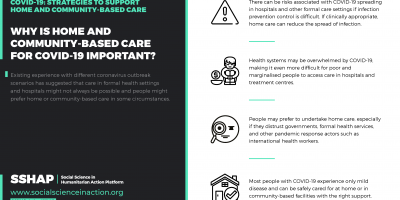
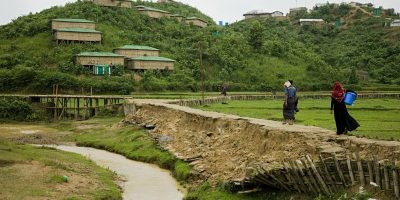
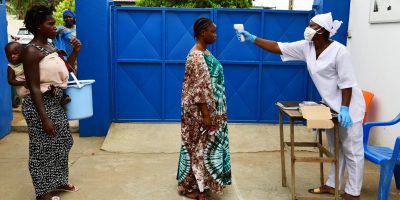
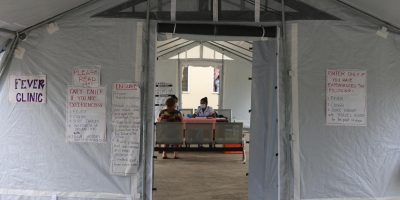
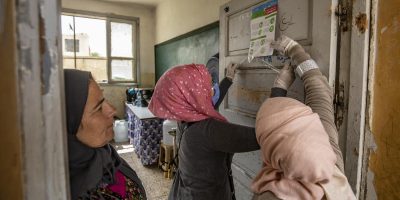
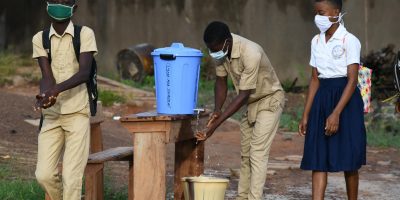
This Interim Guidance outlines how key public health and social measures needed to reduce the risk of COVID-19 spread and the impact of the disease can be adapted for use in low capacity and humanitarian settings. The recommendations outlined here…
A summary of suggested key social science research questions and their rationale to support and inform operational field research and response programming in sub-Saharan Africa.
This brief was developed for actors working “on the ground” in outbreak response in humanitarian programmes and contexts. It focuses on the importance, reasons and recommendations for how to ensure gender inclusivity in outbreak response, based on evidence and lessons…
This brief was developed for actors working “on the ground” in outbreak response in humanitarian programmes and contexts. It addresses recurrent programme recommendations, including strategies, interventions and activities, which resulted from social sciences analyses conducted by the CASS during the…
This brief was developed for actors working “on the ground” in humanitarian response programmes. It focuses on the importance, reasons and recommendations for minimising barriers to healthcare seeking in outbreak settings based on social sciences evidence from CASS studies undertaken during the Ebola…
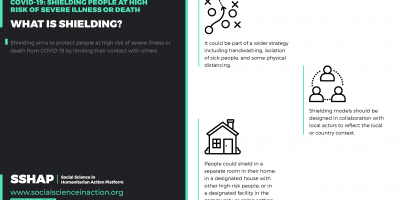
Including proposed approaches to shielding, who may be included in shielding groups, as well as the likely difficulties of these measures, and ways to mitigate them.
Public health officials fear elevated risk of COVID-19 spread during mass gatherings events, such as prayers, pilgrimages, communal meals, feasts and celebrations.
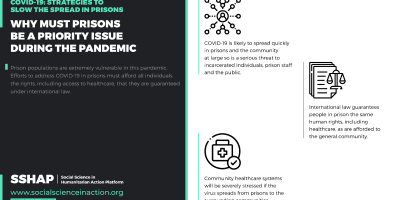
Particular risks associated with an outbreak in prisons in low-and middle-income countries and suggestions of some approaches that may be used to mitigate risks.
A collection bringing together seventeen anthropologists and historians in an effort to share ideas, analytical frameworks and concerns about the ongoing epidemic from interdisciplinary perspectives.
‘Big data’ has promised significant improvements for the global surveillance of infectious disease. This SSHAP Case Study highlights how, over the past two decades, new disease surveillance practices built on amassing and processing large data sets – analysed computationally to…
The revival of community and neighbourhood solidarities around COVID-19 are an example of how such social relationships are crucial in responding to uncertainty.
Health systems around the world struggle to respond to COVID-19 amidst declining trust in public authorities, andcitizen-led self-help groups often taking the lead in ways that are undervalued or ignored by policymakers.
In a fast moving and changing world, all kinds of uncertainty will emerge. We need leaders who will listen and adapt. Clear government directives from above are key, but we also need good coordination of local action.