Summary of key considerations
- Mobility across porous borders: Cross-border movement is sustained by family, trade, healthcare, and displacement. It varies by route, market day, gender, and conflict dynamics. Preparedness should focus on understanding mobility corridors and congregation points, not on assuming closures alone can stop transmission.
- Border closure impacts: Closures have affected but not eliminated movement, pushing people toward more insecure crossings. Despite closures, crossings via informal payments canfeed mistrust linking Ebola to revenue generation.
- Mass gatherings: Markets, funerals and religious events cause major mobility spikes (e.g., Mpondwe market rising to ~20,000 people on market days). Reductions have relied mainly on coercive enforcement rather than trust-building.
- Commerce: Cross-border trade is gendered, with women dominating informal trade in agricultural goods and cloth. Men dominate other border industries like informal cross-border movement of goods. Working with trade and transport associations, restrictions should be assessed for their effects on livelihoods, not just epidemiology.
- Informal and illicit trade networks: Smuggling and mining-related mobility (e.g., artisanal gold from Lubero exiting via Beni–Butembo–Kasindi to Uganda) are significant but less visible. Mapping these routes and actors can identify entry points for disease surveillance and risk communication.
- Securitisation: Military and security agencies heavily enforce border and epidemic control, with documented violence in areas like Kasese District. The public health response relies on coercion which risks undermining disease surveillance and care-seeking. Strengthening trusted community-based actors is key.
- Community-based surveillance (CBS): Village Health Team (VHT)-led CBS is active in parts of Uganda and has worked in past outbreaks. The priority should be integrating symptom reporting with local insights on mobility, rumours and avoidance, drawing on cross-border kinship networks.
- Health-seeking: Congolese women often seek medical care in Uganda, which becomes difficult when borders close, especially near border health centres. Ebola fears are already driving avoidance of facilities and self-medication; healers and private/religious providers should be engaged rather than stigmatised.
- Public authority: Trust and power vary by place, issue and time, so mapping local authority figures (elected leaders, VHTs, clan elders, healers, trade associations) is essential. This mapping should distinguish formal authority, enforcement capacity, and trusted mediators for sensitive issues.
- Socio-linguistic diversity: Borderlands are multilingual, and language choice carries political weight (e.g., Swahili’s military association in parts of Uganda). Risk communication needs careful, locally mapped language selection to build trust.
- Vulnerabilities: Women, fisherfolk, informal traders, refugees, cross-border schoolchildren and those in farming/mining/transport are disproportionately affected by closures and enforcement. Marginalised groups like the Batwa/Twa and Mbuti facehigh discrimination, requiring targeted engagement.
- Local expertise: Communities have extensive experience from past outbreaks, such as adapted burial practices and mutual aid in Uganda’s West Nile region in 2018, and refugee-led CBS in Bidibidi camp. This existing expertise should be reviewed and integrated into locally led interventions.
- Further SBS research: More research is needed on shifting mobility, closure effects, and local adaptations, especially on the under-studied DRC side. Given the outbreak’s proximity to mining areas, the priorities are research on miners’ mobility and health-seeking, and the impact of aid cuts on response capacity.
About this brief
The current outbreak of Bundibugyo Ebola virus, which was first confirmed in Ituri Province of the Democratic Republic of the Congo (DRC) on 15 May 2026, poses specific risks to neighbouring countries. Porous borders, histories of conflict and displacement, as well as strong social ties and trading across the border mean that transmission between countries is a risk. Indeed, it has already spread to Uganda. To date, Uganda has registered 20 cases, with 17 recoveries. The last patient was discharged on 16 July and the World Health Organization (WHO) declared the country Ebola free on 26 August. However, the outbreak in DRC remains in a phase of ‘intense transmission’1 and, given cross-border mobility between the two countries, Uganda continues to be on alert for the possibility of the re-introduction of the disease.
The aim of this brief is to synthesise existing social and behavioural science (SBS) evidence from the current and previous outbreaks on key socioeconomic and political dynamics in the Uganda-DRC borderlands. It focuses on evidence that is significant for designing effective, trustworthy, and contextually appropriate Ebola response and preparedness activities. We highlight the social impacts of the outbreak and its control measures; the contextual factors that might influence the implementation of different outbreak control strategies; and the opportunities for collaboration that strong cross-border ties in this region offer. An analysis of the social dynamics of borderland lives is intended to help design measures that are tailored to the realities on the ground and work with cross-border livelihoods, kinship, trade, public authority, and local expertise.
The brief focuses on cross-border livelihoods, mobility, and health-seeking, with particular attention to the risk of re-importation and preparedness considerations on the Ugandan side of the border. Other recent briefs from the Ituri Collective and the Multi Hazard Research Network (MHRN)2–5, as well as ongoing SBS work in the affected Provinces of DRC, focus more directly on key considerations for DRC.
We reviewed the available academic and grey literature, including outbreak bulletins from key agencies and results of ongoing rapid operational research. Luisa Enria led on the synthesis and writing, with substantial contextual inputs from Grace Akello and co-authors who provided in-depth revisions and additional information. We complemented this synthesis by sourcing analysis of the current situation from researchers based in Uganda’s borderland areas of Kasese and Pakwatch Districts (Bob Okello, Peter Kermundu and Moses Baluku). Godefroid Muzalia contributed an analysis report on the effects of DRC’s security dynamics on Ebola response measures in the country’s borderlands. The brief was then sent for review to five social scientists with expertise on Uganda, DRC, and cross-border livelihoods before being sent to FCDO and WHO reviewers.
The brief is limited by its focus primarily on English literature, with some in French. It is also limited by the rapid nature of the review which meant it was not possible to conduct a wide consultation with country and topic experts or to conduct empirical research.
Considérations clés
- Mobility across porous borders: The border between Uganda and DRC is highly porous, and cross-border movement is sustained by family ties, cultural practices, trade, healthcare, routine livelihoods, and conflict-related displacement. It therefore varies by route, market day, livelihood, gender, local conflict dynamics and access to services. People move across formal and informal crossings (known as panya roads), as well as taking water routes, and moving onward along transport corridors linking Ituri, North Kivu, Kasese, Bundibugyo, Pakwach, West Nile and Kampala. Preparedness efforts should therefore focus on understanding and managing mobility corridors, congregation points and reasons for movement, rather than assuming that closure alone can stop cross-border transmission.
- Border closure impacts: Ebola-related border closures have affected but not eliminated movement. Informal payments to border control actors and unmonitored informal crossings are common and continue. Closures are redirecting people to more insecure crossings. The extraction of informal payments at border points pre-dates Ebola, but now it means heightened mistrust as it feeds a perception that Ebola is linked to revenue generation.
- Mass gatherings: Mobility increases around weekly markets, funerals, religious events and other flashpoint days. Key markets include Mpondwe, Panyimur, Kasindi/ Ubiriha and Bunagana –Bunagana. At Mpondwe market, movement across the border can rise to 20,000 on market days. Reductions in movement through market and border closures have been achieved primarily through coercion and enforcement by security agencies rather than trust-building. Formal registration for public transport or religious events may be feasible but requires extensive consultation with trusted public authorities.
- Trade: Cross-border trade between DRC and Uganda is estimated to be worth around US$478 million, with a further US$320 million accounted to informal trade. Trade takes people across land and water onto third countries, and includes formal, informal, and illicit commodities. Trade is also gendered: women dominate informal trade in agricultural products, cosmetics and Kitenge cloth. The effects of previous closures therefore also had gendered effects, such as during the Covid-19 pandemic. Restrictions should be assessed not only for their epidemiological effect but for how they affect major routes and livelihoods for different groups. Engaging cross-border trading cooperatives, fishing associations, savings and credit groups, associations of business owners, and truck and motorbike riders’ associations, will be essential to identify transmission routes and co-develop feasible risk-reduction measures.
- Informal and illicit trade networks: Informal and illicit trade routes, including smuggling and mining-related mobility, are important but less visible dimensions of cross-border movement. Contraband and small-scale trade frequently move through informal crossings and payment systems that are widely known but unofficial. A significant proportion of artisanal gold produced in areas of DRC such as Lubero is estimated to exit the country through the Beni–Butembo–Kasindi route with Uganda as the primary destination. Mapping these routes and the actors involved will help to identify entry points for surveillance, risk communication, and negotiated risk-reduction measures.
- Securitisation: The military and other security agencies are heavily involved in enforcing border control and epidemic regulations. In some border areas such as Kasese District, this has led to documented instances of violence, and contributes to heightened mistrust, although relations with security actors vary across regions. Reliance on coercive enforcement risks undermining both surveillance and care-seeking. A major challenge for preparedness efforts is how to limit militarised enforcement and monitor abuses. Rather, they should seek to strengthen community-based surveillance through trusted, locally legitimate actors, which may include Village Health Teams (VHTs) or others depending on context.
- Community-based surveillance (CBS): CBS through VHTs is active in some parts of Uganda and has been used effectively in previous outbreaks. For the Uganda–DRC borderlands, a priority should be to develop integrated surveillance that combines reporting of symptoms and events with qualitative and local insights on mobility, livelihoods, informal crossings, health-seeking, rumours, changing enforcement practices, and emerging avoidance of services. Lessons can be learned from long-standing mechanisms for observing movement and reporting concerns through cross-border kinship networks. This would make surveillance more responsive to realities on the ground.
- Health-seeking: Cross-border health-seeking from DRC is driven by perceived better care in Uganda, conflict-related access challenges in DRC, family ties, and the specialised expertise of herbalists and spiritual healers. Congolese women often seek medical care at health centres in Uganda. This becomes difficult when the border is closed, especially if the health centre is located close to the border (e.g., Dei, Pakwach district). Fears surrounding Ebola are already leading to avoidance of health facilities, self-medication and delayed treatment, while restrictions on crossing can interrupt routine and emergency care. Engaging health professional associations, pharmacies, private and religious facilities is key. Healers are often stigmatised or banned during outbreaks, missing an opportunity to engage their expertise and leverage their position as trusted practitioners who people continue to seek out.
- Public authority: Communities are not homogeneous, and who is trusted or powerful differs by place, issue, and over time. Mapping power in different borderland regions, identifying trusted collectives and individuals can help identify the right intermediaries for community engagement. This may include including elected local leaders, VHTs, non-governmental organisation (NGO) workers, religious leaders, clan elders, cultural institutions, trade and savings associations, healers, youth groups, political and security actors. This mapping should distinguish between actors who hold formal authority; centralised and decentralised forms of traditional authority; actors who can enforce decisions; and actors who are trusted enough to mediate sensitive issues such as funerals and health-seeking. It should also include groups that are normally overlooked such as clan elders or cultural institutions that can convene herbalists and spiritual healers.
- Sociolinguistic diversity: Borderlands are diverse multilingual spaces, and language choices carry political meanings. Risk communication, community engagement, and other response activities need to take this into account to design targeted, locally appropriate interventions and to build trust. This should start with identifying comprehensive mapping of appropriate languages for communication across different border communities. In some parts of Uganda, for example, Swahili has historically been associated with the military. Caution is therefore necessary when choosing which language to use for messaging.
- Vulnerabilities: Some groups are more vulnerable to the risk of contracting Ebola and of being negatively affected by the socioeconomic impacts of disease control regulations. Women are particularly at risk because of their roles as primary caregivers and frontline workers. Fisherfolk, informal traders, refugees, children attending school across the border, and people whose livelihoods depend on farming, mining, fishing or transport may also be disproportionately affected by closures and enforcement. Ethic groups such as the Batwa/Twa on DRC side and Twa/Mbuti in Uganda have historically been discriminated, including in healthcare settings, which may make them less likely to engage with formal response structures. Targeted engagement strategies should be developed to understand and respond to these groups’ specific vulnerabilities, concerns and experiences.
- Local expertise: People in Uganda and DRC have experienced several Ebola outbreaks. Awareness is high and there is extensive knowledge on the ground on how to respond. In the 2018 Ebola outbreak for example, people reported cases in the West Nile region of Uganda, adapted burial practices and organised mutual aid to cope with the effects of restrictions. In refugee camps such as Bibibidi in Yumbe District, refugees have been conducting effective CBS based on their expertise as health workers in South Sudan. These adaptations and existing expertise should be reviewed and integrated in the co-development of locally led interventions.
- Further SBS research: More, ongoing research is needed on current cross-border dynamics including shifting mobility patterns, the effects of border closures and securitisation, local adaptations and the effectiveness of different disease control and community engagement strategies is required. This is especially the case for the DRC-side of borderlands, where evidence is currently more limited, including due to access challenges. Given the proximity of the outbreak epicentre to mining activities, it is also important to conduct more specific research on miners’ mobility and health seeking pathways, as this is currently not available. The current outbreak is taking place in the aftermath of significant cuts to overseas aid that previously supported response and preparedness activities as well as local NGO mobilisation – it is important to assess the effects these cuts are having. In this context, understanding how health providers are balancing the provision of routine care and a pivot to Ebola response is crucial both for ensuring continuity of care and as disruptions in services can affect willingness to engage with the health system.
Borderlands: Socioeconomic characteristics
Geography
Uganda shares a 765km border with DRC. Part of this border is across two lakes, Lake Edward (bordering Kasese and Kanugu districts) and Lake Albert (bordering Ntoroko, Kagadi, Kikuube, Hoima and Buliisa districts), where demarcation of territory can be unclear.6 In addition, River Lubhiriha separates DRC from Uganda, including around the Kasese-Bwera-Mpwonde area. The current outbreak in DRC, focused primarily in Ituri province, has prompted the Ugandan government to classify around 36 districts as facing heightened risk, including western border districts of Bundibugyo, Ntoroko and Kasese as well as northern districts, Arua, Adjumani, Yumbe, Lamwo, Moyo, Koboko and Obongi.7,8 There are at least 65 gazetted points of entry in Uganda, and 35 of these have been identified as significant for the current outbreak, although it is recognised that there are many more informal crossing points.9
Cross-border social ties, ethnicity and language
Formal borders do not reflect social structures, family ties, culture, and practices that connect people across each side of the border.10 People marry, trade and socialise across the border. As a respondent in a study on borderland livelihoods during the 2018 Ebola outbreak put it, ‘we are one family, one tribe’.10 Members of the same extended family are often found across sides of the border, including polygamous families where the head of household maintains families on both sides. Groups such as the Lukonjo in Uganda and the Nande in DRC are seen as being part of the same ethno-linguistic family. There is however also great linguistic diversity in these border regions. In West Nile Districts (e.g., Arua, Adjumani, Moyo etc) several languages are found, including Lugbara, Ma’di, Aringa, Alur and Kinubi, all of which also have dialectical variations, as well as additional languages spoken by refugees residing in borderland settlements (although Lugbara and Alur would be intelligible to many in the region).11 Having said that, many of the languages are similar or can be intelligible to many in the region (e.g., Lugbara and Alur or Lukonjo and Nande with are the same in the Rwenzori region, and similarities between Kinyarwanda and Kirundi).
People in Kasese speak primarily Lukhonzo and, due to long-standing interactions with neighbouring languages, can also converse in Swahili, especially for the purposes of trade. Indeed, across the region people are multilingual due to trade and cross-border kinship. English is spoken primarily by the educated. Swahili is the official language of the East African Community and it is spoken by Congolese refugees. However, in Uganda it can also be associated in some areas with the military.11 Caution is therefore necessary when determining which languages are appropriate for public health messaging in different border localities. Local radios offer programming in different local languages. The recent closure of media houses in Uganda poses a risk to the valued role that radios play in risk communication.12
Livelihoods and cross-border trade
Livelihoods in Uganda’s borderlands range from smallholder farming (mostly for subsistence, with surplus harvest sold in local markets), cattle keeping, fishing and trade. Many of these activities take place across the border. For example, fishing brings people along the White Nile as it enters Lake Albert so people frequently cross the border to tend to their gardens and farms. Moreover, herdsmen move across parks and borders to graze their cattle. Natural resource extraction also takes place across borders as people mine for sand along River Lubiriha, which forms part of the border.
Trade, including formal, informal and smuggling activities (e.g., of fuel, cigarettes or skin lightening cosmetics), is another important cross-border activity. In 2024, formal trade from Uganda to DRC was estimated to be worth around US$478 million, with the top product being cement.13 Key trading routes include Mpwonde, Bundibugyo, Bunagana and Goli as well as established routes through Arua and Ariwara market in Ituri.6 Both countries are members of the Common Market for East and Southern Africa (COMESA) trade bloc and there have been efforts in recent years to reduce non-tariff barriers to trade. Political elites, military and other influential people are involved in trade, and profits often come from underreporting to avoid taxation. In previous Ebola outbreaks, there were concerns that border surveillance may be seen as potentially disruptive, increasing scrutiny on movements of goods and people across the border.6
Informal trade has also increased in significance, being valued at around US$320 million in 2021.14 Informal trade is a key livelihood strategy. Whilst the majority of informal traders are women, male traders tend to make higher profits.15 Traded goods include palm oil, plantains, cosmetics, motorcycle, livestock, cocoa and coffee and Kitenge fabric from DRC, with the latter being particularly profitable. Some ethnic groups specialise in trade of specific commodities, for example the Bankozo trade coffee on the Congolese sides. Commodities such as coffee can be traded both formally and informally as it can be brought in alongside food crops to go undetected or as it is traded formally to cover the trade of other goods such as minerals.16 Overall, although specific regulations frequently change, avoidance of state oversight is significant and driven by both informal and illicit trade.
Trade is also gendered. For example, women dominate the trade of Kitenge cloth and cosmetics whilst men trade motorcycles, which are cheaper on the DRC side. Agricultural commodities and fish remain important commodities despite being constrained by security concerns and regulations. For example, salted fish is traded from Lakes George and Edward into DRC. The modes of transport traders take is also relevant for epidemic management as poorer traders in centres like Arua often take overloaded vehicles.
Informal commodities such as cigarettes, motorbikes, rice and petrol are cheaper in DRC and are therefore frequently smuggled into Uganda.15 Goods can also come in and out of the border. For example, as goods arrive into Uganda from a third country, they are marked as being in transit to DRC to avoid taxation, but are instead smuggled back into Uganda.15 Small-scale informal trade is often subject to informal taxation, including at informal crossings through civilian ‘agents’ working for the government.15 These practices – whilst not official – are widely known and implemented.17 Contraband is estimated to arrive through approximately 300 routes, primarily through informal crossings, including gold, ivory and timber especially from deforested areas of Ituri.6 Mining is another important livelihood, and it is often outside state control. Around 20 per cent of artisanal gold produced in areas of DRC such as Lubero is estimated to exit the country through the Beni–Butembo–Kasindi route with Uganda as primary destination.16 Mining is organised around networks of ‘big men’ (people with capital to invest and connections to networks of local intermediaries and in political centres in DRC).18 Mapping how these key power structures extend to Uganda through the mining trade could identify key entry points for the current Ebola response.
Public authority in borderlands
Border areas remain politically marginalised, and histories of fragile relations with central government authorities has shaped (mis)trust in public health interventions. Whilst in Uganda mistrust of public authorities relates to experiences of state presence or interference, it is important to note that in DRC the state is less visible. Years of conflict in DRC have especially undermined trust in government authorities and international actors and this is sometimes exploited by armed groups.19
In Uganda, perceptions of corruption, e.g., through informal taxation to transport goods not only drive trade to informal crossings, they also reduce trust in officials seen to work for their own profit.10 Power mapping exercises in Uganda’s border districts in the context of previous outbreaks have highlighted that higher levels of trust lie in local leaders such as Local Council I members (who are elected at village level by their constituents), NGO workers who are seen as impartial, Village Health Teams and traditional healers.10,20 Marginalised groups such as fisherfolk had particularly low trust in official authorities, and particularly in the military given the latter’s frequent seizing of their business.6 This is also true for DRC, where the military are known for this practice. The presence of the Ugandan army in Ituri (discussed further below) is also looked at with major suspicion by the Congolese, especially given the military’s involvement in the natural resources trade and looting in the past.
Chiefdoms and clan structures are also important forms of social organisation and can stretch across the border. For example, Alur people on both sides of the border (Pakwach in Uganda and Mahagi territory in DRC’s Ituri province), are subjects of the same chiefdom whose royal palace in is in Panyimur, on the Ugandan side. Clans can be influential especially in rural areas of Uganda. They tend to be presided over by male elders and each clan is associated with its own totems, taboos and social responsibilities which serve to maintain social order and continuity. However, they are rarely mobilised for public health responses, despite being organised into district-level associations that have experience of collaborating with NGOs in other areas.10,11
Previous research in the 2018 Ebola outbreak in DRC noted a dearth of in-depth analysis on the dynamics of power and mistrust.21 In the Grand Nord, it was noted that the conflict had removed ‘ready-made authority mechanisms and trusted networks…making engagement difficult’.22 Ongoing SBS research in Ituri during the current outbreak shows a particularly important role for religious leaders as well as male heads of households.23 Detailed empirical mapping of power and how this is affected by current conflict and epidemic dynamics can provide more granular insights into public authority.24
Vulnerabilities
Some groups may require consideration either because of their exposure to the risk of Ebola and/or due to their existing marginalisation. These include fisherfolk, who are especially marginalised and economically disadvantaged, often facing debt, health risks such as cholera and schistosomiasis, and frequent abuse and extortion from military, armed groups, and border officials.6,25 As discussed further below, women face particular risks as primary caregivers and frontline health workers, as well as due to gendered patterns of cross-border mobility discussed further below. Ethno-linguistic groups such as the Batwa/ Twa on DRC side and Twa/ Mbuti on the Ugandan side are also often discriminated against, leading to disengagement from formal healthcare and authority structures.26 Other ethnic groups such as the Banyabindi and Basongora in Kasese or the Lendu and Bagungu in Pakwach similarly face discrimination, some of which is linked to regional conflict and displacement (e.g., the arrival of the Basongora following conflict in Eastern DRC in the mid-2000s). Some, like the Banyabindi, have been asking to be organised in a separate chiefdom.
Children may be particularly vulnerable to the socioeconomic consequences of an Ebola outbreak as border closures and emergency regulations can affect school attendance, especially for those attending school across the border. Structural vulnerabilities also explain long-term risks and Ebola resurgence, including large-scale displacement due to conflict and natural disasters, and poverty that pushes people to engage in activities that may increase exposure despite their knowledge of the risks (see more below), poor access to clean water and weak health systems.27 Indeed, in some communities, such as in areas of Pakwach District, people have been questioning the urgency of Ebola versus their concerns that cholera is more likely to affect their lives. This highlights that a key problem, rather than lack of awareness around Ebola, is the fact that Ebola emerges in a context of intersecting crises and disadvantage. This means there is a need for long-term, holistic approaches to thinking about cross-border epidemic preparedness.27
Cross-border mobility patterns
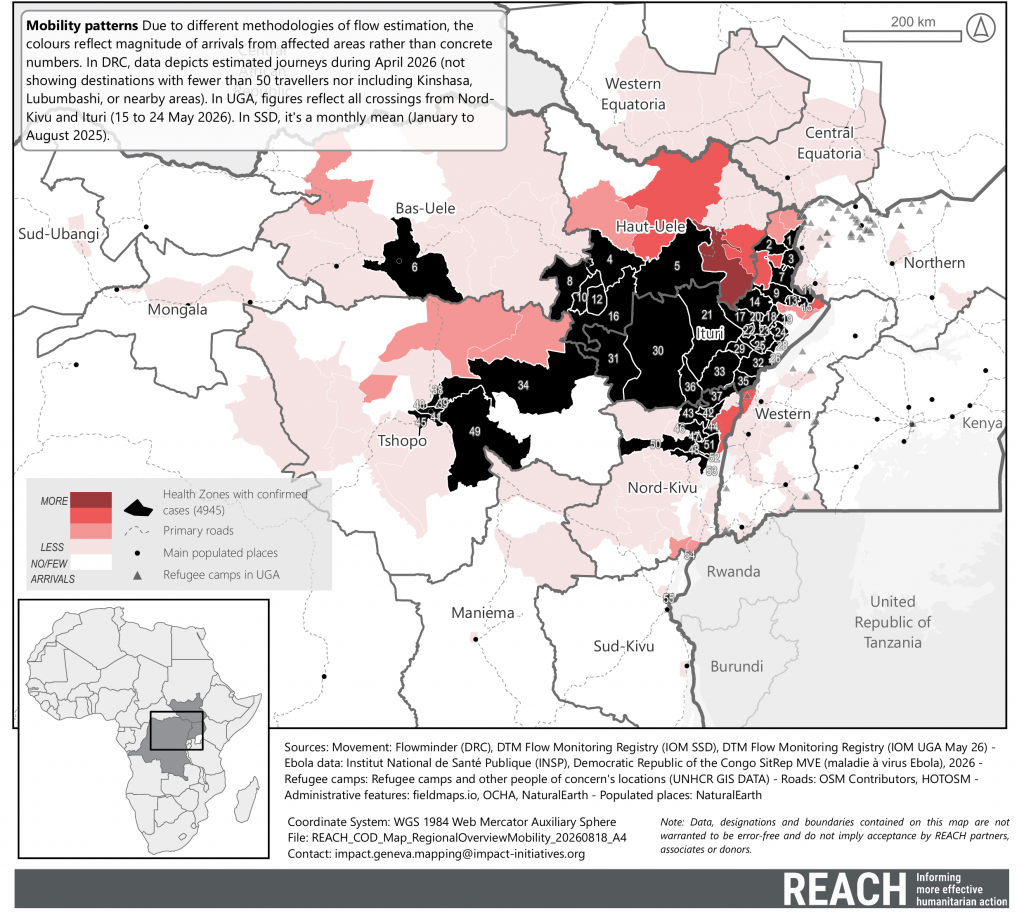
Recent analysis demonstrates that the current outbreak has spread along major transport corridors and trading routes and highlights substantial population movements linking affected areas of Ituri and North Kivu with neighbouring countries, including Uganda.28,29 The analysis identifies mobility pathways through key urban centres, markets and transport hubs, reinforcing the need to focus preparedness efforts on mobility systems and congregation points. These routes represent risks for transmission, but also opportunities for risk communication and community engagement (see Figure 1). A limitation of this analysis is that mobility into Uganda is based on formal data, which is likely to miss informal crossings. Similarly, mobility data from databases such as Flowminder, which draw on mobile data, also have limitations, e.g., as they rely on a single network provider, and challenges around network coverage and mobile phone access.
Figure 1: Health zones (DRC) and borderland counties (in Uganda and South Sudan) at risk of Ebola, based on historical mobility patterns
Formal and informal crossing points and key routes
The Uganda-DRC border is porous, and people use both formal crossing and informal paths known as panya. In Kasese District, for example, each border village was estimated to have at least four unofficial crossing routes The closure of the Ugandan border on the 27 May has pushed people towards informal crossings, and the closure of Cyanika crossing between Uganda and Rwanda which many Congolese used after crossing into Rwanda from Gisenyi through popular bus routes from Goma and Butembo is likely to have the same effect as it did during previous outbreaks with people having to opt for less secure routes.30
Major routes for movement include Kasindi–Mpwonde–Kasese, Beni–Mbau–Kamango–Bundibugyo–Fort Portal and the Kabale–Kisoro road which reaches as far as Kampala.6 An International Organization for Migration (IOM) flow monitoring exercise carried out in May 2026, prior to the border closure, at selected border points found that most movement was coming through Cyanika (on the Rwanda–Uganda border), Busunga and Bunagana.31 Most people crossing from DRC were from North Kivu, Ituri and Haute–Uele, with movement from North Kivu primarily coming through Busunga, Bunagana and Mpownde while movement from Ituri came through Goli and Vurra crossings. A population mobility mapping identified additionally important routes relevant to the outbreak such as the Bunia to Kasenyi and Tchomia via Lake Albert for the fish trade, Bunia to Mahagi towards Uganda via Road 27 used by approximately 2,000 people every day and Bunia to Aru to Kengezi via Road 27 to Uganda through Offoo point of entry.32 From Bunia specifically, it is possible to travel to Kasenyi (for US$10), cross Lake Albert (US$30) and reach Kampala (US$25).2 River Lubhiriha can be crossed by wading by foot in parts and the Lakes can be crossed by boat, often with limited oversight from port health.
Border control and monitoring
Border control infrastructure can vary on either side of the border (e.g., a Mpwonde crossing there is more formal control on the Ugandan side), while in some areas such as Arua people perceived that Congolese could pass more easily while Ugandans feared violence and fines when crossing.6,11 Visas have been scrapped for crossing, although there are requirements such as Yellow Fever certificates and informal payments remain common. Research in Uganda has highlighted that crossing is often at the discretion of border officials, who for example have in the past refused to stamp passports for Ugandan researchers to cross the border on the basis that they might be arrested in DRC by armed groups demanding ransom. Particularly for people living in borderlands, it can be easy to cross the border, although the outbreak seems to be changing these dynamics in what is perceived as political moves to isolate Congolese nationals out of the many who have Ugandan travel documents, for example through recently reported deportations. A very large number of agencies are involved in border control on both sides (at least eight on the Ugandan side and five on the DRC side)[1], making coordination sometimes difficult.15 The military and other security agencies play an important role in border control and the enforcement of outbreak measures, as well as having presence on some of the panya roads. In Uganda, this military surveillance has been present since the Covid-19 pandemic, but the presence of armed personnel on both formal and informal crossings has intensified since the emergence of Ebola in DRC (see more below). The Uganda People’s Defence Force’s (UPDF) marine unit has also established radar surveillance systems on the water.
Since the onset of the Ebola outbreak, the Ugandan border has been officially closed. There are however several caveats. People crossing by foot are officially not allowed to cross, whilst truck drivers are permitted if they have necessary clearance from the Ugandan Revenue Authority. In practice, reports from Pakwach and Kasese District note that people with financial resources can cross and move goods through informal payments. In Pakwach, these payments were estimated to be between UGX 2,000-5,000. These payments have been reported to undermine trust in the Ebola response as people, not unreasonably, perceive it as an opportunity for the military to make money.
IOM and other agencies are supporting screening for Ebola and the training of frontline workers at border points. Screening for Ebola is also ongoing at Ugandan airports, although recent observations have noted that soldiers encourage people to mark ‘no’ for Ebola symptoms and not to mention travel to DRC on landing forms. In border posts in Kasese and Pakwach, screening and hand-washing were observed to be implemented inconsistently. At the Dei border crossing, the government and international partners have established an Ebola screening tent composed of Village Health Team (VHT) members supported by security personnel, and crossing was conducted between 7am and 7pm. In Kasese the isolation centre at Bwera hospital has been reactivated and a treatment centre was established at Kagando hospital.
Reasons for and modes of movement
Much movement in border areas is circular, that is, people coming from either side to sell commodities and then going back to their homes.10 IOM flow monitoring highlights that major reasons for moving are economic (33 per cent for the period of observation), family (19 per cent), and return (17 per cent), purchasing goods (9 per cent), conflict related movement (8 per cent) and healthcare (3 per cent), although this is likely to be underreported. Water has also been highlighted as a reason for movement in some border areas, for example in Bunagana because there were no sources of clean water in town and residents had to cross to fetch clean water.10 A study on the 2018–19 outbreak showed that although people like truck and motorbike riders had knowledge of Ebola risks and indeed feared infection, they felt they could not forego the payments (for example for carrying a dead body or a sick person on a boda boda) due to economic insecurity.10 Mining-related mobility can be harder to trace because much is done through informal routes; this requires further research. During the last Ebola outbreak, it was noted that women in Kasese were more likely to cross the border, not only because they were involved in informal trade and farming across the border, but also because their husbands had found that violence from soldiers had increased for men seeking to cross.33 These movements are likely to be very specific to each location and depend on the nature of local livelihood strategies and the gendered patterns of different types of trade.
Effects of Ebola on mobility and cross-border livelihoods
Border closures, albeit implemented in ad hoc ways as noted above, are having significant impacts on mobility and cross-border livelihoods. New, less secure, informal routes have emerged, for example through the forested area of the Queen Elizabeth National Park. People are more likely to travel at night when border surveillance is more limited. Border crossings for health-seeking continue but people who are visibly sick have been stopped and travellers are asked to show official referral forms to be able to cross. Records at Dei Health Facility (Pakwach District) have shown an estimated fall in attendance of approximately 55 per cent (this could also partly be due to local avoidance due to Ebola). Refusals of crossings for previously routine visits have been reported in some areas to have had significant consequences, for example in Pakwach there were reports of a woman from DRC who died during childbirth after having been unable to attend her regular antenatal services in Uganda.
Livelihoods have also been negatively affected. Farmers in Kasese reported concerns about being unable to tend to their farms and gardens across the border in the approaching rainy season. Also, in Kasese, restrictions to sand mining have been challenged, for example in a violent confrontation with military officers who attacked a woman who contested the connection between Ebola regulations and cessation of mining activities. School pupils from DRC have been absent from school. Commodity costs have increased (e.g., a bag of rice in Dei and Panyimur has gone up from UGX 65,000 to 75,000). Market closures, including the fish market in Payimur and the market in Mpondwe. Although traders are reportedly operating outside the closed market gates, activities have reportedly greatly reduced with traders unable to cross for markets on either side. The fact that markets only slightly further away from the border such as Kinyamaseke or Kisinga remain open have raised questions about the consistency of regulations.
Markets and market days
Movement across the border does not appear to be especially seasonal but market days determine movement across different entry points on different days of the week. There are markets on both sides of the border that alternate days and specialise in particular goods. Key market areas include Mpondwe which attracts goods from a large area and specialises in Ugandan livestock and a fish market in Panyimur. Movement at Mpwonde border crossing has been estimated to rise as high at 20,000 per day on market days.34 On the Congolese side of the border the Kasindi/Ubiriha market sells charcoal and timber.15 Buangana is another important market.
Funérailles
Funerary practices have been a central concern of Ebola response efforts, given the risks of transmission associated with the handling of dead bodies. As authors of the Ituri collective have noted, ‘there is nothing specifically African or Congolese in the desire to organise funerals that are respectful of the deceased’, and all societies have their practices.3 Some aspects of funerary practices in the region that may be relevant for disease control include the arrival of relatives to visit the dying or deceased which may include direct contact as part of saying goodbye to a loved one, greetings that involve physical contact, and the washing of bodies. In Ituri, one practice that has been highlighted is the moving of limbs after death.3 Wakes may include gathering around the deceased, and in some occasions physical contact.
Given the strong social ties and family networks across the border, funerals attract movement across the border (as do other events such as weddings). In the West Nile region of Uganda, for example (but this is also true for other communities), bodies of the deceased are normally brought back either to their ancestral town if they are men or to their husband’s town if they are women, including using public transport if necessary.11 Funerals happen rapidly after death and require attendance from anybody connected to the deceased and the size of the funeral increases with prominence. Attendance to funerals from across the border has been reported to have reduced in the current outbreak, with examples in Pakwach showing that border security and the imposition of a quarantine for travellers returning from DRC, meant that family members did not attend the funeral. Given recurrent experience with Ebola epidemics in recent years, there has already been substantial, community-led adjustment of burial practices towards safe and dignified procedures, for example amongst communities in the West Nile region.
Decisions about adjustments to mass gatherings such as funerals would be taken by clan or family elders and then communicated widely through a megaphone (muzindalo). A recent death in Kasese for example saw district authorities engaging elders to postpone the burial until a negative test result was confirmed. This was however also enforced through the deployment of police officers. Considerations around the feasibility of event registration in Kasese and Pakwach suggested that registration at funerals may be difficult given that they are large informal arrangements with fluid movement of people, while this may be easier to arrange for public transport. In those Districts, VHTs were seen as the most reliable mechanism for tracing attendance and movement given their role in community-based surveillance.
Réfugiés
Uganda is host to over 2 million refugees and asylum seekers of which, according to latest estimates, 670,240 are from DRC and 1,059,650 from South Sudan (UNHCR, 31 August 2026). It is however, not always clear who is a refugee. In Kasese district, for example, people joined their kin across the border in Uganda due to insecurity in DRC and stayed as guests until they felt safe and regularly travelled back and forth. Refugee settlements near the DRC border include Rhino that stretches between Madi Okollo and Terego Districts, Kyangwali in Kikuube, Kyaka II in Kyegegwa Nakivale in Isingiro.8 Other significant settlements in heightened risk districts include Palabek in Lamwo and Bidibidi in Yumbe. Official transit points for refugees include Kisoro, Bundibugyo and Matanda, where refugees are temporarily accommodated while being registered .6 Ninety two per cent of Uganda’s refugees live in settlements alongside host communities rather than formal camps. This sometimes leads to tensions with host communities over issues such as land allocation.35 Refugees and migrants from Congo may also be subject to discrimination due to the association with the current epidemic. On the other hand, the categories of host and refugee may not always capture the realities of cross-border mobility, for example South Sudanese who were born in Uganda during previous displacement, returned to South Sudan and came back.
Border closures and the suspension of asylum admissions have been noted to pose a risk of increasing irregular movement through informal crossings. In DRC, no refugees have yet been reported to have contracted Ebola, however 19 IDPs from Kpangba, Kigonze and Beyembi sites in Ituri have and over 2 million displaced people reside in high-risk areas, including 320,000 refugees and asylum seekers.36
There may be important, unexplored, opportunities for refugee-led Ebola response in some of these settlements. Recent research in Bidibidi settlement in Yumbe, Uganda, for example has shown significant capacity of VHTs in conducting community-based surveillance (including compared to local CBS) as they are often led by formally trained and experienced South Sudanese health workers who are underemployed in Uganda.37,38
Conflict dynamics and securitisation
Dynamique des conflits
Borderlands have long been grounds for recruitment of rebel groups for Uganda’s periods of conflict and DRC’s ongoing wars, due to widespread resistance towards state control.6 Ugandan armed groups such as the Allied Democratic Forces (ADF) have survived across the border and this contributes to occasional deployment of the Ugandan military across the border. Operation Shujaa in 2021 highlights the links between conflict dynamics and trade interests that offer important context for understanding cross-border dynamics.16 The Operation was intended to target ADF forces following a suicide attempt in Kampala, yet the operation gradually expanded. In February 2025 the UDPF, the Ugandan military, entered Mahagi in Ituri province. These incursions have been understood not simply as addressing security concerns but also to shore up Uganda’s ‘zone of interest’ in DRC from perceived Rwanda’s expansion through their backing of the M23 rebel group. Part of the operation, for example, was in order to support the construction of a road from Goma to Bunagana. Given the role that the Ugandan army has played in the Second Congo war, Ugandan presence, especially in Ituri, is perceived with suspicion both by Congolese authorities and the population.
Ugandan military deployment to border areas increases periodically in response to perceived threats from DRC armed groups. In addition, armed groups in the borderlands are directly involved in local trade as a way to fund their activities, as well as selling protection to civilians.6 Other recent conflicts that have been found to influence distrust of central government during previous Ebola outbreaks were for example tensions in the Rwenzori region of Uganda, particularly following a police raid of the Rwenzururu royal palace resulting in the killing of eight royal guards.
Borderland territories on the DRC side of the border are directly affected by ongoing conflict, creating particular challenges for the Ebola response (see Villa et coll. (2026) for a more detailed overview of conflict dynamics in DRC and their relevance for the epidemic5). Djugu territory in Ituri Province, which borders Uganda’s Zombo District, for example, has experienced recurrent violence by local armed groups such as the Cooperative for the Development of the Congo (CODECO). This has resulted in significant internal displacement of households who now face significant shortages of food, safe drinking water, healthcare and other services, and who, due to insecurity, are difficult to access. Attacks on IDP sites have caused people to relocate frequently, including when they are taking care of sick ones. Protracted violence, as noted above, has led to people from Ituri settling in Uganda.
Securitisation of the border and epidemic control
Securitisation of disease control has a long history in Uganda, including in colonial management of sleeping sickness. The Ugandan military was already involved in the 2000–1 Ebola outbreak which took place in Northern war zones. There were reports at the time of human rights violations, yet the involvement of the military in that outbreak has since become a blueprint for future outbreak control.39 The UDPF for example was tasked with enforcing the Covid-19 lockdown together with local paramilitary units. There were accounts of beatings that then led to perceptions that the pandemic was an effort to expand state power and that vaccines were means for the military to monitor people.39 Research in Pakwach and Kasese during Covid-19 showed that the use of Covid-19 regulation to strengthen local power through militarisation led to people developing ‘new modes of mutuality to resist and subvert regulations’, suggesting that this actually undermined the effectiveness of epidemic management.40 In this context, regulations and militarisation had a larger effect on the population (through losses in livelihoods and violence) than the pandemic itself. Forceful enforcement of regulations, including the arrest and isolation of asymptomatic Covid-19 patients also eroded trust as well as giving rise to social tensions, with reports of people using the regulations to report neighbours with whom they had land disputes to the Covid-19 task force.41 The militarisation of the mandatory roll-out of the Covid-19 vaccine has also been assessed to have had counter-productive impacts on routine vaccination programmes, although uptake of the Covid-19 vaccine was high.42
Current reports from the Ugandan border suggest that similar dynamics are at play in the face of the Bundibugyo epidemic. In Dei, in Pakwach, the number of UDPF personnel rose from approximately 60 to 200. The military’s prominent role in border control (including along panya roads) and enforcement of health emergency regulations has meant that they are also the ones benefiting from bribes for border crossings. The military also have a presence in some health facilities, for example conducting screenings at Bwera hospital and enforcing the wearing of masks (which they also sell). As noted above, this has contributed to perceptions of Ebola as a money-making opportunity at the expense of people’s livelihoods.
Violence has also been reported, for example in the confrontations over sand mining noted above or the beating of a pregnant woman trying to cross for antenatal care in Dei, Pakwach District in June 2026. For some living in borderlands, this militarisation appears to produce stricter Ebola-related restrictions on the Uganda side rather than the DRC side. Given that the disease is affecting DRC much more, this raises questions as to whether restrictions are serving interests beyond public health. It is worth noting that relations between the military and borderlands people may vary in different regions, and violence and bribes were reported in our empirical research in two districts. In other areas, such as West Nile region, the military have been involved in helping to transport sick people to the hospital and relations may be less tense.
Santé
Health infrastructure and medical pluralism
Uganda has a mixed health system comprising public health facilities, private not for profit and private for-profit facilities and actors. State facilities are organised by administrative units from VHTs at village level to regional referral hospitals (e.g., in Arua). Research has shown that private healthcare dominates significantly, especially as people tend to visit pharmacies to purchase treatment or visit herbalists and spiritual healers for specific conditions.43,44 Choice of provider is determined by cost and type of illness as well as demographic characteristics such as level of education and age. Public and private facilities may be a first port of call for common illnesses such as malaria and typhoid but if symptoms continue alternatives may be sought and multiple pathways may be followed at once.11
Herbalists treat using herbal remedies and are different from spiritual healers, whilst religious healers such as charismatic Christian practitioners and Islamic faith healing in Muslim-majority areas like Yumbe are increasingly significant (and there are often overlaps between Christian, Islamic and ‘traditional’ knowledge).11,45 Herbalists are particularly sought out for chronic conditions such as diabetes while spiritual healers might be called upon for mental health concerns.26 Healing is often carried out very privately, given it can be viewed negatively, including by Christianity and Islam. On both sides of the border, sudden deaths, including from known medical conditions, can be explained as poisoning and require investigation but it is taboo to speak of poisoning publicly.2,11Across Ebola outbreaks, healing practices and ceremonies have been identified as carrying risks of transmissions due to the touching of sick bodies and the lack of protective equipment. The direct involvement of healers in response activities has helped mitigate this, but opportunities are often missed to involve healers more substantially, drawing on their expertise and social status rather than relying on healing bans or livelihood diversion.46
Trust in different types of health services also affect choice of practitioner. For example, state facilities in Uganda’s border areas such as Hoima, Kasese and Kisoro were seen by residents as providing limited care, shortages of medicines and having long waiting times, unless one could pay to get the attention of healthcare workers.26 Some ethnic groups like the Batwa were particularly discriminated against in health facilities, encouraging them to seek herbal medicine instead. Healthcare workers being unpaid or paid late undermined morale further eroding relations with patients. Experiences of health staff having to work during the Covid-19 pandemic without adequate protection, for example in the West Nile region, mean that feelings of vulnerability can resurface during new outbreaks.
DRC has a similarly pluralistic healthcare landscape, although less data is available on healthcare utilisation.47 The system operates on a four-tier model: university hospitals, provincial hospitals, reference health centres and community health centres. Faith-based facilities are also important and, although officially integrated in the national system, they operate often in parallel. Overall, chronic underfunding of the system means that there are recurrent shortages of medicines and staff are unpaid or under-paid. Private facilities tend to be more trusted and perceived to provide higher quality care.48 Pharmacies and informal providers and self-medication are the first port of call for many, particularly among the poor. In Tshopo province, traditional healers were found to serve many of the basic functions expected of Community Health Workers.49 This is both because healers are found to be more affordable and accessible, and because of local distinctions between spheres of disease, some of which can only be treated by healers (e.g., illnesses such as fota itoko, a febrile illness accompanied by diarrhoea amongst children). The Ministry of Health recognises six categories of healers: pythotherapists, herbalists, naturalists, spiritualists, exorcists and ritualists, although categories overlap.50
Cross-border health-seeking
Despite the Ugandan health system’s struggles with inadequate financing and shortages of staff, medicines and diagnostics, it still manages to deliver a robust package of health services that attract people from across the border, with a high number of patients along border areas coming from DRC and South Sudan. Early imported cases of BVD reflect this confidence in the system.
Congolese residents frequently cross the border to access healthcare in Uganda, where services are perceived to be higher quality. Arua referral hospital, for example, is a regional hub of care often frequented by Congolese patients. Research with health workers in Kasese showed that they perceived Congolese as their kin and as such would not refuse healthcare. Referral hospitals in Uganda also frequently treat Congolese residents and there is some evidence that this includes treatment of combatants from the conflict in DRC.6 It is particularly common for Congolese women married into Ugandan families but residing in DRC to cross the border and stay with family to seek healthcare at Ugandan facilities or from healers along the border.11 Observations in Pakwach District noted perceptions that healers in DRC had specialised knowledge, driving some cross border visits. The IOM flow monitoring mentioned above identified 3 per cent of cross-border movement in the week of observation to be associated with health-seeking, and this is likely to be higher considering unobserved crossings.
Effects of Ebola on health-seeking
It is well documented across Ebola outbreaks in the region and beyond that these epidemics can affect health-seeking. In Congo during the 2018-19 outbreak for example, people were found to avoid health-centres, seeking private healthcare and healing, fearing isolation etc.51 Therapeutic journeys, then, were characterised by self-treatment followed by visits to a pharmacy.52 A study of movement into Uganda during the same Ebola outbreak found people coming from DRC to access cheaper and higher quality healthcare in Uganda.30 This is likely to be exacerbated in Ebola affected areas of DRC where overwhelmed health systems are complemented by fears of contracting Ebola at local facilities. Ongoing SBS research in this outbreak is finding similar patterns as in previous ones, including avoidance of health centres, fears of treatment centres and people resorting to self-medication (e.g., with a home preparation known as kadawasi).23 This research also shows a weakening of the current system with community workers underfunded and undervalued, great delays in healthcare worker’ salaries and a lack of protective equipment.
In previous Ebola outbreaks in Uganda, among Acholi people, Ebola was thought to be caused by gemo (spirits that rapidly spread illness), so that communal drumming was performed to chase gemo and cleanse the community. This practice, known as ryemo gemo was also used in subsequent epidemics, including Covid-19.53 In Dei, Pakwach, cleansing pots containing a mixture of herbs are used for ritual cleansing before an epidemic has resulted in deaths in the community. These activities are however not carried out openly due to fear of arrest by government security personnel. It is also important to note that these practices, and medical pluralism more generally, do not foreclose clinical intervention – people know Ebola can kill, and can seek multiple sources of protection and healing at once.
In previous outbreaks, tensions have also been documented around the location of Ebola Treatment Centres.33 The perception of Covid-19 as a politicised response to a disease that was not affecting people’s lives as much as restrictions, compounded by increased militarisation, has had an impact and created ongoing distrust of epidemic control measures over the years. Some avoidance of health centres has been noted in Kasese and Pakwach, including reports of fears of catching Ebola from other patients.
Gendered patterns of care and risk
Women are often primary caregivers, yet they have remained ‘conspicuously invisible’ in outbreak response efforts.54 In Uganda’s borderlands, women not only provide caregiving roles inside the home (for example tending to the ill, supporting childbirth, taking care of children) but they also tend to be disproportionately represented amongst frontline health workers.55 Because caregiving in the home is not paid, this makes women vulnerable to a double burden as they seek livelihoods that expose them to further risk.55 This means firstly that women are more exposed to Ebola risks. Compounding that, the patterns highlighted above showing that women are more likely to be involved in informal trade and that marriage means they often travel across the border for family or health-seeking, suggest that the gender dynamics of cross-border risk must be considered.
Perceptions of emergency
There is some evidence that there is currently a low-risk perception connected to the current Ebola outbreak on the Ugandan side of the border as people view it as a purely Congolese problem, compared to previous experiences of deadly Ebola epidemics. Rather than an emergency it is perceived as a distant reality because people have to deal with ‘everyday’ emergencies include malaria, hunger, poverty, HIV/AIDS and insecurity caused by rebel groups. In observations in Kasese and Pakwach, researchers noted widespread awareness of the epidemic and control measures, some fears of the disease spreading, but also a sense that it is not yet severe in Uganda. Avoidance of health centres was thought more likely if people hear of an Ebola admission in a local hospital. In areas of Northern Uganda, furthermore, people feel they have experience of dealing with Ebola epidemics so that they are not perceived as ‘emergencies’ in the same way they may be elsewhere, and they are integrated in a broader approach to the management of multiple challenges.45
Ongoing qualitative research in DRC’s Ituri province, shows a different picture. There is awareness of the disease and risk perceptions are rising, but, as in previous outbreaks, concerns include: anger around ‘Ebola business’ (that is, people profiting from the emergency situation), fears that treatment centres are ‘places one does not return from’, and concerns around the suspension of key funerary practices seen as essential for a good death.23 As in Uganda, communities in Ituri have extensive experience of previous outbreaks of Ebola and there are some emerging reports of community groups spontaneously mobilising to communicate with their constituencies about Ebola.
Ebola preparedness in Uganda
Surveillance
Uganda’s surveillance system is overseen by the Department of Integrated Epidemiology, Surveillance and Public Health Emergencies in the Ministry of Health (MOH). Surveillance is conducted through IDSR (with eIDSR implemented in many but not all districts). There is an established system for both Indicator and Event Based Surveillance (IBS/ EBS) which includes both community-based (CEBS) and facility-based surveillance (FEBS). CEBS functions through reports from VHTs, Community Extension Workers (CHEWs), local and religious leaders and community members. Community members can report suspicious events to VHTs, local leaders or directly through SMS or toll-free lines.56 Facility based surveillance captures signals of unusual events from health facilities (as well as animal health facilities and environmental monitoring for One Health approaches). Regional Public Health Emergency Operations Centres exist in 16 health regions and, as of the 2025 Joint External Evaluation exercise, multidisciplinary Rapid Response Teams to facilitate event investigation had been rolled out to 70 districts.9 Cross-border collaboration frameworks exist for surveillance including information sharing.9 Border district focal points exist for event-based surveillance and the detection of a signal should lead to the establishment of joint risk assessment teams across the border.57 Community based surveillance appears to only be functional for Ebola in some districts but VHTs (soon to be replaced by Community Health Extension Workers) are trained to identify signs and symptoms of Ebola.
Specifically for Bundibugyo, a Joint Africa Centres for Disease Control and Prevention (Africa CDC)–WHO AFRO Continental Incident Management Support Team (IMST) was launched in Kampala on 27 June 2026 with the aim to coordinate operations between DRC and Uganda as well as supporting preparedness in 11 further countries.58 This coordination including interventions in high-risk border corridors and the development of plans for mobile labs and treatment units to DRC from Uganda.58 The joint external evaluation exercise in 2025 identified some challenges for surveillance, including limited budgets, poor reporting from private facilities, poor internet connections for electronic reporting, limited port health infrastructure at water crossings, limited infrastructure for isolation and holding facilities at points of entry, limited cross-border information sharing in practice and ability to mobilise cross-border rapid support systems during emergencies.9 The complex cross-border dynamics noted in this brief, many of which bypass formal entry points and go through contested territories such as lakes, make effective surveillance much more difficult. This integration of VHTs, trusted local actors and qualitative mobility intelligence could enhance preparedness.
Uganda also has three static Biosafety Level 3 (BSL3) labs and three mobile BSL 3 labs. It has over 170 pre-trained Emergency Medical Technicians (EMTs) with a plan to scale up to over 500 during the outbreak, and over 170 health workers trained on emergency response through the AVoHC-SURGE initiative. AVoHC-SURGE combines Africa CDC’s African Volunteer Health Corps (AVoHC) and WHO’s Strengthening & Utilizing Response Groups for Emergencies (SURGE).
Communication sur les risques et engagement communautaire (RCCE)
The JEE exercise identified that RCCE infrastructure exists and that there are trained professionals as well as a number of communication platforms, a central repository for RCCE materials, community structures and information on mapping community organisations and leadership and community feedback mechanisms are in place.9 Some identified challenges included delayed responses to community demand and inconsistent collection and analysis of feedback. The National Ebola preparedness plan from June 2026 identifies RCCE activities including the use of film vans, community audio towers, digital trucks, stakeholder engagement (including with private sector and public transport actors), social listening and a call centre for community feedback.59 The plan also alludes to plans to deploy anthropologists and conduct rapid community readiness assessments as well as efforts to integrate Ebola interventions in already existing community activities.
Based on the evidence provided above, there are important lessons to be learned around ensuring that linguistic diversity is taken into account in efforts to engage communities, and particularly that the political connotations of languages such as English and Swahili are considered (see also evidence from previous outbreaks on the benefits of localised communications60). Similarly careful consideration and mapping of public authority structures, how these differ across communities and how they shift over time (including as a result of the Ebola response) can help identify trusted interlocutors, including those who have not normally been included such as clan elder associations.24 Trade associations are also important and will vary across areas but will include fishing unions as well as organisations around specific commodities listed above. Similarly, church groups, youth groups and other forms of social association have been found to be important sources of trusted authority.11 This does not mean it is possible to bypass actors such as local political elite and military, as they remain powerful,10 yet it is an important reminder of the need to diversify. NGOs are normally very active in community engagement, but it will be important to map the effects that recent international aid cuts have had on their ability to function.
Local adaptations and expertise
People living in the region have experienced several epidemics, including recurrent Ebola outbreaks, and as such have significant experience of adapting their lives and livelihoods to protect themselves from disease. Historical evidence shows adaptations and local forms of containment (‘indigenous lockdowns’) already in the 19ème and 20ème centuries, in response for example to meningitis and rinderpest outbreaks.61 Similarly, during the 2018 Ebola epidemic in DRC, cross-border kinship networks were mobilised to monitor movement and report concerns to authorities.62 In Kasese and Pakwach, during Covid-19, people established mutual aid networks to support each other in confronting the harsh effects of epidemic regulations on livelihoods.40 Community engagement networks are remobilised to confront new outbreaks and associations such as local savings and credit associations, predominantly composed of women, provided important platforms for women in sharing information, discussing challenges and coordinating local responses to the pandemic and related issues of food security and vaccination. Memories of previous outbreaks then serve as a form of ‘preparedness from below’.63,64
[1] On the Ugandan side: Uganda Revenue Authority; Directorate for Immigration and Citizenship Control; Ugandan Police Force; Internal Security Organization; External Security Organization; Uganda People’s Defence Forces; Chieftaincy of Military Intelligence; and local government representatives. On the DRC side: Direction Générale de Migration; Direction Générale des Douanes et Accises, DGDA); Office Congolais de Contrôle; Direction de la Quarantaine Internationale; Police des frontiers.
Contributors
This brief was written by Luisa Enria (London School of Hygiene & Tropical Medicine, LSHTM), Grace Akello (Gulu University), Bob Okello (LSHTM and Makerere University), Peter Kermundu (independent consultant), Moses Baluku (independent consultant), Godefroid Muzalia (Groupe d’Études sur les Conflits et la Sécurité Humaine, GEC-SH), Megan Schmidt-Sane (Institute of Development Studies, IDS), Sophie Mylan (London School of Economics and Political Science, LSE), Jennifer Palmer (LSHTM) and Annie Wilkinson (IDS). It was reviewed by Kristof Titeca (Antwerp University), Hugh Lamarque (African Borderlands Research Network), Caesar Lubangakene (LSHTM), Elizabeth Storer (Queen Mary University, London) and Melissa Parker (LSHTM).
Remerciements
This brief has been produced for the Multi-Hazard Research Network (MHRN). This project is funded by the UK government’s Foreign, Commonwealth & Development Office (FCDO) through its Global Research and Technology Development portfolio. Luisa Enria would like to acknowledge funding from a UKRI Future Leaders Fellowship (Ref. MR/Z000130/1).
The views expressed in this briefing are those of the authors and do not necessarily reflect the official policy or positions of the UK government’s Foreign, Commonwealth & Development Office (FCDO) or its partners.
First published by the Institute of Development Studies in September 2026.
EST CE QUE JE: 10.19088/MHRN.2026.002
Citation suggérée : Enria, L. et coll. (2026), ‘Key Considerations: Cross Border Dynamics Between Uganda and DRC in the Context of the Bundibugyo Ebola Outbreak’, Multi-Hazard Research Network (MHRN) Brief 2, Brighton: Institute of Development studies, DOI: 10.19088/MHRN.2026.002
Il s'agit d'un document en libre accès distribué selon les termes du Creative Commons Attribution 4.0 International Licence (CC BY), which permits use, distribution and reproduction in any medium, provided the original authors and source are credited, and any modifications or adaptations are indicated.
Available from:
Institute of Development Studies, Library Road,
Brighton, BN1 9RE, United Kingdom
+44 (0)1273 606261
IDS is a charitable company limited by guarantee and registered in England
Charity Registration Number 306371
Charitable Company Number 877338A

Les références
- World Health Organization. Ebola disease caused by Bundibugyo virus – Democratic Republic of the Congo. https://www.who.int/emergencies/disease-outbreak-news/item/2026-DON615 (2026).
- Villa, J. et coll. Note contextuelle sur l'épidémie d'Ebola Bundibugyo en Ituri (2026). https://hal.science/hal-05632368 (2026).
- Villa, J. et coll. Contextual note: Funeral practices in Ituri.
- Schmidt-Sane, M. et coll. Recommendations: Rapid Synthesis of Social and Behavioural Science Learnings on Ebola for the Bundibugyo Virus Outbreak (2026), Ituri, DRC. https://www.socialscienceinaction.org/resources/recommendations-rapid-synthesis-of-social-and-behavioural-science-learnings-on-ebola-for-the-bundibugyo-virus-outbreak-2026-ituri-drc/ (2026).
- Villa, J., Wilkinson, A., Bedford, J., Schmidt-Sane, M. & Duclos, D. Ituri Ebola Outbreak 2026 (DRC): Summary Overview of Context. https://www.socialscienceinaction.org/resources/ituri-ebola-outbreak-2026-drc-summary-overview-of-context/ (2026).
- Bedford, J. & Akello, G. Uganda-DRC cross-border dynamics. F1000Recherche 9, 390 (2020).
- Uganda Minsitry of Health. UGANDA NATIONAL RESPONSE PLAN FOR EBOLA BUNDIBUGYO DISEASE OUTBREAK 2026. (2026).
- REACH. 2026 Ebola Outbreak: Mobility and Health System Vulnerabilities in Eastern DRC and Bordering Areas. (2026).
- Organisation Mondiale de la Santé. Joint External Evaluation of the International Health Regulations (2005) Core Capacities of Uganda: Mission Report, 23–27 October 2023. https://www.who.int/publications/i/item/9789240112971 (2025).
- Schmidt-Sane, M. M. et coll. Challenges to Ebola preparedness during an ongoing outbreak: An analysis of borderland livelihoods and trust in Uganda. PLoS UN 15, e0230683 (2020).
- Storer, E. & Pearson, G. Cross-border dynamics and healthcare in West Nile, Uganda. F1000Recherche 9, 386 (2020).
- BBC News. Uganda’s leading media outlets shut down by army chief. https://www.bbc.co.uk/news/articles/cj9gyk1z7ngo (2026).
- The Observatory of Economic Complexity. Uganda (UGA) and Democratic Republic of the Congo (COD) Trade. https://oec.world/en/profile/bilateral-country/uga/partner/cod.
- Ayoki, M. Informal Cross-Border Trade by MSMEs in East Africa: Opportunities, Challenges, and Gendered Experiences at Cyanika, Mpondwe, and Vvura Border Areas. https://mpra.ub.uni-muenchen.de/127325/1/MPRA_paper_127325.pdf (2025).
- Titeca, K. Informal Cross-Border Trade Along the Uganda–DRC Border. https://www.undp.org/africa/publications/borderland-policy-briefing-series-informal-cross-border-trade-along-drc-uganda-border (2020).
- Titeca, K. & Salvaggio, G. Understanding Uganda’s (Ambiguous) Actions in Eastern DRC: Military Interventions to Protect Roads and Trade? https://egmontinstitute.be/app/uploads/2025/06/Titeca_Salvaggio_Paper_134_vFinal.pdf (2025).
- Titeca, K. & De Herdt, T. Regulation, Cross-border Trade and Practical Norms in West Nile, North-Western Uganda. Afrique 80, 573–594 (2010).
- Vogel, C. N. Conflict Minerals, Inc.: War, Profit and White Saviourism in Eastern Congo. (Oxford University Press, 2022).
- Center for African Security Studies and Thinking. The Ebola Outbreak Tests the Security Fragility of Eastern Congo. https://www.cass-center.org/public/en/blog/the-ebola-outbreak-tests-the-security-fragility-of-eastern-congo (2026).
- Schmidt-Sane, M. & Kwaa-Mafigiri, D. Authority Briefing. (2021).
- Mayhew, S. H. et coll. Responding to the 2018-2020 ebola virus outbreak in the Democratic Republic of the Congo: Rethinking humanitarian approaches. Risk management and healthcare policy 14, 1731–1747 (2021).
- Bedford, J. Key Considerations: The Context of North Kivu Province, DRC. https://www.socialscienceinaction.org/resources/key-considerations-the-context-of-north-kivu-province-drc/ (2018).
- Pilier de Recherche, EGI Ituri. Evaluation Rapide Pour La Protection Communautaire – 17e Épidemie, Ituri, RDC: 1er Cycle, Résultats. (2026).
- Enria, L. et coll. Mapping Power in Community Engagement: Methodological Reflections from Health Emergencies. BMC Medical Research Methodology https://doi.org/10.1186/s12874-026-02905-1 (2026) doi:10.1186/s12874-026-02905-1.
- Parker, M. et coll. Border Parasites: Schistosomiasis Control among Uganda’s Fisherfolk. Revue d'études sur l'Afrique de l'Est 6, 98–123 (2012).
- Schmidt-Sane, M. & Kaawa-Mafigiri, D. Health-Seeking Briefing. (2021).
- Akello, G., Moro, L. & Muzalia, G. Workshop Report: How Can Epidemic Preparedness and Response be Improved in the Central and East African borderlands? (2024).
- REACH. Nord-Est de la RDC – Zones frontalières: Vue d’ensemble régionale: Schémas de mobilité – juillet 2026. (2026).
- IMPACT Initiatives. Emergency Thread – Ebola Outbreak. https://www.impact-initiatives.org/crisis/ebola-outbreak-thread/ (2026).
- Nakiire, L. et coll. Population Movement Patterns Among the Democratic Republic of the Congo, Rwanda, and Uganda During an Outbreak of Ebola Virus Disease: Results from Community Engagement in Two Districts — Uganda, March 2019. MMWR Morb. Mortal. Wkly. Rep. 69, 10–13 (2020).
- International Organization for Migration. DTM – Uganda: Flow Monitoring – Ebola Virus Disease Outbreak, 15–24 May 2026. (2026).
- International Organization for Migration. Population Mobility Mapping: Epidemic Preparedness and Response: Ituri, Democratic Republic of the Congo, 27–29 May 2026. (2026).
- Akello, G. Life for Women Living on an Ebola Border. Institut d'études sur le développement https://www.ids.ac.uk/opinions/life-for-women-living-on-an-ebola-border/ (2020).
- World Health Organization Regional Office for Africa. Uganda Steps Up Ebola Preparedness Response in 22 High-Risk Districts. https://www.afro.who.int/news/uganda-steps-ebola-preparedness-response-22-high-risk-districts (2018).
- Bjørkhaug, I. Revisiting the Refugee–Host Relationship in Nakivale Refugee Settlement: A Dialogue with the Oxford Refugee Studies Centre. Journal on Migration and Human Security 8, 266–281 (2020).
- United Nations High Commissioner for Refugees. Ebola Outbreak: Democratic Republic of the Congo and Uganda – External Update #3. https://data.unhcr.org/en/documents/details/123281 (2026).
- Lubangakene, C. Disease Surveillance Responsiveness in Humanitarian Refugee Camps: A Qualitative Study in Uganda and South Sudan. (London School of Hygiene & Tropical Medicine).
- Palmer, J. et coll. From Humanitarian Crisis to Employment Crisis: The Lives and Livelihoods of South Sudanese Refugee Health Workers in Uganda. La Revue internationale de planification et de gestion de la santé 39, 671–688 (2024).
- Allen, T. & Parker, M. In the line of duty: Militarising African epidemics. Politique mondiale 15, 97–108 (2024).
- Parker, M. et coll. Epidemics and the Military: Responding to Covid-19 in Uganda. Sciences sociales et médecine 314, 115482–115482 (2022).
- Akello, G. Covid-19 in Northern Uganda: Resistance, Defiance and Hospitalising Asymptomatic Cases. BMJ Global Health Blog https://blogs.bmj.com/bmjgh/2020/07/09/covid-19-in-northern-uganda-resistance-defiance-and-hospitalising-asymptomatic-cases/ (2020).
- Parker, M. et coll. Did Covid-19 vaccine enforcement work? Evidence from northwestern and northern Uganda. Sciences sociales et médecine 382, 118273 (2025).
- Konde-Lule, J. et coll. Private and public health care in rural areas of Uganda. BMC Int Health Hum Rights 10, 29 (2010).
- Turyamureba, M., L Yawe, B. & Oryema, J. B. Factors influencing public and private healthcare utilisation in Uganda. Afr H. Sci. 23, (2023).
- Mylan, S. ‘There is No Fixed time’: Epidemic Preparedness and Relational Time Among Acholi Refugees in Uganda. Anthropologie médicale 45, 94–108 (2026).
- Enria, L. Doing Collaboration Otherwise: The Politics of Evidence during Health Emergencies. Anthropologie actuelle 67, 000–000 (2026).
- Nyakasane, R. et coll. The Democratic Republic of the Congo: Country Report. https://www.publichealth.columbia.edu/sites/default/files/media/documents/2023-03/drc_v4-compressed.pdf (2023).
- Bwirire, D. et coll. Community Perspectives on Inequalities in the Provision of Basic Healthcare Services for the Most Vulnerable Populations in the Eastern Congo: A Qualitative Study. Community Health Equity Research & Policy 46, 195–208 (2026).
- Dalglish, S. L. et coll. Who Are the Real Community Health Workers in Tshopo Province, Democratic Republic of the Congo? BMJ Santé mondiale 4, e001529 (2019).
- Kazamwali, M. et coll. Traditional, Complementary, and Alternative Medicine and the Provision of Health Care to Internally Displaced Persons in South Kivu, Democratic Republic of the Congo. Frontières de la dynamique humaine 6, 1289169 (2024).
- Carter, S. E. et coll. Barriers and Enablers to Treatment-Seeking Behavior and Causes of High-Risk Practices in Ebola: A Case Study From Sierra Leone. Journal de communication sur la santé 22, 31–38 (2017).
- Diarra, T. et coll. Therapeutic Itineraries, Therapeutic Itinerances in Democratic Republic of Congo. Journal of Immunological Sciences Supplement 3, 88–101 (2023).
- Mwaka, J. O. & Ochola, E. Harmony and tension in integrating Indigenous responses to covid-19 in Uganda. Journal of Management, Spirituality & Religion 18, 425–443 (2021).
- Harman, S. Ebola, gender and conspicuously invisible women in global health governance. in La dimension internationale de l'épidémie d'Ebola 152–169 (Routledge, 2018).
- Schmidt-Sane, M. et coll. Gendered care at the margins: Ebola, gender, and caregiving practices in Uganda’s border districts. Santé publique mondiale 17, 899–911 (2022).
- Ministry of Health, Department of Integrated Epidemiology, Surveillance and Public Health Emergencies. Event-Based Surveillance Guidelines for Uganda. https://library.health.go.ug/index.php/ebola-virus-disease-evd/ebola-guidelines/event-based-surveillance-guidelines-uganda-may-2026 (2026).
- Uganda Ministry of Health. Uganda National Response Plan for Ebola Bundibugyo Disease Outbreak 2026. (2026).
- World Health Organization Regional Office for Africa. Bundibugyo Virus Disease Outbreak: Democratic Republic of the Congo, Uganda, France. Weekly External Situation Report No. 08 (Data as of 05 July 2026). (2026).
- Uganda Ministry of Health. Uganda National Response Plan for Ebola Bundibugyo Disease Outbreak 2026. (2026).
- Translators without Borders. Localized Communication in the Equateur Ebola Response. https://translatorswithoutborders.org/wp-content/uploads/2021/06/Localized-communication-in-the-Equateur-Ebola-response-report-brief.pdf (2021).
- Aluma, C., Anguyo, I., Storer, E. & Pearson, G. Indigenous Lockdowns: A Historical Exploration of Epidemic Containment in Arua District, West Nile Sub-Region, Uganda. https://researchonline.lse.ac.uk/id/eprint/114622/ (2022).
- Anguyo, I. & Storer, E. Border Areas Should Be Used, Not Feared, in Pandemic Responses. Arguments africains https://africanarguments.org/2022/10/uganda-borders-areas-should-be-used-not-feared-in-pandemic-responses/ (2022).
- Mari-Saez, A. & Le Marcis, F. Between the Extraordinary and the Everyday: Embodied Memory and Epidemic Preparedness During Ebola Outbreaks in Guinea. Anthropologie médicale 1–14 (2026).
- Leach, M., MacGregor, H. & Parker, M. Shifting Power in Pandemics: Perspectives from African Settings. Journal des sciences biosociales 58, 63–73 (2026).