




Planned and unplanned migrations, diverse social practices, and emerging disease vectors transform how health and wellbeing are understood and negotiated. Simultaneously, familiar illnesses-both communicable and non-communicable-continue to affect individual health and household, community, and state economies. Together, these forces shape medical knowledge and how it is understood, how it comes to be valued, and when and how it is adopted and applied.
Background report
Culture and Health
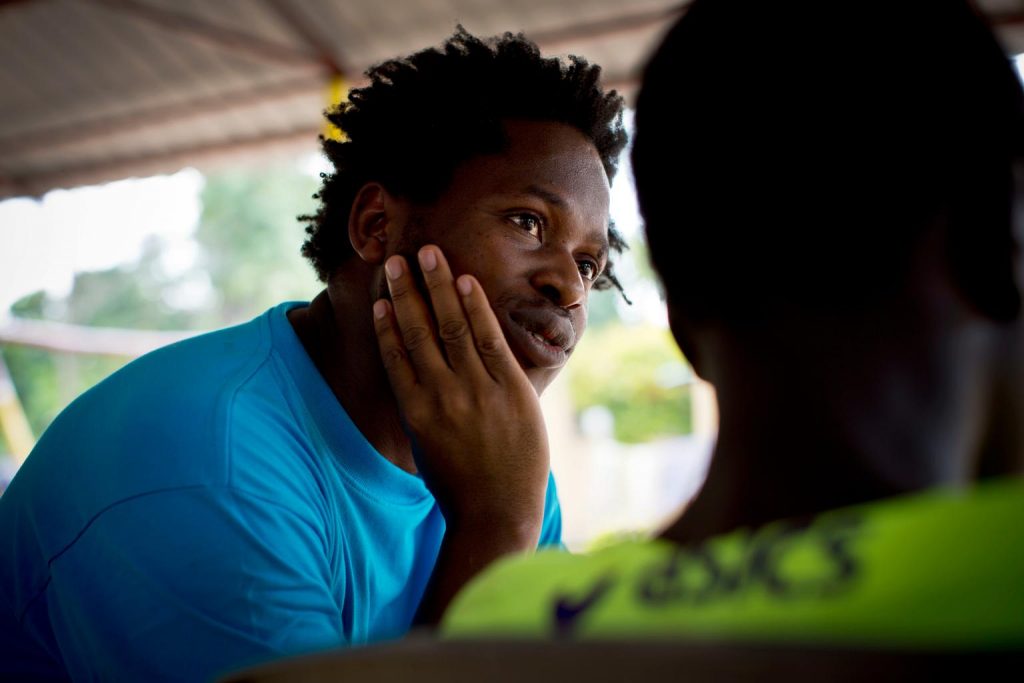
On 21 November 2015, (right) UNICEF Advocate for Children Affected by War Ishmael Beah talks with children at a centre supported by UNICEF in Juba.
In late November, Beah travelled to South Sudan with UNICEF to meet with former child soldiers, along with different parties to the conflict so as to advocate for the release of child soldiers and their re-integration into their communities and families. A peace agreement was signed in August this year, but fierce fighting has continued in parts of South Sudan. Since the beginning of 2015, the situation for children has worsened, and there are now as many as 16,000 associated with armed forces or groups.
Related content
Article
Contextual note: Funeral practices in Ituri
This note is the second produced by "the collective for Ituri", an informal network primarily driven by social scientists who provide contextual information for the response to the Bundibugyo Ebola epidemic in Ituri, eastern DRC. This note expands on the…
Article
Contextual Note on the Ebola Bundibugyo Outbreak in Ituri (2026)
This note provides contextual background on the Ituri province, currently affected by an Ebola Bundibugyo outbreak. The note does not directly address the news and latest developments in the Ebola response, it rather presents the general context in which public…
Briefing
Recommendations: Rapid Synthesis of Social and Behavioural Science learnings on Ebola for the Bundibugyo Virus Outbreak (2026) Ituri, DRC
A rapid synthesis of lessons learned from prior Ebola social and behavioural science (SBS) research to highlight critical insights for locally adapted and contextually informed response efforts.
Briefing
Ituri Ebola Outbreak 2026 (DRC) – Summary overview of context
This note details relevant contextual factors in Ituri Province, DRC, to inform the response to the outbreak of Ebola disease caused by Bundibugyo virus.
