Executive summary
Population. 7 million inhabitants, including ~1 million internally displaced persons. High ethnic diversity (Hema, Lendu, Alur, Lugbara, Nande). The Hema-Lendu conflict is rooted in land disputes, exacerbated by manipulation of local elites. Urban centres are densely populated and interconnected. Swahili and Lingala are the common languages, with French used by elites. Local languages are important in rural areas (Lendu, Nyali).
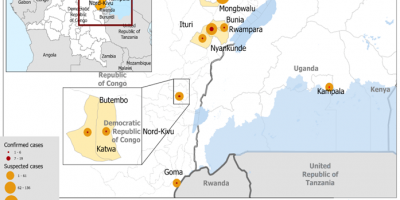
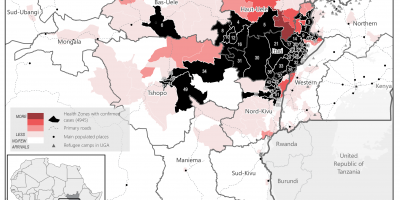
Insecurity. Major intercommunal violence since 2017 concentrated in Djugu territory; ADF attacks (>950 deaths in 2025) in the territories of Beni, Irumu and Mambasa. Health facilities have been targeted, and food insecurity is widespread. Confirmed cases in areas of North and South Kivu administered by the M23 armed group complicate coordination. Part of Ituri province is under the control of local armed groups involved in various forms of trafficking and extortion. Numerous roadblocks.
Economy and mobility. Artisanal gold mining structures the provincial economy and generates significant flows of people to mining sites (including Mongbwalu). Strong integration with Ugandan markets and cross-border mobility, including illegal crossings. South Sudan is also at risk because of high mobility and border crossings.
Funerals. Epidemic risk is associated with gatherings that accompany families through the mourning process, and with the preparation and transport of the body. In rural areas, existing rituals must be adapted.
Vulnerable populations. Women are at greater risk due to their role as caregivers. Populations living in displacement sites are particularly vulnerable (overcrowding, inability to implement barrier measures).
Recommendations
- Work with and for communities. Community priorities and needs must guide the response, not the other way around. The response must learn from local populations, understanding how communities are structured (administrative, religious, economic, tribal, and political components).
- Recruit locally and transparently. Ensure that recruitment is ethnically diverse, socially relevant, and perceived as fair.
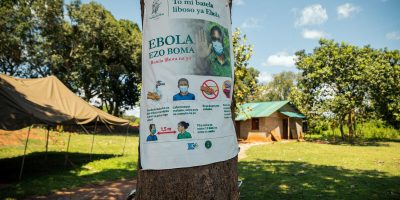
- Adapt outreach to the social and linguistic context. Messaging must be adapted to the language and channels used, and it must communicate scientific uncertainty (around the epidemic and interventions deployed).
- Fully mobilize local expertise. Existing local expertise in Bunia and across the territories is available to inform response coordination.
- Negotiate ritual adaptations around burials. Adapt rituals rather than prohibiting them to avoid clandestine burials and tensions with communities.
- Reinforce durably the existing health system. Investments made in the context of Ebola must not be limited to the emergency response: they should contribute to long-term improvement of the health system.
- Uphold the rights of patients and families. Treatment centres are not merely places of isolation but places of care and must be perceived as such locally.
- Be transparent and accountable. Take the Ebola business narrative seriously. Suspicion towards the response is structural, rooted in a broader context of abandonment and violence. It should therefore not be dismissed as irrational.
- Secure teams without fueling the war economy. Avoid over-militarizing response activities, which could attract the attention of armed groups.
- Coordinate with national authorities. The Ministry of Health of the DRC through the COUSP/INSP is responsible for the Ebola response.