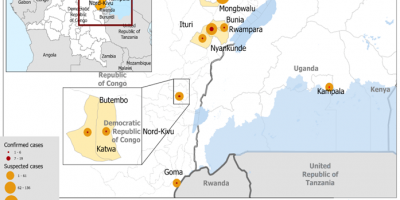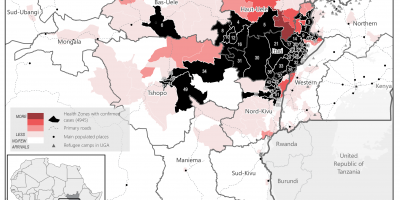
This brief summarises key considerations about the context of North Kivu province in relation to the outbreak of Ebola in the DRC, August 2018. The province of North Kivu has six territories: Beni, Lubero, Masisi, Nyiragongo, Rutshuru, Walikale. At the time of writing, cases of Ebola had been positively confirmed in Beni territory, and cases were also under investigation in Lubero territory and in the neighbouring Ituri province.
This brief focuses specifically on the Grand Nord (Great North): the Beni and Lubero territories of northern North Kivu that are the epicentre of the outbreak. Further participatory enquiry should be undertaken with the affected populations, but given ongoing transmission, conveying key considerations and immediate recommendations have been prioritised.
This brief is based on a rapid review of existing published and grey literature, professional ethnographic research in DRC, personal communication with administrative and health officials and practitioners in the country, and experience of previous Ebola outbreaks. The brief was developed by Juliet Bedford with support from colleagues at Harvard University and Anthrologica.
Additional inputs were provided by colleagues from the Congo Research Group, CNRS-MNHN Paris, Danish Institute for International Studies, Institut de Recherche pour le Développement, Institut Pasteur, Institute of Development Studies, London School of Economics, London School of Hygiene and Tropical Medicine, New York University, Réseau Anthropologie des Epidémies Emergentes, Rikolto, Social Science Research Council, Universität Bayreuth, University of Basel, University of Florida, University of Ghent, University of Melbourne and University of Sussex. The briefing is the responsibility of the Social Science in Humanitarian Action Platform.
For further details on the issues contained in this brief and for contact details of associations and networks active in the Grand Nord, please contact Juliet Bedford ([email protected]).
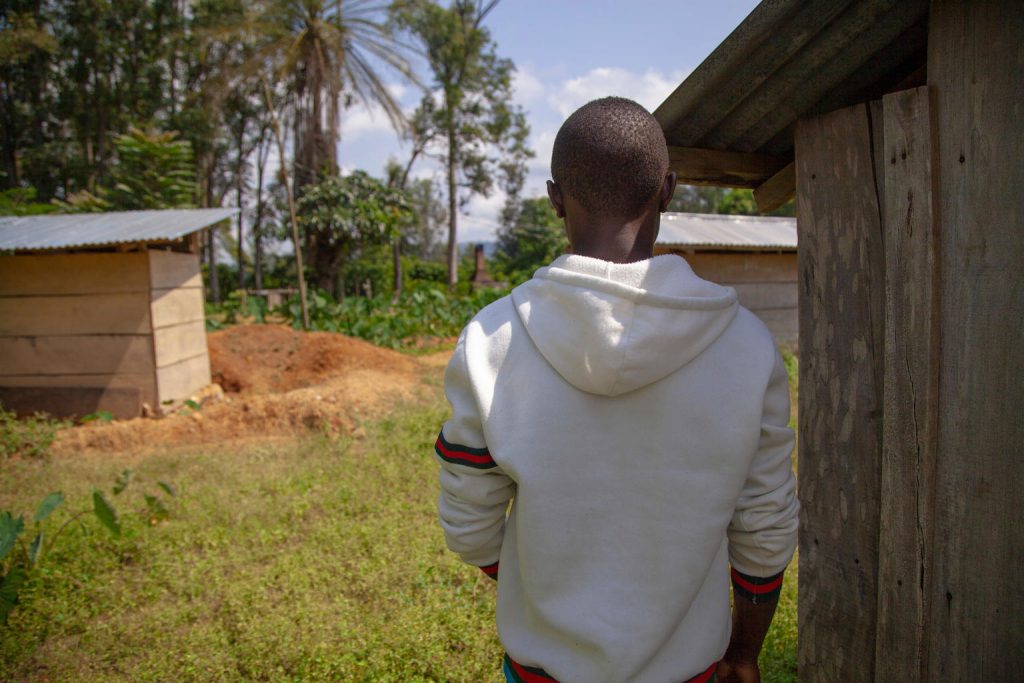
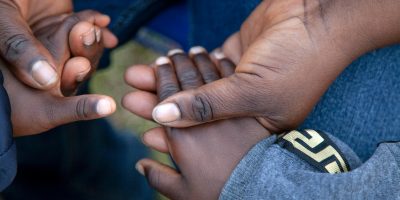
![On 14 August 2018, 'Dieudonne' [not his real name], a thirteen year old boy who lost eight members of his immediate family to Ebola, stands in Ebola-affected Mangina, North Kivu, the Democratic Republic of the Congo (DRC).
“There were eight of them and they are all dead,” says Dieudonné*, a young 13-year-old boy living in Mangina, the Democratic Republic of the Congo, where 27 cases of Ebola were recently confirmed. It all started when Dieudonné’s mother fell ill and died. “When we buried Mum, the family was next to her body,” the young boy explains. “Soon after, everyone began to have headaches and diarrhoea.”
When his big sister was admitted to the Ebola treatment centre, Dieudonné stayed in the little family home alone, the same house that was the starting point of all his hardship. “Everyone who entered our home fell sick,” the boy recalls. At only 13 years of age, Dieudonné has lost all his bearings, all the people that he loved and on whom he could count. “I don’t have anyone who can take care of me anymore,” sadly explains the young boy, who does not know if his sister will survive the disease.
Dieudonné is one of 53 children orphaned by Ebola that UNICEF has identified in the east of the DRC. He currently benefits from psychosocial, material and dietary support. Dieudonné was also vaccinated against the disease a few days ago.
The young boy does not what his future will be. “I have to continue to live but I do not know how I will make it,” he explains. “This is serious.”
Following the 1 August 2018 announcement by the Government of the Democratic Republic of the Congo (DRC) of a new Ebola Virus Disease (EVD) outbreak in North Kivu, UNICEF has mobilized its teams to help contain the spread of the disease and protect children. The impact of an outbreak on children can be far reaching. It’s known from earlier outbreaks in the DRC as well as in West Africa that children can be affected in various ways. Children ca UNICEF/UN0229875/Naftalin](https://www.socialscienceinaction.org/wp-content/uploads/2018/10/UN0229875-1024x683.jpg)