Executive summary
A critical epidemiological issue. Ebola virus disease is transmitted through direct physical contact with a symptomatic person infected with the virus (such as a patient being cared for or greeted through physical contact). The bodies of persons who have died from Ebola may also pose a risk to those who touch them (during the washing of the body or handling of the corpse). Women are particularly exposed due to their role in caring for the sick or deceased, as are the closest relatives of the same sex as the deceased if they performed the body washing themselves. The gestures that may have taken place within the family setting should be known to epidemiologists in order to identify the highest-risk contacts.
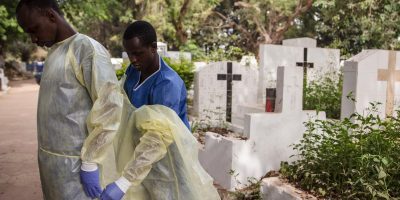
Involving families rather than bypassing them should be a guiding principle of action, particularly to defuse suspicion toward the response. Preventing the family from seeing the body is perceived as a suspicious act (raising fears of organ harvesting or abduction), interpreted in light of a long history of extraction and abandonment. Allowing family members to visually inspect the body of the deceased while maintaining safe distances, taking the time to consult with families to explain the situation, and mobilizing religious and customary leaders are concrete steps that can reduce friction around funerals.
Local considerations deserve to be known and anticipated, particularly regarding the transport of bodies which, although prohibited during an Ebola epidemic, may continue clandestinely. Visits to the seriously ill and greetings involving direct physical contact must be acknowledged, explicitly discouraged, and described as situations of potentially high transmission risk for visitors and those around them.
Recommendations
- Explain to families the importance of preventing further contamination during burial and introduce adaptations to the protocol that balance biosecurity with social imperatives.
- Involve mourning families at every stage of the process and identify spokespersons recognized as such by the entire family. Respect the family’s wishes as much as possible (clothing of the deceased, burial site, etc.) and explain the reasons why a particular request cannot be fulfilled if it poses an epidemiological risk.
- Be aware of the highest-risk transmission practices (before and after death) and the identity of those who carried them out, to pass this information on to epidemiologists.
- Identify in advance the most potentially contentious burials due to pre-existing conflicts within the family unrelated to Ebola (bride price, inheritance, rivalries) or the social status of the deceased (influential person).
- Consider the family’s particular experience with Ebola. Reactions differ depending on whether this is the first victim or whether the case is part of a longer transmission chain.
- Establish local liaison units recruited locally to play a mediation and awareness-raising role between the response team and the neighbourhood or village.
- Take time with families at every stage, from initial discussions through to the ceremony, as a mark of respect for the deceased (but also for the identification of contact persons and their possible isolation).
- In the event of a hospital death away from the family, use photos and videos if the family consents, and allow a visual inspection of the body to prove its integrity and counter rumors of organ harvesting or disappearance of the body.
- Raise community awareness through radio, opinion leaders, religious figures, and economic actors (including funeral workers) about the need to adapt certain practices during the epidemic in order to curb its spread.
- Avoid unnecessarily burning the deceased’s belongings in public view; consider burying them with the body instead.