




When civil war broke out in South Sudan in 2013, people from the Nuer minority ethnic group became targeted by government forces and sought protection in United Nations peace-keeping bases which expanded and became known as Protection of Civilian sites (PoCs). In 2020, responsibility for these sites was handed over to the transitional unity government despite protests from human rights groups and internally displaced persons (IDPs) and lack of a clear plan to address security and basic needs. This article describes both the history of events around this transition as well as how life changed for camp residents after this handover, particularly the decrease in security inside and outside the camps, the strategies IDPs have adopted to hide their ethnic identities and how this affects IDPs’ hopes, plans and participation in civic life.
Research paper
Hiding in plain sight: IDP’s protection strategies after closing Juba’s protection of civilian sites
DOI: https://doi.org/10.1111/1758-5899.13206

Related content

Report
MHRN Roundtable Report: Social and Behavioural Science Priorities for Ebola Clinical Trials in DRC
Against the backdrop of a large outbreak of the Bundibugyo Ebola virus in the DRC, this August 2026 roundtable consolidated lessons from past SBS research in/on Ebola clinical trials and discuss current challenges with clinical trial design and rollout.

Briefing
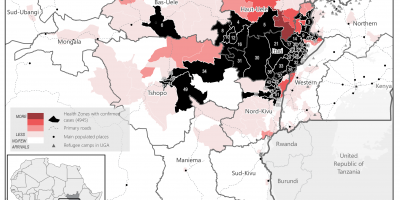
Key Considerations: Cross-Border Dynamics Between Uganda and DRC in the Context of the Bundibugyo Ebola Outbreak
This brief synthesises existing social and behavioural science evidence from the current and previous outbreaks on key socioeconomic and political dynamics in the Uganda-DRC borderlands.
Briefing
Key Considerations: Cross-Border Dynamics Between South Sudan and DRC in the Context of the Bundibugyo Ebola Outbreak
This brief updates previous SSHAP analyses to highlight key socioeconomic and political considerations in the South Sudan–DRC borderlands that shape Ebola preparedness and response.
Article
Contextual note: Funeral practices in Ituri
This note is the second produced by "the collective for Ituri", an informal network primarily driven by social scientists who provide contextual information for the response to the Bundibugyo Ebola epidemic in Ituri, eastern DRC. This note expands on the…
