

Natural disasters and disasters that directly derive from human actions, both evolving and sudden, trace the structural fault lines of the societies that they affect. Disaster outcomes disproportionately impact those with the least access to social and material resources: women and children, and people who are elderly, disabled or impoverished.
Using a disability conceptual framework,the essays in this volume focus on disasters within their social and environmental ecologies, with particular attention to the ways in which conventional disaster planning and responses ensure that existing social inequalities will be perpetuated as consequences of disasters. We argue that by foregrounding the needs of those with the fewest resources, an applied anthropology of disaster points to potential benefits to all when disaster preparedness, response, and recovery plans include the expertise of disabled people.
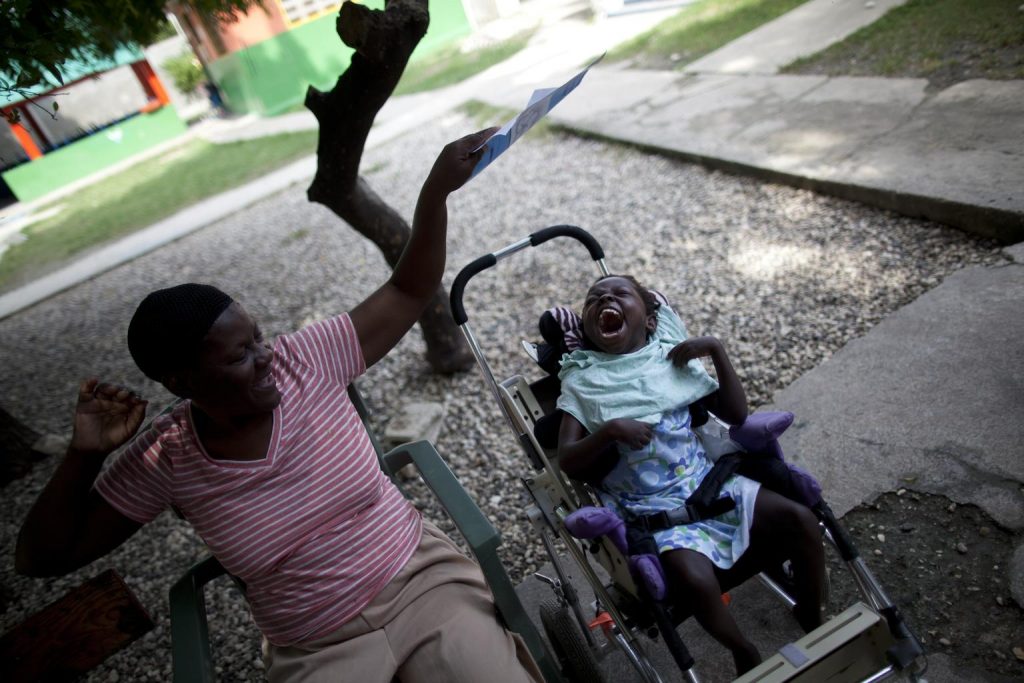
![Two-year-old Diasline Joseph, seated in a wheelchair, laughs while playing with a caretaker at New Life Centre, a residential care facility in Port-au-Prince, the capital. Her mother died when Diasline was 16 months old, after which her father waived his custodial rights of her and left her at the centre; he has never visited her since. Founded in 1978, the centre currently hosts 108 children, 20 of whom have physical or mental disabilities. Most have been orphaned, abandoned or come from families who could not afford their childrens care but who still visit them monthly. The centre receives support from Catholic Relief Services, an international Catholic humanitarian agency based in the United States of America. [#1 IN SEQUENCE OF THREE]
In November 2012 in Haiti UNICEF is working with the Government to support optimum alternative care for children at risk or who are deprived of parental care. Efforts are particularly focused on establishing for these children alternatives to institutionalization, which poses a significant threat to their rights and well-being. Some 50,000 Haitian children presently live in institutions, while the figure for all Latin America and the Caribbean is conservatively estimated at 240,000. Institutionalization significantly hampers child development: As a general rule, for every three months spent in an institution, children lose one month of development. Risks are especially acute for children under age 3, for whom institutionalization is known to damage mental and emotional development, inhibit cognitive and speech development, impair intelligence and contribute to emotional detachment. Children with disabilities or other conditions necessitating specialized care are also at increased vulnerability. Institutionalized children are six times more likely to experience violence and nearly four times more likely to experience sexual abuse than children placed with adoptive or foster families. The latter alternative care environments ar UNICEF/UNI134980/Dormino](https://www.socialscienceinaction.org/wp-content/uploads/2017/01/UNI134980_Med-Res-1024x683.jpg)