




By the start of 2014, violent conflict had erupted across much of South Sudan following initial violence in Juba on 15 December 2013. The speed with which the fighting has spread raises questions regarding the impact of national-level politics on violence at the local level. This article develops a framework in which violent conflict can be comprehended as a response to the interruption of the negotiation of the balance of power between groups; the negotiation is interrupted when that balance tips in favour of one group, such as through changes in the national political market or government reforms. The article provides two cases studies of attempts to strengthen the state that inadvertently interrupted local power relations between groups. In response, the groups engaged in violent conflict to reinstate a balance of power. Both examples involve conflict among Dinka groups from 2005 to 2008.
Research paper
Interrupting the balance: reconsidering the complexities of conflict in South Sudan
Related content

Briefing
Key Considerations: Cross-Border Dynamics Between Uganda and DRC in the Context of the Bundibugyo Ebola Outbreak
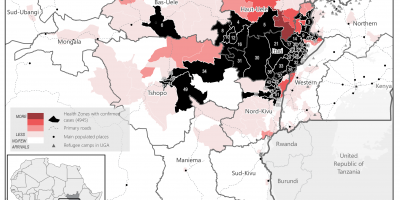
This brief synthesises existing social and behavioural science evidence from the current and previous outbreaks on key socioeconomic and political dynamics in the Uganda-DRC borderlands.
Briefing
Key Considerations: Cross-Border Dynamics Between South Sudan and DRC in the Context of the Bundibugyo Ebola Outbreak
This brief updates previous SSHAP analyses to highlight key socioeconomic and political considerations in the South Sudan–DRC borderlands that shape Ebola preparedness and response.
Article
Contextual note: Funeral practices in Ituri
This note is the second produced by "the collective for Ituri", an informal network primarily driven by social scientists who provide contextual information for the response to the Bundibugyo Ebola epidemic in Ituri, eastern DRC. This note expands on the…
Article
Contextual Note on the Ebola Bundibugyo Outbreak in Ituri (2026)
This note provides contextual background on the Ituri province, currently affected by an Ebola Bundibugyo outbreak. The note does not directly address the news and latest developments in the Ebola response, it rather presents the general context in which public…
