




Providing cures for health problems isn’t enough, if people’s personal or cultural beliefs clash with the scientific approach. Policy-makers must recognize and engage with these objections.
Briefing
Accomodating Dissent

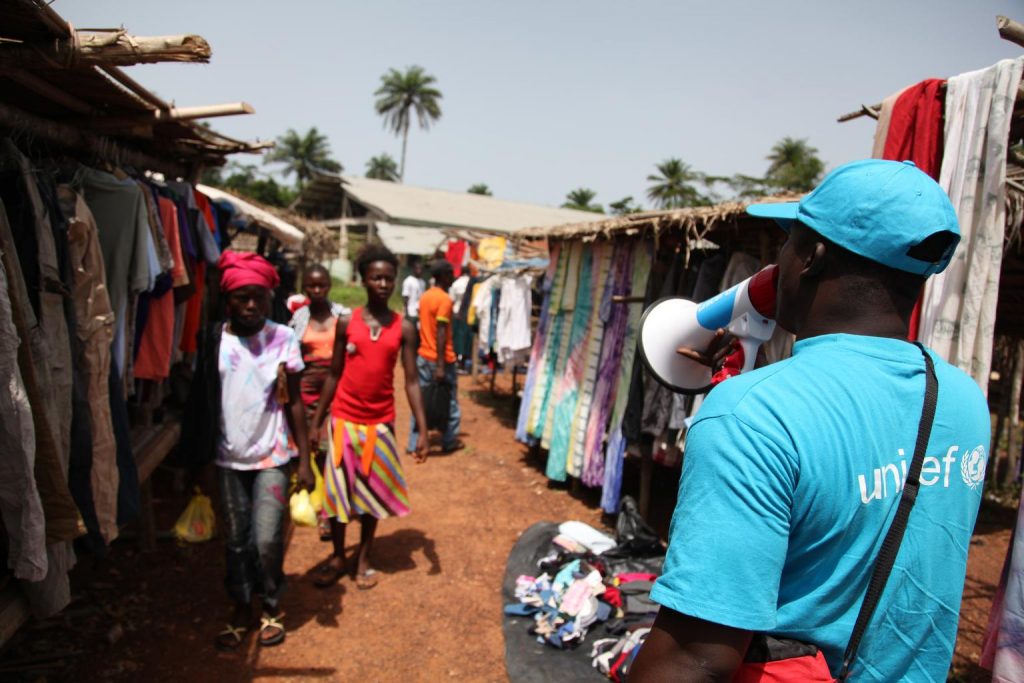
On 24 April 2014, a UNICEF outreach worker uses the opportunity to convince marketers that Ebola is in Liberia on a market day in Voinjama, Lofa County, where groups of people gather to sell their products,.
In April 2014 in Liberia, UNICEF workers share information on the symptoms of Ebola virus disease (EVD) and best practices to help prevent its spread in Lofa County, including posters bearing information on and illustrations of such practices. As of 27 July 2014, a total of 1,323 cases, including 729 deaths, had been attributed to EVD in the four West African countries of Guinea, Liberia, Nigeria and Sierra Leone. Liberia has borne 329 of these cases (100 confirmed, 128 probable and 101 suspected), including 156 deaths.
Related content

Report
MHRN Roundtable Report: Social and Behavioural Science Priorities for Ebola Clinical Trials in DRC
This August 2026 roundtable consolidated lessons from past SBS research in/on Ebola clinical trials and discussed current challenges with clinical trial design and rollout.

Briefing
Key Considerations: Cross-Border Dynamics Between Uganda and DRC in the Context of the Bundibugyo Ebola Outbreak
This brief synthesises existing social and behavioural science evidence from the current and previous outbreaks on key socioeconomic and political dynamics in the Uganda-DRC borderlands.
Briefing
Key Considerations: Cross-Border Dynamics Between South Sudan and DRC in the Context of the Bundibugyo Ebola Outbreak
This brief updates previous SSHAP analyses to highlight key socioeconomic and political considerations in the South Sudan–DRC borderlands that shape Ebola preparedness and response.
Article
Contextual note: Funeral practices in Ituri
This note is the second produced by "the collective for Ituri", an informal network primarily driven by social scientists who provide contextual information for the response to the Bundibugyo Ebola epidemic in Ituri, eastern DRC. This note expands on the…
