




This SSHAP Practical Approaches brief provides guidance on undertaking rapid anthropological assessments in the context of an epidemic. During an epidemic, rapid anthropological assessments are used to collect data with and from affected populations and public health officials to (a) understand key social, cultural, political, and economic dynamics; (b) identify relevant authorities and trusted leaders for message dissemination; (c) gather communities’ understanding of the disease and health decision-making processes; and (d) inform appropriate and effective response efforts.
Briefing
Tools
Rapid anthropological assessments in the field
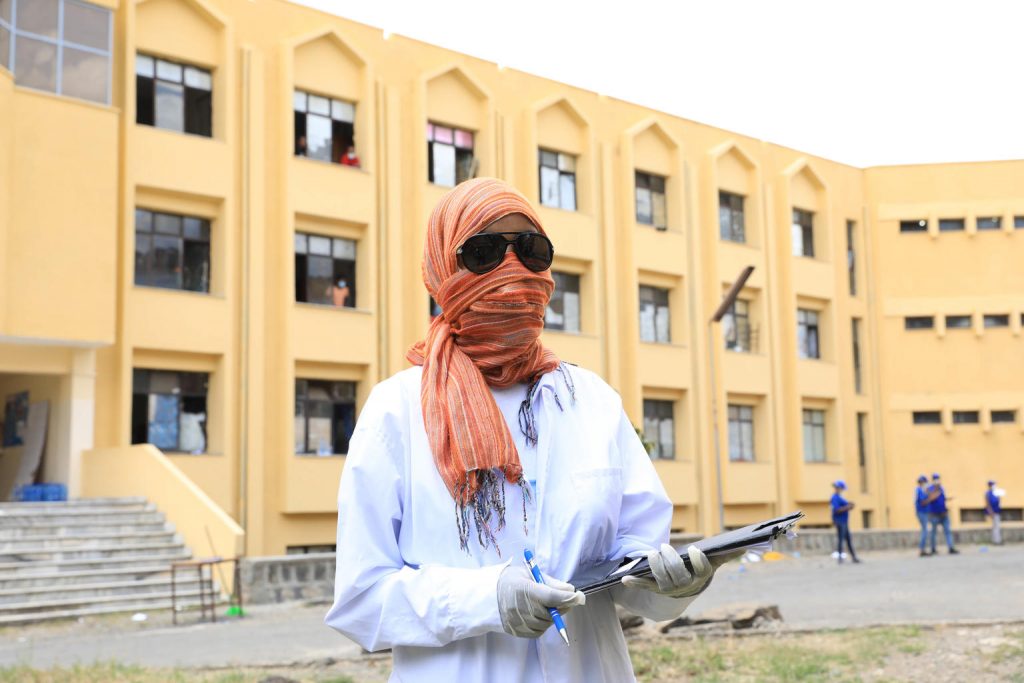
On 10 April 2020, Turusew Getahun, a social worker, works to identify, profile and register unaccompanied children and youths at the Civil Service University in Addis Ababa, Ethiopia. The centre is being used to quarantine returnees to the country, amidst concerns about the spread of COVID-19. Many of the returnees had sought work in Saudi Arabia, were victims of human trafficking along the way, and were subject to captivity and deportation upon reaching Saudi Arabia.
All unaccompanied minors are classified as vulnerable migrants, which is the social workers, in addition to profiling and registering them, identify their needs, look for signs of abuse requiring follow-up services, and obtain information about their families. The latter information is important for initiating a detailed assessment, family tracing, and reunification. In cases where a reunification with the family is not possible, alternative care arrangements are explored in cooperation with social workers or community service workers in their places of origin. Turusew says she looks forward to reuniting the children with their families when the quarantine is over. In the meantime, she wants them to be protected from COVID-19 during their quarantine. “Although information [about COVID-19] is being given to all returnees, children require specific support and child-focused messaging to help them understand how to protect themselves from the virus,” she says.
As of 14 April 2020, Ethiopia has reported 82 confirmed cases of COVID-19 in the country, with 3 deaths. In recent weeks the country has seen a surge of returnees to the country, due to the global situation. All returnees are now being placed in a mandatory 14-day quarantine. The sudden surge in returnees is straining local capacities, especially the health system. Some 2,780 returnees have been registered and quarantined at various centers the government has set up in Addis Ababa. An additional 300 returnees per day are expected in the comi
Related content
Article
Contextual note: Funeral practices in Ituri
This note is the second produced by "the collective for Ituri", an informal network primarily driven by social scientists who provide contextual information for the response to the Bundibugyo Ebola epidemic in Ituri, eastern DRC. This note expands on the…
Article
Contextual Note on the Ebola Bundibugyo Outbreak in Ituri (2026)
This note provides contextual background on the Ituri province, currently affected by an Ebola Bundibugyo outbreak. The note does not directly address the news and latest developments in the Ebola response, it rather presents the general context in which public…
Briefing
Recommendations: Rapid Synthesis of Social and Behavioural Science learnings on Ebola for the Bundibugyo Virus Outbreak (2026) Ituri, DRC
A rapid synthesis of lessons learned from prior Ebola social and behavioural science (SBS) research to highlight critical insights for locally adapted and contextually informed response efforts.
Briefing
Ituri Ebola Outbreak 2026 (DRC) – Summary overview of context
This note details relevant contextual factors in Ituri Province, DRC, to inform the response to the outbreak of Ebola disease caused by Bundibugyo virus.
