




An Ebola survivor reports on a pioneering community initiative in Monrovia that could save lives in the fight against other infectious diseases.
Briefing
Young People Played a Game-Changing Role in the Battle Against Ebola in Liberia
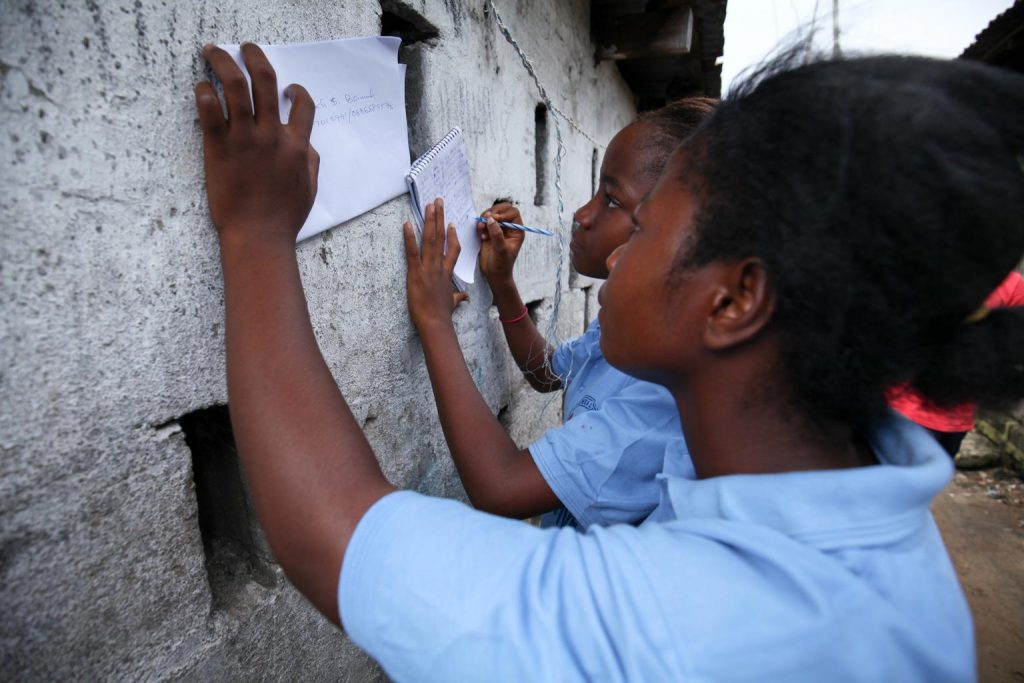
On 5 November, in the initial phases of U-Report's launch in Liberia, two adolescent girls who have been raising awareness of the technology among other youths record on paper the mobile numbers of new users, in the West Point neighbourhood of Monrovia, the capital. They used the traditional route of gathering new user data during a system outage. Part of the rollout process included identifying lingering glitches in the system. The adolescents are UNICEF-supported social mobilizers from the group Adolescents Leading an Intensive Fight against Ebola (A-LIFE); they underwent UNICEF training on U-Report and on how to use the technology to track data on EVD as well as on sexual health and teen pregnancy.
In November 2014, Liberia remains one of three countries in West Africa experiencing widespread and intense transmission of Ebola virus disease (EVD). UNICEF continues to support social mobilization efforts to raise awareness of the disease, its symptoms and how to prevent its spread all of which are critical to curtailing the unprecedented outbreak. U-Report, a text-based communication platform previously developed by UNICEF, was customized and deployed for use within Liberias mobilization efforts. Using Short Message Service (SMS), U-Report allows individual subscribers to ask questions about issues, to get real-time answers and to share information with other users U-reporters across the country. By giving people a new and effective platform for communication, it is intended to strengthen community-led development, citizen engagement and behavioural change. [Note, this story captions applies to all images below.]
Related content
Evidence review
Rapid Evidence Review: School-Based Transmission of Orthoebolaviruses
This rapid review sought to identify published evidence reporting transmission of human pathogenic strains of orthoebolavirus in school-based settings.

Report
MHRN Roundtable Report: Social and Behavioural Science Priorities for Ebola Clinical Trials in DRC
This August 2026 roundtable consolidated lessons from past SBS research in/on Ebola clinical trials and discussed current challenges with clinical trial design and rollout.
Briefing
Key Considerations: Cross-Border Dynamics Between Uganda and DRC in the Context of the Bundibugyo Ebola Outbreak
This brief synthesises existing social and behavioural science evidence from the current and previous outbreaks on key socioeconomic and political dynamics in the Uganda-DRC borderlands.
Briefing
Key Considerations: Cross-Border Dynamics Between South Sudan and DRC in the Context of the Bundibugyo Ebola Outbreak
This brief updates previous SSHAP analyses to highlight key socioeconomic and political considerations in the South Sudan–DRC borderlands that shape Ebola preparedness and response.
