

The problem of HIV internationally has many wide ranging impacts on people, communities and countries’ development. In the last decade antiretroviral (ARV) treatment has emerged as the major scientific-technical solution, albeit a costly one. Access to ARV treatment is of vital importance across Africa and around the world. Resources for HIV treatment, care and support are transferred globally on a massive scale. However, how such programmes operate ‘on the ground’ in different contexts is still unclear. This research contributes to understanding the experience of the people who access such treatment programmes in different contexts. This research focuses on this gap, exploring how treatment programmes are experienced, how the availability of treatment impacts both on people’s experience of being HIV+ and how the availability of treatment may also change perceptions of what it means to be HIV+, both individually and at a societal level. This research focuses on the lives and experiences, particularly the treatment experiences, of people living with HIV in peri-urban Gambia. Low prevalence countries such as The Gambia can provide a compelling example of the ways in which meanings and understandings of HIV are created.
Here, entering a field of health pluralism and fluid knowledge creation around HIV-infection, came large scale actors providing a high-profile ARV treatment programme through clinic-based medicine, and an effective de-pluralisation of the medical field in relation to HIV, inviting scrutiny of how such knowledge relations and differences are experienced. Although not anticipated at the outset of the research, in parallel the Gambia has become the locus of a major, politically-backed, ‘alternative’ AIDS treatment programme. This has thrown the personal and societal meanings of HIV into a new and sensitive context, compelling research attention into how knowledge, status and meanings around HIV are negotiated, and how people make choices amongst different treatment options.
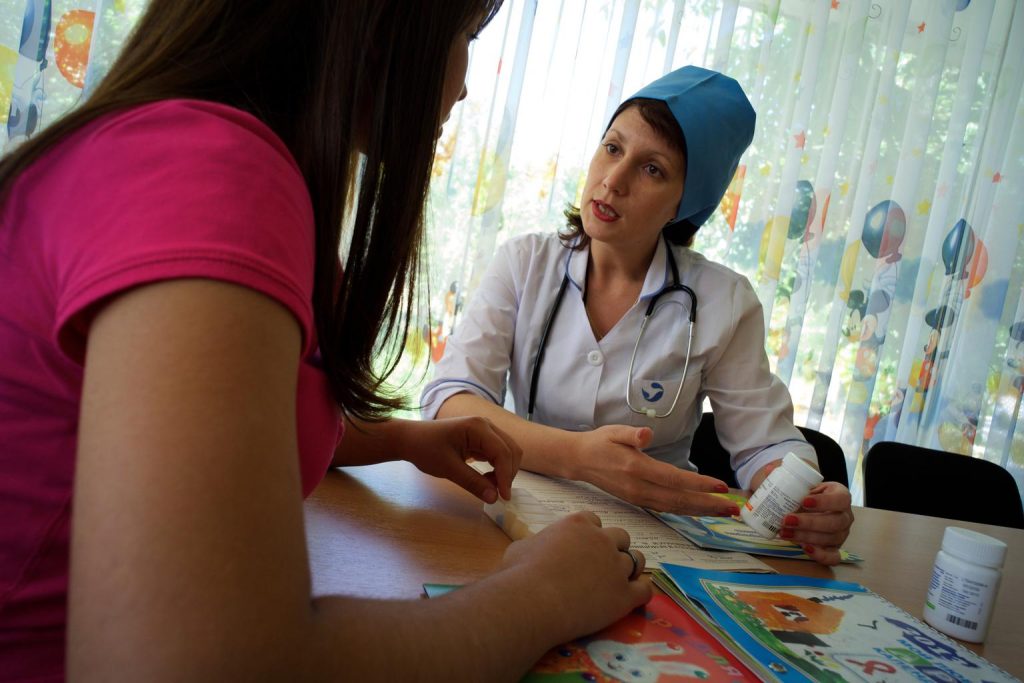
![Mubina [NAME CHANGED], 19, receives counselling and advice from a Dr. Irina Subotina, one of the first paediatrician who started treating children with HIV in Uzbekistan, at the Day Care Centre in the Research Institute of Virology of the Ministry of Health in Tashkent in Uzbekistan.
Mubina is from Tashkent. She is a 3rd year student of the medical vocational college. It is believed that she contracted HIV during a surgery. She discovered her HIV status when she was 16 years old. When being tested for HIV she did not received any counselling from medical professionals and had no idea about the infection, thus she was not able to absorb the news well. She refused to accept the diagnosis in the beginning. She became very isolated and was afraid to communicate with her friends and peers. Despite referral from doctors in AIDS Centre, Mubina refused to receive any services from the Day Care Centre. She simply did not wanted to communicate with staff of DCC either.
In November 2013 UNICEF invited Mubina to attend a training for adolescents with HIV who were aware of their HIV status. This was a turning point for Mubina . From that time her attitude toward the infection changed. She began to take ART regularly and started to attend psycho-support group in DCC. She also became an active member of the Peer-Support Group for Adolescents Living with HIV. Now she helps her peer to deal with stigma and discrimination.
Currently Mubina takes ART and has good blood test results. She also talks to other children and parents and encourages them about the importance of receiving ART, benefits treatment and how to live and grow with ART positively. Mubina is also a member of Y-PEER Network, where she talks to other young people about her experiences of living with HIV and problems with which adolescents living with HIV are currently facing in Uzbekistan. She also conducts information sessions in schools and colleges of Tashkent on prevention of HIV. UNICEF/UNI164691/Noorani](https://www.socialscienceinaction.org/wp-content/uploads/2017/01/UNI164691_Med-Res-1024x683.jpg)