




About 125 million people are affected by crises. A quarter of those people are female and of reproductive age – and women are 14 times more likely than men to die in a crisis.
Briefing
Sexual Health Gets Little Attention in a Crisis, with Devastating Results
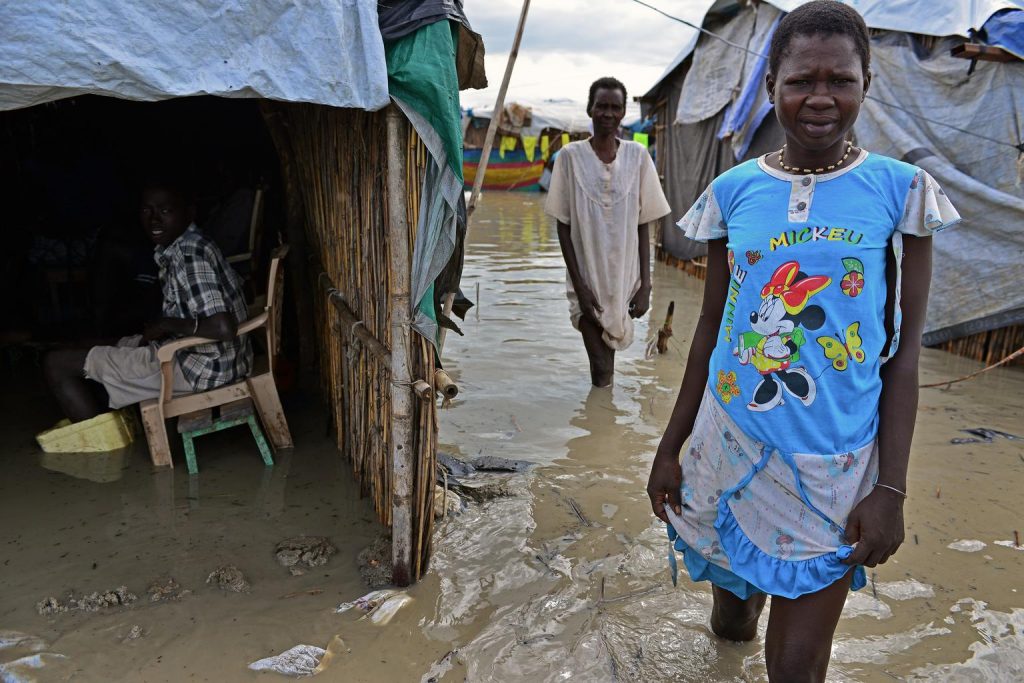
On 23 August, (left-right) two displaced women making their way through floodwaters pass a boy sitting in a flooded shelter, at the Bentiu Protection of Civilians (POC) site, located on the United Nations peacekeeping mission in South Sudan (UNMISS) base near the city of Bentiu, capital of Unity State, following heavy rains. Shelters in several areas at the PoC site remain largely flooded, exacerbating living conditions for the sites approximately 40,000 displaced and increasing the risk of waterborne disease. An estimated 1.3 million people have been displaced since resurgent conflict erupted in mid-December 2013. More than 695,000 of the displaced are children. About 442,600 people have also sought refuge in neighbouring countries. UNICEF has appealed for US $151.8 million to cover emergency responses across the vital areas of nutrition; health; water, sanitation and hygiene (WASH); protection; education; multi-sector refugee response; and cholera response. By 19 August, 52 per cent remained unfunded.
Related content
Evidence review
Rapid Evidence Review: School-Based Transmission of Orthoebolaviruses
This rapid review sought to identify published evidence reporting transmission of human pathogenic strains of orthoebolavirus in school-based settings.

Report
MHRN Roundtable Report: Social and Behavioural Science Priorities for Ebola Clinical Trials in DRC
This August 2026 roundtable consolidated lessons from past SBS research in/on Ebola clinical trials and discussed current challenges with clinical trial design and rollout.

Briefing
Key Considerations: Cross-Border Dynamics Between Uganda and DRC in the Context of the Bundibugyo Ebola Outbreak
This brief synthesises existing social and behavioural science evidence from the current and previous outbreaks on key socioeconomic and political dynamics in the Uganda-DRC borderlands.
Briefing
Key Considerations: Cross-Border Dynamics Between South Sudan and DRC in the Context of the Bundibugyo Ebola Outbreak
This brief updates previous SSHAP analyses to highlight key socioeconomic and political considerations in the South Sudan–DRC borderlands that shape Ebola preparedness and response.
