Mpox outbreak
The global mpox outbreak has been a WHO graded level 3 acute emergency since August 2024. Transmission of mpox continues to affect key populations largely through sexual transmission, often followed by household spread and community outbreaks. All clades of mpox virus (MPXV) continue to circulate.
In July 2026, 32 countries across four WHO regions reported 1370 confirmed mpox cases, including seven deaths (case fatality ratio [CFR] 0.5%). About three-quarters of these cases were reported in the WHO African Region. Madagascar, Angola, China, the Democratic Republic of the Congo and Kenya reported the most cases.
Vulnerable groups, particularly children, pregnant women and people living with HIV, continue to face higher risks for severe disease and death.
SSHAP’s mpox collection features resources focused on social, political and contextual considerations to inform the global response.
A review of the social and behavioural science research landscape for mpox in African settings
Rapid evidence synthesis: Mpox community protection
Key considerations: Home-based care for mpox in Central and East Africa
Mpox response in urban informal settlements
Supporting the mpox response for people with diverse sexual orientation, gender identity and/or gender expression in contexts where their rights are restricted
Mpox in the Busia-Malaba border region linking Uganda and Kenya
Mpox question bank: Qualitative questions for community-level data collection
Meeting report: Mpox and discrimination in African settings
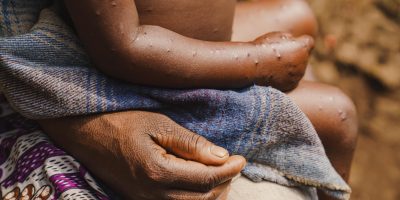
Mpox, mining, and vulnerabilities of women and children in eastern DRC
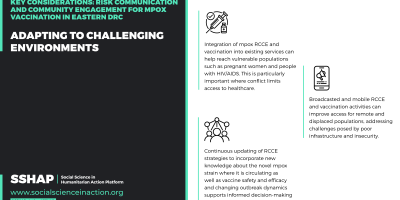
Risk communication and community engagement for mpox vaccination in Eastern DRC