




Soon after South Sudan achieved independence in 2011, its political landscape grew increasingly volatile. It became almost impossible for international and regional actors to address one crisis before another more serious one erupted. This article combines cultural, political, economic and social factors into a comprehensive framework to explain the role of the political elites in transforming fear and politicized anger into violent and deadly conflicts. The theoretical framework of the security dilemma model is applied to the South Sudanese conflict to demonstrate how it was triggered—and continued to be exacerbated—by the politics of fear.
Related content

Report
MHRN Roundtable Report: Social and Behavioural Science Priorities for Ebola Clinical Trials in DRC
This August 2026 roundtable consolidated lessons from past SBS research in/on Ebola clinical trials and discussed current challenges with clinical trial design and rollout.

Briefing
Key Considerations: Cross-Border Dynamics Between Uganda and DRC in the Context of the Bundibugyo Ebola Outbreak
This brief synthesises existing social and behavioural science evidence from the current and previous outbreaks on key socioeconomic and political dynamics in the Uganda-DRC borderlands.
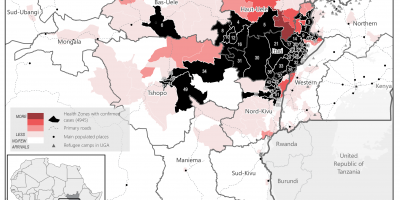
Briefing
Key Considerations: Cross-Border Dynamics Between South Sudan and DRC in the Context of the Bundibugyo Ebola Outbreak
This brief updates previous SSHAP analyses to highlight key socioeconomic and political considerations in the South Sudan–DRC borderlands that shape Ebola preparedness and response.
Article
Contextual note: Funeral practices in Ituri
This note is the second produced by "the collective for Ituri", an informal network primarily driven by social scientists who provide contextual information for the response to the Bundibugyo Ebola epidemic in Ituri, eastern DRC. This note expands on the…
