




Search
Search within
1447 results found
Briefing
Ebola Can Be Transmitted Sexually for Weeks After Recovery – Education is Crucial
Conflicting messages on the length of time that Ebola remains in semen after recovery make education and prevention confusing. We need to avoid mixed messages and focus on girls’ rights, says anthropologist Pauline Oosterhoff. When I met members of a…
Evidence review
Community Perceptions of Ebola Response Efforts in Liberia: Montserrado and Nimba Counties
This study aimed to support Oxfam’s Public Health Promotion (PHP) strategy through a rapid qualitative assessment of the remaining social barriers to compliance with Ebola prevention and treatment messages. At the time of the study, most Liberians had a high…
Evidence review
Village Responses to Ebola Virus Disease and its Prevention
The present document is the eighth and final report in a series presenting descriptive results of a survey of responses to Ebola and Ebola control in 26 villages in all three provinces of rural Sierra Leone, fieldwork for which was…
Briefing
Ebola: Limitations of Correcting Misinformation
This comment piece identifies problematic assumptions behind communication and social mobilisation strategies which rely on using biomedicine to correct local logics and concerns and which cast them as misinformation. The effectiveness of using standardised advice for non-standardised situations is questioned.
Evidence review
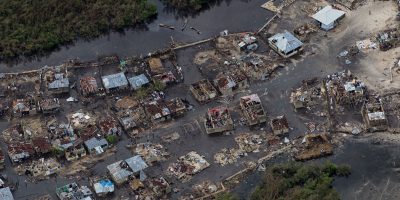
Determinants of the Lethality of Climate-Related Disasters in the Caribbean Community (CARICOM): A Cross-Country Analysis
Floods and storms are climate-related hazards posing high mortality risk to Caribbean Community (CARICOM) nations. However risk factors for their lethality remain untested. We conducted an ecological study investigating risk factors for flood and storm lethality in CARICOM nations for…
Briefing
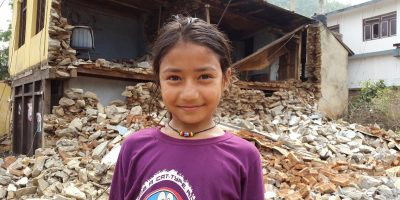
Focus on Nepal Earthquake and Earthquakes in Southern Asia
Nepal witnessed a 7.8 magnitude earthquake on 25th April and a 7.3 quake on 12th May, the worst natural disasters since 1900 in terms of number of dead, population affected and economic losses (A). The earthquakes killed more than 9,000 people…
Evidence review
Lessons Learned on Health Adaptation to Climate Variability and Change: Experiences Across Low- and Middle-Income Countries
Climate variability and change are exacerbating many current climate-sensitive health outcomes and have the potential to affect the ability of health system institutions and organizations to maintain or improve health burdens in the context of changing climate and development patterns.…
Policy document
WHO’s six-year strategic plan to minimize the health impact of emergencies and disasters: 2014-2019
The purpose of this document is to outline how WHO plans to contribute to the reduction of death, illness and disability from emergencies while promoting the wellbeing and dignity of those affected.
Ethics in Epidemics, Emergencies and Disasters: Research, Surveillance and Patient Care: Training Manual
The training manual has two parts. Part 1 covers ethical issues in research and surveillance, such as conflicts that might arise between the common good and individual autonomy, ethics oversight and publication ethics. Part 2 covers patient care, including triage,…
Briefing
Sierra Leone: Tracing Ebola in Tonkolili
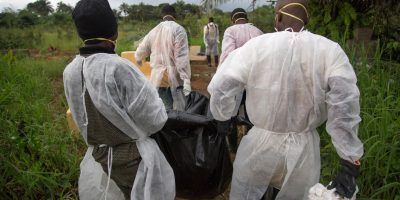
When the Tonkolili District reported a new case of Ebola on 24 July 2015, it marked a change in the Sierra Leone Ebola response. A rapid response team was despatched to manage this new source of infection, the first case…
Briefing
Sierra Leone: Inspiring Confidence and Trust in Ebola Care
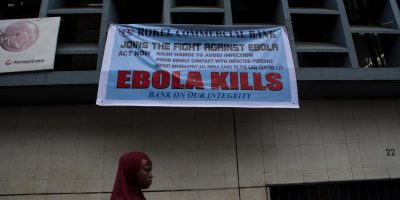
In Sierra Leone’s Magazine Wharf, there are mixed perceptions around Ebola response systems. Ambulance services are met with especial scepticism. Many fear that a trip in the ambulance will end in death in an Ebola treatment centre or holding unit.…
Briefing
Helping Guinean Communities Fight Ebola
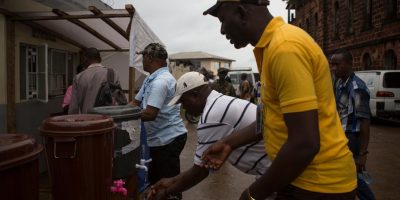
Through household visits, a presence on prefecture streets and conversations with influential members of key community groups, surveillance teams are spreading the message about Ebola and providing support to families
