




Search
Search within
1447 results found

Briefing
Using a Human Rights Accountability Framework to Respond to Zika
Like other mosquito-borne viruses, Zika thrives in areas with substandard sanitation and infrastructure—which are directly linked to state failures to ensure the basic human right to an adequate standard of living. Until recently, the Zika virus was thought to be…
Briefing
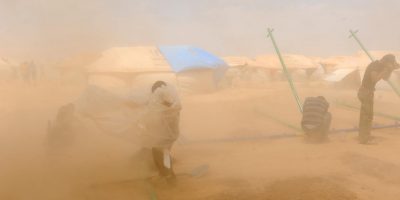
Sand and Dust Storms Fact Sheet
Sand and dust storms are a global environmental problem that affects the health and livelihoods of millions of people across the world. These storms, which have increased in frequency, intensity and geographical range in recent decades, have an immense impact…
Evidence review
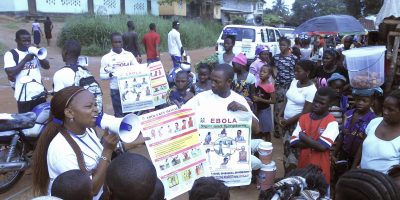
The First Mile: Community Experience of Outbreak Control during an Ebola Outbreak in Luwero District, Uganda
A major challenge to outbreak control lies in early detection of viral haemorrhagic fevers (VHFs) in local community contexts during the critical initial stages of an epidemic, when risk of spreading is its highest (“the first mile”). This paper documents…
Background report
Stakeholders’ Perception on National Heatwave Plans and their Local Implementation in Belgium and The Netherlands
National heatwave plans are aimed at reducing the avoidable human health consequences due to heatwaves, by providing warnings as well as improving communication between relevant stakeholders. The objective of this study was to assess the perceptions of key stakeholders within…
Background report
Futures thinking
Tsunami disaster risk 2016: past impacts and projections
This report gives mathematical projections underlining that the threat to human life from tsunamis is increasing.
Background report
Poverty & death: disaster mortality 1996-2015
A report on worldwide deaths from geophysical disasters.
Background report
Excess Mortality in Refugees, Internally Displaced Persons and Resident Populations in Complex Humanitarian Emergencies (1998–2012) – Insights from Operational Data
Complex humanitarian emergencies are characterised by a break-down of health systems. All-cause mortality increases and non-violent excess deaths (predominantly due to infectious diseases) have been shown to outnumber violent deaths even in exceptionally brutal conflicts. However, affected populations are very…
Background report
What Is the Association between Absolute Child Poverty, Poor Governance, and Natural Disasters? A Global Comparison of Some of the Realities of Climate Change
The paper explores the degree to which exposure to natural disasters and poor governance(quality of governance) is associated with absolute child poverty in sixty-seven middle-and low-income countries. The data is representative for about 2.8 billion of the world´s population. Institutionalist…
Background report
What is the Human Cost of Weather-Related Disasters (1995-2015)?
This publication provides a sober and revealing analysis of weather-related disaster trends over a twenty year time-frame which coincides with a period which has seen the UN Framework Convention on Climate Change Conference of the Parties become an established high-…
Briefing
Disaster Data: A Balanced Perspective
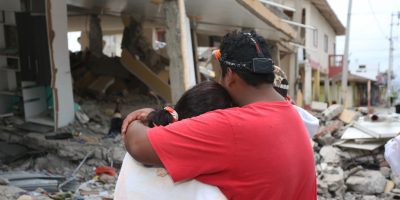
In 2015, 346 natural disasters were recorded in the EM-DAT database. They claimed 22,773 lives, affected over 98 million others and caused economic damages of US$66.5 billion. The largest disaster of 2015 in terms of mortality was the earthquake in Nepal from…
Background report
Looking Upstream: Enhancers of Child Nutritional Status in post-Flood Rural Settings
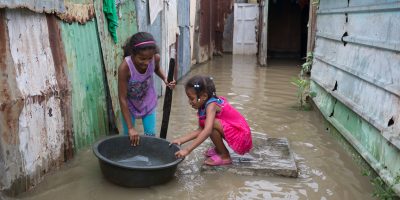
Child undernutrition and flooding are highly prevalent public health issues in many developing countries, yet we have little understanding of preventive strategies for effective coping in these circumstances. Education has been recently highlighted as key to reduce the societal impacts…
Background report
The human cost of natural disasters: A global perspective
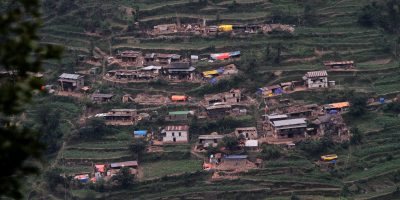
This report offers a 20-year review of disaster impacts across the world.
