




This infographic summarises the key considerations of a brief which explores behavioural and community dynamics related to plague outbreaks in Madagascar.
Supporting ‘wheat-to-bread’ systems in fragmented Syria
This Key Consideratoins briefing describes the social and political dimensions of food insecurity in Syria and provides insights into how territorial fragmentation affects wheat-to-bread systems.
L’Approche de l’AIE Pour La Prise de Décision dans Les Urgences de Santé Publique (FR)
L’Analyse Intégrée des Epidémies est née de la nécessité de recherche opérationnelle et multisectorielle pour informer les activités de réponse au cours de l’épidémie de Maladie à virus Ebola en 2018 dans l’Est de la République Démocratique du Congo (RDC). En 2020, cette collaboration multidisciplinaire s’est structurée autour d’une plateforme d’échange pour tous les partenaires du Réseau mondial d’alerte et d’action en cas d’épidémie (GOARN). Depuis, cette approche multidisciplinaire a été utilisée pour orienter les activités de réponse au cours de différentes urgences de santé publique, notamment des épidémies de peste, de choléra, de rougeole, de polio et de crise de malnutrition.
L’objectif de notre partenariat est de faciliter et encourager les communautés et les autorités sanitaires à concevoir des stratégies de Santé Publique responsables, redevables et efficaces reposant sur l’analyse de données objectives et multisectorielles. L’AIE adopte une approche holistique : des questions de recherche aux données recueillies ou consultées,
What is the IOA approach for decision-making in public health emergencies? (ENG)
This video explains the Integrated Outbreak Analytics (IOA) approach for decision-making in public health emergencies.
Comment l’AIE c’est une approche multi-acteurs et multidisciplinaire? (FR)
L’Analyse Intégrée des Epidémies est née de la nécessité de recherche opérationnelle et multisectorielle pour informer les activités de réponse au cours de l’épidémie de Maladie à virus Ebola en 2018 dans l’Est de la République Démocratique du Congo (RDC). En 2020, cette collaboration multidisciplinaire s’est structurée autour d’une plateforme d’échange pour tous les partenaires du Réseau mondial d’alerte et d’action en cas d’épidémie (GOARN). Depuis, cette approche multidisciplinaire a été utilisée pour orienter les activités de réponse au cours de différentes urgences de santé publique, notamment des épidémies de peste, de choléra, de rougeole, de polio et de crise de malnutrition.
L’objectif de notre partenariat est de faciliter et encourager les communautés et les autorités sanitaires à concevoir des stratégies de Santé Publique responsables, redevables et efficaces reposant sur l’analyse de données objectives et multisectorielles. L’AIE adopte une approche holistique : des questions de recherche aux données recueillies ou consultées,
How IOA is a Multi-Actor and Multi-Discipline Approach? (ENG)
This video explores how Integrated Outbreak Analytics (IOA) is a multi-actor and multi-discipline approach.
Qu’est-ce que L’Analyse intégrée des épidémies (ou AIE)? (FR)
L’Analyse Intégrée des Epidémies est née de la nécessité de recherche opérationnelle et multisectorielle pour informer les activités de réponse au cours de l’épidémie de Maladie à virus Ebola en 2018 dans l’Est de la République Démocratique du Congo (RDC). En 2020, cette collaboration multidisciplinaire s’est structurée autour d’une plateforme d’échange pour tous les partenaires du Réseau mondial d’alerte et d’action en cas d’épidémie (GOARN). Depuis, cette approche multidisciplinaire a été utilisée pour orienter les activités de réponse au cours de différentes urgences de santé publique, notamment des épidémies de peste, de choléra, de rougeole, de polio et de crise de malnutrition.
L’objectif de notre partenariat est de faciliter et encourager les communautés et les autorités sanitaires à concevoir des stratégies de Santé Publique responsables, redevables et efficaces reposant sur l’analyse de données objectives et multisectorielles. L’AIE adopte une approche holistique : des questions de recherche aux données recueillies ou consultées,
What is Integrated Outbreak Analytics (or IOA)? (ENG)
This video introduces what Integrated Outbreak Analytics (IOA) is in English.
Engaging Young People in Latin American and the Caribbean in the COVID-19 Response
This brief draws on academic and grey literature exploring how COVID-19 affects young people, as well as literature describing the pandemic response in Latin American and the Caribbean and other regions. It offers considerations on how to engage youth by viewing them not only as a part of the affected population, but also as partners in the response.
Evidence Review: COVID-19 Recovery in South Asian Urban Informal Settlements
This evidence review highlights local responses, grassroots efforts, and challenges around COVID-19 recovery within urban informal settlements in South Asia. It focuses on specific examples from Karachi, Pakistan and Mumbai, India to inform policy responses for COVID-19 recovery and future epidemic preparedness and response.
Social dimensions of monkeypox: gaps and priority questions?
This presentation on the social dimensions of monkeypox was compiled by Hayley MacGregor and the WHO Social Science Technical Working Group for a meeting of the WHO R&D Roadmap.
Drivers Influencing Vaccination-related Behaviours Among Ukrainian Refugees in Poland
This brief summarises existing information about the factors influencing vaccination-related practices during the Ukrainian crisis. It also presents strategic and practical considerations to inform the design of interventions to create demand for routine immunisation among Ukrainian refugees.
Social considerations for monkeypox response
This brief outlines the social considerations for responding to the recent outbreak of Monkeypox.
RCCE strategies for monkeypox response
This brief outlines specific considerations for monkeypox risk communication and community engagement (RCCE) in relation to the recent outbreak.
Youth COVID-19 Vaccine Engagement in Ealing, London, United Kingdom
This is a case study about vaccine engagement among youth in Ealing, United Kingdom. It forms part of a British Academy-funded research on vaccine uptake in the US and the UK.
Youth COVID-19 Vaccine Engagement in Cleveland, Ohio, United States
This is a case study about vaccine engagement among youth in Cleveland, Ohio. It forms part of a British Academy-funded research on vaccine uptake in the US and the UK.
COVID-19 Vaccine Acceptance by Key Influencers in the MENA Region – Teachers and Healthworkers
This infographic summarises the key considerations of a recent evidence review on vaccine acceptance among two key groups in the Middle East and North Africa (MENA) region: teachers and health workers.
To expand, open in the image in a new tab, or download the PDF in full using the button on the right.
Citizen ethnography in outbreak response: Guidance for establishing networks of researchers
This guidance outlines the steps for designing and implementing citizen-led ethnographic research, including those for recruitment, training and support of citizen researchers to collect and analyse ethnographic data, and how to transform the insights they gain to support preparedness and responses for disease outbreaks.
COVID-19 Vaccines and (Dis)Trust among Minoritised Youth in Ealing, London, United Kingdom
This brief explains youth perceptions of COVID-19 vaccination and outlines key considerations for engaging with and building trust among young people living in Ealing, London.
Key Considerations: Tackling Structural Discrimination and COVID-19 Vaccine Barriers for Roma Communities in Italy
This brief highlights how structural discrimination and social exclusion shape attitudes to COVID-19 vaccines among Roma communities in Italy, and the role trusted communal and public authorities can play in supporting vaccine uptake and tackling broader exclusions.
10 Ways Local Governments in Multicultural Urban Settings can Support Vaccine Equity in Pandemics
This brief investigates these disparities through the lens of “vaccine (in)equity”, focusing on the role of local actors. It builds on ethnographic and qualitative research carried out in the Northern Districts of Marseille and ongoing research engagement around vaccine equity in Ealing (Northwest London), as well as qualitative research carried out in Italy among networks of healthcare providers, intercultural mediators, and civil society organizations that collaborated during the COVID-19 campaign in the Emilia Romagna region and in Rome.
Key Considerations: Equitable Engagement to Promote COVID-19 Vaccine Uptake among Undocumented Urban Migrants
This brief sets out key considerations linked to the promotion of COVID-19 vaccine uptake among undocumented migrants residing in Rome, Italy. We focus on strategies to equitably distribute COVID-19 vaccines. Evidence from Italy is applicable to other contexts where vaccine administration is tied to “vaccine passports” or “immunity passes”.
COVID-19 Vaccine Hesitancy among Minoritised Youth in Cleveland, Ohio, United States
This brief illustrates underlying reasons shaping COVID-19 vaccine attitudes among minority (especially Black and Latinx) youth (ages 12-18) and offers key considerations for how young people can be better engaged within Cleveland, Ohio.
Key Considerations: Engaging ‘People on the Move’ to Promote COVID-19 Vaccine Acceptance in Italy
This key considerations brief outlines perceptions, understandings and experiences of COVID-19 vaccination among ‘people on the move’ in Italy.
Covid-19 vaccination: improving uptake for women in South Sudan
This infographic summarises the key considerations of a recent briefing on improving COVID-19 vaccine uptake amongst women in South Sudan.
To expand, open in the image in a new tab, or download the PDF in full using the button on the right.
Note de Partage rapide de la Cellule d’Analyse Intégrées d’Ebola: Equateur 2020 (Juin a Novembre 2020)
Ce briefing passe en revue les preuves de la réponse à la dernière épidémie d’Ebola en Equateur.
Key Considerations: Improving Uptake of the COVID-19 Vaccine Amongst Women in South Sudan
This brief explores some of the reasons behind the low COVID-19 vaccine uptake amongst women in South Sudan during the initial phases of the roll-out. This brief draws on evidence from academic and grey literature, dashboards and datasets on COVID19 vaccine uptake, and consultations with partners working in the COVID-19 response.
Key Considerations: Adherence to COVID-19 Preventive Measures in Greater Kampala, Uganda
This brief sets out key considerations for risk communications and community engagement (RCCE) to promote adherence to COVID-19 preventive measures in greater Kampala, Uganda. It looks at adherence to COVID-19 preventive measures, assesses the challenges to their adoption and outlines key considerations for partners working in RCCE and the wider COVID-19 emergency response. The brief responds to concern (as of March 2022) about COVID-19 transmission in informal urban areas in Uganda due to their high population density, limited sanitary infrastructure, and reported low uptake of vaccination. Ensuring effective communication and engagement with a series of preventative measures is essential in limiting the spread of COVID-19. The Ministry of Health and response partners have been proactive, however interventions and guidance for COVID-19 have taken limited account of social science research about the perceptions and practices related to COVID-19 regulations. This brief aims to address this gap so these data may be used to inform more effective and practicable guidance for vulnerable groups.
Key Considerations: Behavioural, Social and Community Dynamics related to Plague Outbreaks in Madagascar
This brief explores behavioural and community dynamics related to plague outbreaks in Madagascar.
COVID-19: Achieving Vaccine Equity in Ealing, London
Key messages from our evidence review and brief on Achieving COVID-19 Vaccine Equity in Ealing and North West London.
Evidence Review: Achieving COVID-19 Vaccine Equity in Ealing and North West London
This review sets out key considerations for improving vaccine equity – as well as broader health equity – in the North West London (NWL) borough of Ealing.
Key Considerations: Achieving COVID-19 Vaccine and Health Equity in Ealing and North West London
This brief illustrates how COVID-19 vaccine (in)equity has played out on the ground and offers key considerations for how it can be improved in the North West London (NWL) borough of Ealing.
Evidence Review: COVID-19 Vaccine Acceptance by Key Influencers in the MENA Region – Teachers and Healthworkers
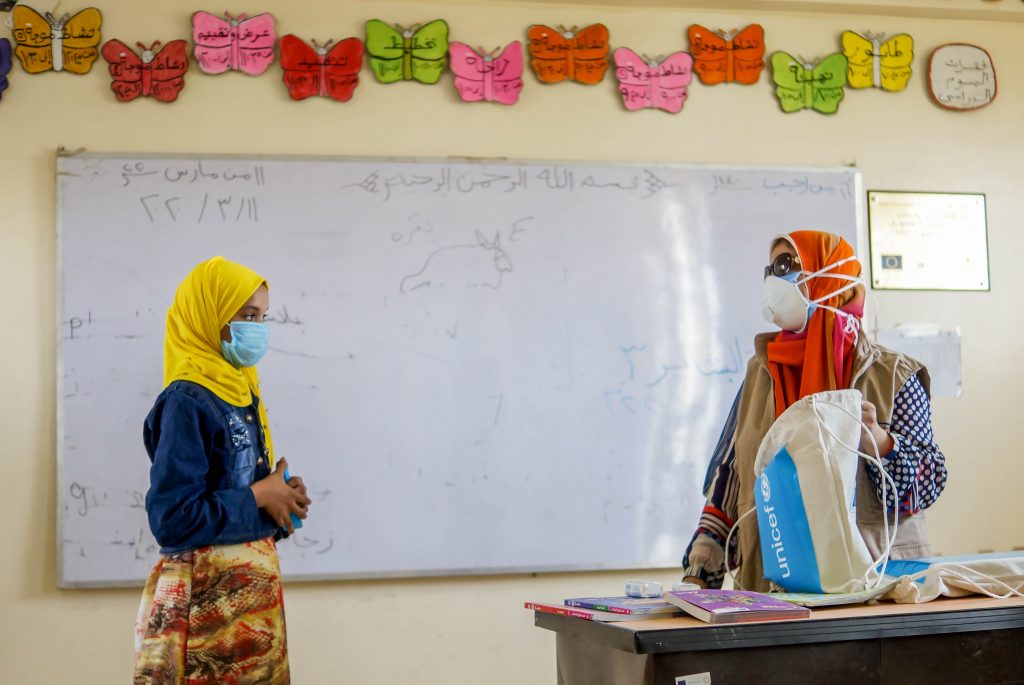
This review synthesises evidence on vaccine acceptance among two key groups in the Middle East and North Africa (MENA) region: teachers and health workers. It draws from academic studies, most of which were cross-sectional studies, largely conducted between February 2020 and June 2021, and grey literature reports, including social listening reports.
Evidence Review: Religious Marginality and COVID-19 Vaccination – Access & Hesitancy
This evidence review explores how religious minority affiliation or status shapes experiences of vaccine access and uptake and how this relates to COVID-19, and how vaccine hesitancy can be addressed.
Key Considerations for Epidemic Response and Preparedness in Uganda
This technical brief was prepared by IDS in December 2020 to support the embedding of social science and anthropological perspectives in UK AID-supported Tackling Deadly Diseases in Africa (TDDA) technical assistance and its Early Response Mechanism.
It draws on a review of both academic and grey literature, as well as inputs from social scientists and other public health experts in Uganda. It presents key considerations regarding:
the background and overview of the country’s health system;
issues related to infectious disease outbreaks, response, and preparedness;
health governance and key actors;
community experiences and responses;
implications for outbreak preparedness and response.
This briefing was produced with support from the UK Foreign, Commonwealth & Development Office (FCDO) funded Tackling Deadly Diseases in Africa (TDDA) programme managed by DAI Global Health.
Key Considerations for Epidemic Response and Preparedness in Niger
This technical brief was prepared by IDS in December 2020 to support the embedding of social science and anthropological perspectives in UK AID-supported Tackling Deadly Diseases in Africa (TDDA) technical assistance and its Early Response Mechanism.
It draws on a review of both academic and grey literature, as well as inputs from social scientists and other public health experts in Niger. It presents key considerations regarding:
the background and overview of the country’s health system;
issues related to infectious disease outbreaks, response, and preparedness;
health governance and key actors;
community experiences and responses;
implications for outbreak preparedness and response.
This briefing was produced with support from the UK Foreign, Commonwealth & Development Office (FCDO) funded Tackling Deadly Diseases in Africa (TDDA) programme managed by DAI Global Health.
