The UK’s Foreign, Commonwealth & Development Office (FCDO) has awarded funding for the Institute of Development Studies (IDS) to lead the Multi-Hazard Research Network, initially covering a three‑year programme, to strengthen decision-making before, during and after crises.
The new Multi-Hazard Research Network (MHRN) funding from the FCDO will extend the work of the Social Science in Humanitarian Action Platform (SSHAP) to include a wider range of disciplinary expertise for response and a more extensive hazard focus, including natural hazards in addition to health.
The MHRN will have a cross-cutting focus on people-centred approaches and cascading and compounding hazards, thus embedding interdisciplinarity as a core principle. Expansion of the network aims to foreground equitable partnership and regional expertise in responding to emergencies.
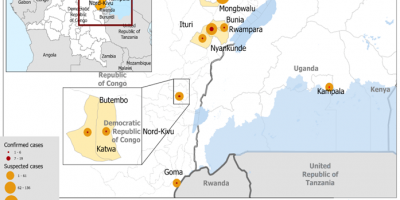
The MHRN is contributing to the UK Government’s response to the current Ebola outbreak in the eastern Democratic Republic of the Congo (DRC). These activities are drawing on prior research and response work, including on community-level preparedness and trust, delivered through SSHAP, which was previously supported by FCDO, Wellcome Trust and UNICEF. Several of SSHAP’s regional partners are members of the MHRN and are contributing to these response activities.