




Search
Search within
1456 results found
Evidence review
Rapid Humanitarian Assessment in Urban Settings
This Technical Brief is intended to be a starting point for improving coordinated needs assessments in urban areas, without which the humanitarian community will not be able to ensure the quality and accountability of urban response itself. It provides guidance…
Briefing
Ebola in West Africa Guinea: Resistance to the Ebola Response
Resistance to the Ebola response has been more widespread and more severe in Guinea, than in Liberia and Sierra Leone, with sometimes violent incidents. This is due to a complex interaction of many factors, including underlying causes and the nature…
Background report
A dangerous divide: the state of inequality in Malawi
This report examines the sharp rise in inequality in Malawi between 2004/5 and 2010/11, and models the link between poverty, inequality and growth from 2015 to 2020.
Background report
Biosocial Approaches to the 2013-2016 Ebola Pandemic
Despite more than 25 documented outbreaks of Ebola since 1976, our understanding of the disease is limited, in particular the social, political, ecological, and economic forces that promote (or limit) its spread.In the following study, we seek to provide new…
Background report
Interview with Francisco Songane: Evidence of Impact of Human Rights-Based Approaches to Health
Dr. Francisco Songane was Mozambique’s minister of health from 2000 to 2004. During his tenure, he oversaw the introduction of innovative strategies to tackle malaria and hepatitis B. In addition to ensuring the inclusion of HIV treatment in the public…
Briefing
Diaspora Communications and Health Seeking Behaviour in the Time of Ebola: Findings from the Sierra Leonean Community in London
The Sierra Leonean diaspora was active in responding to the Ebola outbreak that hit Sierra Leone in March 2014, both by providing financial and material support, and through direct communication with relatives, friends and colleagues back home. This paper looks…
Briefing
Communities are the Real Heroes – Doing Social Mobilisation Differently: Lessons and Recommendations from the Ebola Outbreak
The Ebola outbreak in West Africa has reinvigorated the debate about the role of ‘social mobilisation’ and ‘community engagement’, not only in response to devastating disease but a range of other intractable issues affecting Africa and the rest of the…
Briefing
Contextualising Ebola Rumours from a Political, Historical and Social Perspective to Understand People’s Perceptions of Ebola and the Responses to it
This briefing explores how rumours about Ebola in Sierra Leone influences people’s perception and response to Ebola, from the political, historical and social perspectives. Despite the efforts of the World Health Organisation to control the Ebola outbreak, achieving zero cases…
Evidence review
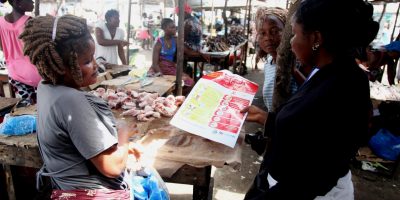
Children’s Ebola Recovery Assessment: Sierra Leone
Nearly half the population of Sierra Leone is under the age of 18 years and the impact of the Ebola crisis on their lives now and on their future opportunities has been far-reaching: no school; loss of family members and…
Briefing
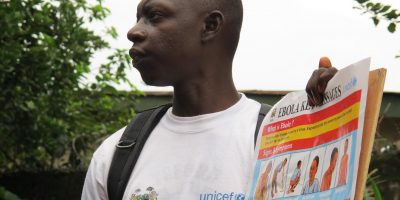
Ebola Can Be Transmitted Sexually for Weeks After Recovery – Education is Crucial
Conflicting messages on the length of time that Ebola remains in semen after recovery make education and prevention confusing. We need to avoid mixed messages and focus on girls’ rights, says anthropologist Pauline Oosterhoff. When I met members of a…
Evidence review
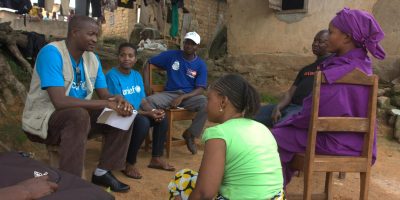
Community Perceptions of Ebola Response Efforts in Liberia: Montserrado and Nimba Counties
This study aimed to support Oxfam’s Public Health Promotion (PHP) strategy through a rapid qualitative assessment of the remaining social barriers to compliance with Ebola prevention and treatment messages. At the time of the study, most Liberians had a high…
Evidence review
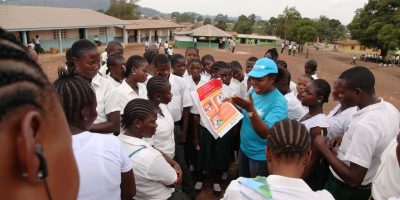
Village Responses to Ebola Virus Disease and its Prevention
The present document is the eighth and final report in a series presenting descriptive results of a survey of responses to Ebola and Ebola control in 26 villages in all three provinces of rural Sierra Leone, fieldwork for which was…
Briefing
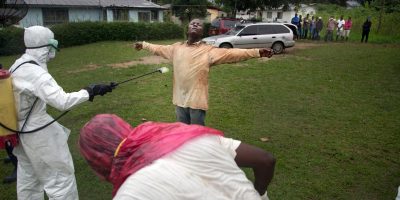
Ebola: Limitations of Correcting Misinformation
This comment piece identifies problematic assumptions behind communication and social mobilisation strategies which rely on using biomedicine to correct local logics and concerns and which cast them as misinformation. The effectiveness of using standardised advice for non-standardised situations is questioned.
Evidence review
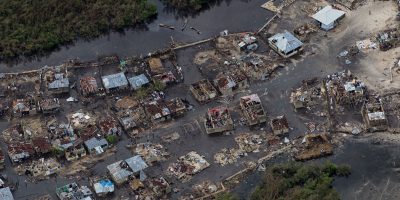
Determinants of the Lethality of Climate-Related Disasters in the Caribbean Community (CARICOM): A Cross-Country Analysis
Floods and storms are climate-related hazards posing high mortality risk to Caribbean Community (CARICOM) nations. However risk factors for their lethality remain untested. We conducted an ecological study investigating risk factors for flood and storm lethality in CARICOM nations for…
Briefing
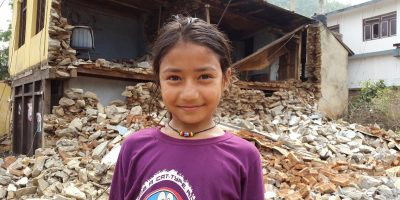
Focus on Nepal Earthquake and Earthquakes in Southern Asia
Nepal witnessed a 7.8 magnitude earthquake on 25th April and a 7.3 quake on 12th May, the worst natural disasters since 1900 in terms of number of dead, population affected and economic losses (A). The earthquakes killed more than 9,000 people…
Evidence review
Lessons Learned on Health Adaptation to Climate Variability and Change: Experiences Across Low- and Middle-Income Countries
Climate variability and change are exacerbating many current climate-sensitive health outcomes and have the potential to affect the ability of health system institutions and organizations to maintain or improve health burdens in the context of changing climate and development patterns.…
Policy document
WHO’s six-year strategic plan to minimize the health impact of emergencies and disasters: 2014-2019
The purpose of this document is to outline how WHO plans to contribute to the reduction of death, illness and disability from emergencies while promoting the wellbeing and dignity of those affected.
Ethics in Epidemics, Emergencies and Disasters: Research, Surveillance and Patient Care: Training Manual
The training manual has two parts. Part 1 covers ethical issues in research and surveillance, such as conflicts that might arise between the common good and individual autonomy, ethics oversight and publication ethics. Part 2 covers patient care, including triage,…
Briefing
Sierra Leone: Tracing Ebola in Tonkolili
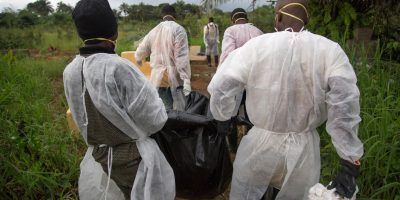
When the Tonkolili District reported a new case of Ebola on 24 July 2015, it marked a change in the Sierra Leone Ebola response. A rapid response team was despatched to manage this new source of infection, the first case…
Briefing
Sierra Leone: Inspiring Confidence and Trust in Ebola Care
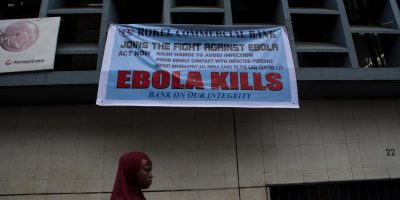
In Sierra Leone’s Magazine Wharf, there are mixed perceptions around Ebola response systems. Ambulance services are met with especial scepticism. Many fear that a trip in the ambulance will end in death in an Ebola treatment centre or holding unit.…
Briefing
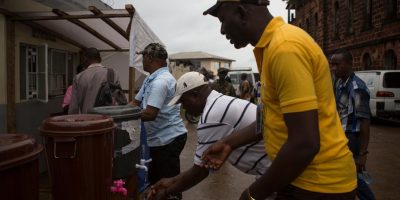
Helping Guinean Communities Fight Ebola
Through household visits, a presence on prefecture streets and conversations with influential members of key community groups, surveillance teams are spreading the message about Ebola and providing support to families
Briefing
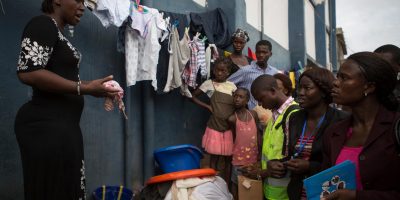
Sierra Leone: Increasing Community Engagement for Ebola On-Air
WHO’s social mobilization team is using radio to reach communities with information about how to prevent the spread of Ebola in Sierra Leone.
Briefing
Guinea: Reopening Schools Safely – Partnering with Families and Communities
After many months of prolonged closure due to fear of Ebola transmission, schools have reopened in Guinea last month. WHO and partners have played a crucial role in preparing schools to open their doors to students.
Briefing
Anthropologists work with Ebola-Affected Communities in Mali
Ebola virus control teams need a mix of expertise, including epidemiologists, logistics specialists, laboratory workers, hygiene experts and various other specialized professions. Social anthropologists play a less well-known but equally important role.
Briefing
Ebola Diaries: Lessons in Listening
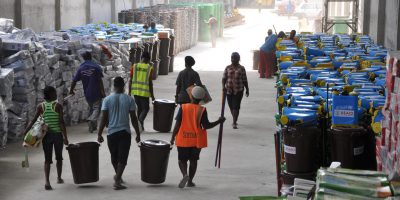
Cheikh Ibrahima Niang, a professor of medical and social anthropology at the Cheikh Anta Diop University in Dakar, Senegal, has researched anthropological aspects of a wide range of health issues. In July 2014, WHO asked him to investigate community attitudes…
Briefing
Ebola Diaries: Lessons from Previous Ebola Outbreaks Help with the Response in Guinea
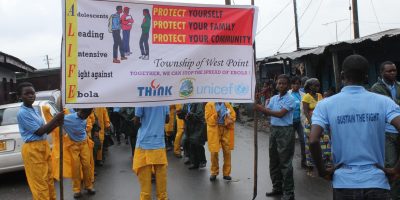
Marie Claire Therese Fwelo Mwanza, a social mobilization expert with 27 years experience at WHO, helped end 5 of the Democratic Republic of Congo’s (DRC) 7 Ebola outbreaks through effective community engagement. In 2014, Marie Claire played a role in…
Evidence review
Communication and social mobilization in yellow fever mass vaccination campaigns: 10 points from field experience
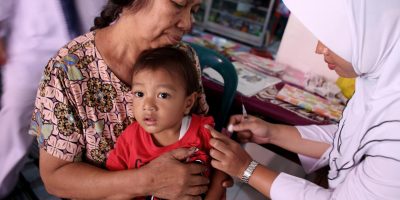
The main objective of this document is to provide evidence-based guidance on conducting practical social mobilization and communication for a yellow fever vaccination campaign, either preventive or reactive. Information is also given on the monitoring and evaluation of communication and…
WHO Emergency Reform Consultation Workshop Community Engagement
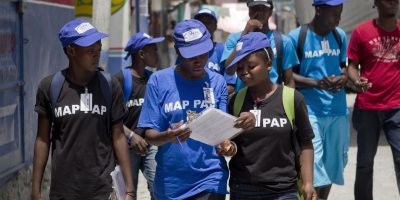
Community Engagement has been identified as a cross-cutting priority in WHO`s Emergency Reform agenda as outlined in WHO Emergency Reform: Roadmap for Action. The report serves as a blueprint for the reform process and calls for a plan/strategy with “operational…
Briefing
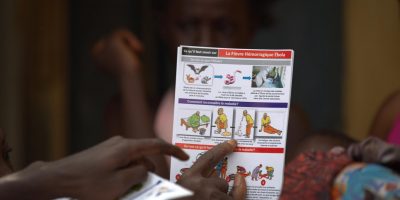
Sierra Leone’s Young Community Leaders Are Best Weapon Against Ebola
Foreign leaders discussing solutions to the Ebola epidemic must acknowledge the contribution made by local workers to reduce infection rates.
Briefing
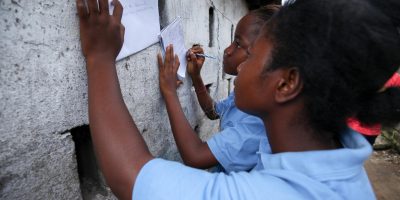
Young People Played a Game-Changing Role in the Battle Against Ebola in Liberia
An Ebola survivor reports on a pioneering community initiative in Monrovia that could save lives in the fight against other infectious diseases.
Background report
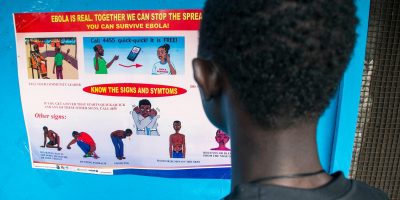
Ebola in the Context of Conflict Affected States and Health Systems: Case Studies of Northern Uganda and Sierra Leone
Ebola seems to be a particular risk in conflict affected contexts. All three of the countries most affected by the 2014-15 outbreak have a complex conflict-affected recent history. Other major outbreaks in the recent past, inNorthern Uganda and in the…
Background report
Sociocultural and Economic Dimensions of Rift Valley Fever
Health researchers have advocated for a cross-disciplinary approach to the study and prevention of infectious zoonotic diseases, such as Rift Valley Fever. It is believed that this approach can help bring out the social determinants and effects of the zoonotic…
Background report
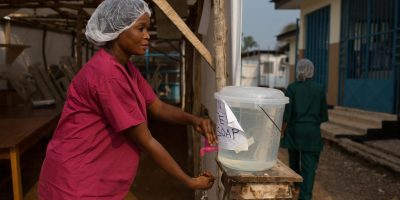
What Factors Might Have Led to the Emergence of Ebola in West Africa?
An Ebola outbreak of unprecedented scope emerged in West Africa in December 2013 and presently continues unabated in the countries of Guinea, Sierra Leone, and Liberia. Ebola is not new to Africa, and outbreaks have been confirmed as far back…
Briefing
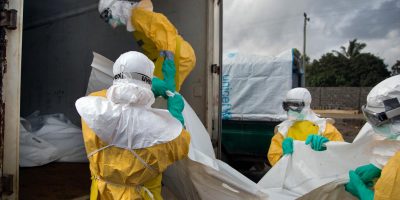
The Financialization of Ebola
Far away from the frontlines of the Ebola outbreaks in Sierra Leone, Guinea, and Liberia, where people and their caretakers die from the disease, new forms of humanitarian aid and global health financing are being leveraged behind closed doors. In…
Briefing
Ebola, Chimeras, and Unexpected Speculation
Alex Nading explains how brincidofovir’s path to the front lines of the Ebola crisis underscores the contingent, speculative, “chimeric” nature of contemporary global health.
Evidence review
The Disease that Emerged
Lyle Fearnley explores how global preparedness for emerging diseases left some places unprepared.
