




Search
Search within
1456 results found
Evidence review
Ebola, Running Ahead
What does experimentation look like in the time of emergency? Ann H. Kelly explores the design of clinical trials amidst the Ebola crisis.
Evidence review
Frozen By the Hot Zone
Joanna Radin explores the role of the “hot zone” in immobilizing people, blood and information.
Evidence review
Ebola, 1995/2014
Nicholas B. King looks back at the dialectics of confidence and paranoia in the Ebola outbreaks of 1995 and 2014.
Evidence review
Medical Vulnerability, or Where There Is No Kit
Where there is no kit and no infrastructure, there is vulnerability. Peter Redfield explores the role of medical humanitarian response in the Ebola crisis.

Evidence review
Outbreak of Unknown Origin in the Tripoint Zone
Guillaume Lachenal traces the urgent past of the current ebola outbreak, offering some surprising lessons about borders.
Evidence review
Income and Malaria. Evidence from an Agricultural Intervention in Uganda
We exploit a spatial discontinuity in the coverage of an agricultural extension program in Uganda to causally identify its effects on malaria. We find that eligibility for the program reduced the incidence of malaria by 8.8 percentage points, with children…
Evidence review
Poor Health Reporting. Do Poor South Africans Underestimate Their Health Needs?
Researchers often rely on household survey data to investigate health disparities and the incidence and prevalence of illness. These self-reported health measures are often biased due to information asymmetry or differences in reference groups. Using the World Health Organization study…
Background report
Human Rights and the HIV Response: Eastern and Southern Africa Region
Key populations, specifically people who sell sex (PWSS), people who inject drugs (PWID) and lesbian, and gay, bisexual, transgender and intersex (LGBTI) people experience significant human rights violations which underpin the continued high HIV incidence in these populations.This rapid assessment…
Evidence review
Effects of Climate Change on the Social & Environmental Determinants of Health in Africa
The authors present current evidence on how climate change impacts on social and environmental determinants of health and the link between these determinants and the vulnerability of local communities. They outline proven community-based interventions that local populations in developing countries…
Evidence review
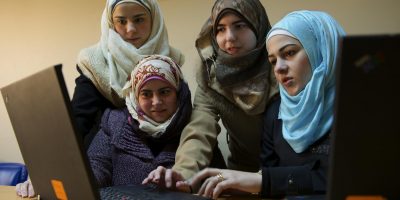
Women and Girls Safe Spaces – A Guidance Note Based on Lessons Learned from the Syrian Crisis
The creation of women and girls safe spaces (WGSS) has emerged as a key strategy for the protection and empowerment of women and girls affected by the Syrian crisis. This document provides an overview of what safe spaces are and…

Background report
Women and Health: The Key for Sustainable Development
Girls’ and women’s health is in transition and, although some aspects of it have improved substantially in the past few decades, there are still important unmet needs. Population ageing and transformations in the social determinants of health have increased the…
Evidence review
Understanding Social Resistance to Ebola Response in Guinea
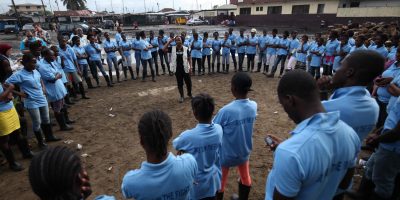
This paper seeks to understand the fear many Guineans feel towards Ebola response initiatives and why the educators, doctors and burial teams have sometimes encountered resistance, occasionally violent.
Briefing
Urbanisation, the Peri-Urban Growth and Zoonotic Disease
Ebola has had significant, negative effects in the rapidly expanding, unregulated areas of peri-urban and urban West Africa. The residents of these areas maintain vital connections with rural populations while intermingling with and living in close proximity to urban and…

Evidence review
Visions, Voices and Priorities of Young People Living With and Most Affected by HIV
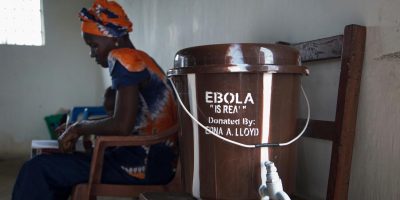
This report shares perspectives and insights from young people from around the world living with and affected by HIV, who share their visions for realising and claiming their sexual and reproductive health and rights (SRHR) and for setting priorities for…
Comment
Social science intelligence in the global Ebola response
Correspondence on continued poor integration of social sciences during global health crises.

Briefing
Managing Health Crises After Ebola: Key Resources
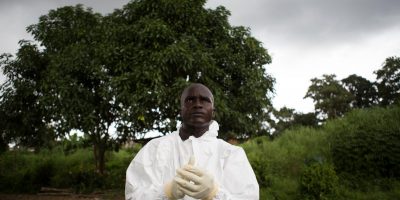
Rachel Thomas maps out the various institutions involved in the response and reviews communication challenges. The ongoing outbreak of Ebola in West Africa is the largest and longest since the virus was discovered four decades ago. Many organisations have been…
Briefing
Managing Rumours and Misinformation in West Africa
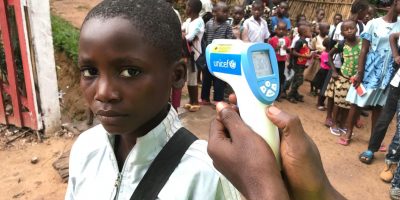
Rumours about Ebola generated social challenges that were real but surmountable, finds Amzath Fassasi.
Briefing
Ethical Considerations in the Conduct of Research on Therapies for the Prevention and Treatment of Ebola Virus Disease in Developing Countries
The devastating toll of the Ebola epidemic in West Africa necessitates considerations of new approaches to research into new prevention technologies and treatments for Ebola Virus Disease (EVD). Research must be planned and delivered in consultation with civil society from…
Background report
Extending the “Social”: Anthropological Contributions to the Study of Viral Haemorrhagic Fevers
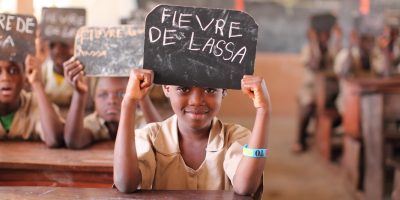
Emerging Viral Haemorrhagic Fevers (VHFs) offer a frontier for a “One-Health” research agenda; the joined-up, or collaborative, effort of multiple disciplines to attain optimal health for people, animals, and the environment (e.g. http://www.onehealthinitiative.com/). Multidisciplinary work on Lassa Fever and Ebola…
Background report
Food Strategy of Batwa Pygmies in Lake Tumba Landscape, Democratic Republic of Congo
The Pygmies are knowledgeable of the virtues of the biodiversity of their environment, including the food value ofthese species. This study report on food strategy developed by the Batwa and is based on a rich biodiversity. The authors conducted a household…
Background report
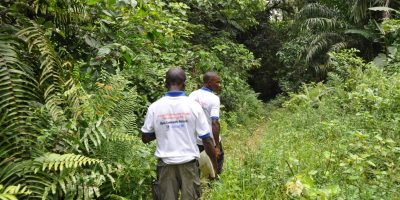
Institutional Choice and Fragmented Citizenship in Forestry and Development Interventions in Bikoro Territory of the Democratic Republic of Congo
Substantive citizenship is the ability of an individual to influence those who govern. In order to assess this ‘ability’, this study examined the powers of sanction possessed by individuals or groups and the accountability mechanisms at their disposal in three villages in…
Background report
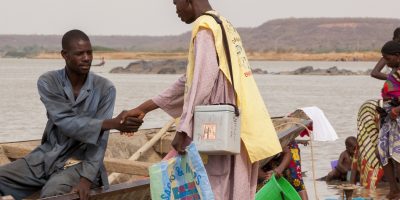
Knowledge, Attitudes and Practices (KAP) on Rift Valley Fever among Pastoralist Communities of Ijara District, North Eastern Kenya
Outbreaks of Rift Valley fever (RVF), a mosquito-borne viral zoonosis, have previously been associated with unusually heavy rainfall and extensive flooding. The disease is a serious public health problem in Africa and the Middle East, and is a potential global…
Background report
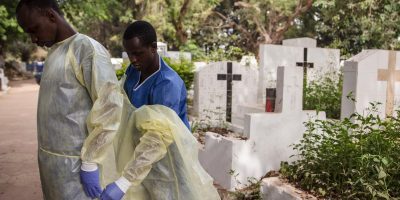
Missing Bodies and Secret Funerals: The Production of “Safe and Dignified Burials” in the Liberian Ebola Crisis
During the height of the Ebola crisis in West Africa, public health responders and the international media focused on dead bodies as sites of disease transmission when early contact tracing discovered the relationship between attendance at funerals and emerging clusters…
Background report
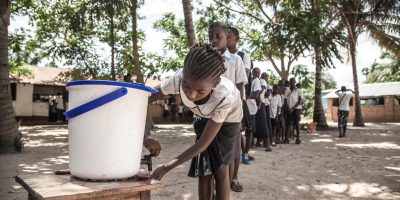
Perceptions of Health Communication, Water Treatment and Sanitation in Artibonite Department, Haiti, March-April 2012
The international response to Haiti’s ongoing cholera outbreak has been multifaceted, including health education efforts by community health workers and the distribution of free water treatment products. Artibonite Department was the first region affected by the outbreak. Numerous organizations have…
Briefing
Strengthening Health Systems for Resilience
In countries with high levels of poverty or instability and with poor health system management and governance, people are highly vulnerable to shocks associated with ill health, including major epidemics. An effective health system can help build their resilience by…
Briefing
UNICEF Annual Report 2015, Democratic Republic of Congo
Despite noticeable progress in some dimensions of children’s rights and significant Gross Domestic Product (GDP) growth, the Democratic Republic of Congo (DRC) is a challenging place for most children and their families, particularly for those living in conflict-affected and hard-to-reach areas. The national…
Case study
‘Resistance’ in Guinea
The following key considerations have been collated from the suggestions and insights provided by over twenty-five anthropologists and social-behavioural scientists (based in West Africa and internationally) who answered an on-line call to provide guidance and operational recommendations in relation to…
Briefing
Emergency Ebola Anthropology Network Advisory Brief: Culture and Clinical Trials fr
This advisory brief aims to provide anthropologically informed guidance to governmental and humanitarian actors involved in the Ebola response at local, national and international levels, about clinical trials for Ebola treatments, therapies and vaccines.
Briefing
Beyond a Public Health Emergency: Potential Secondary Humanitarian Impacts of a Large-Scale Ebola Outbreak
This report documents the secondary humanitarian problems and impacts of largescale Ebola outbreak on the different humanitarian sectors
Case study
Ebola outbreak in West Africa: Challenges to the reintegration of affected groups into communities
This report outlines the key challenges that Ebola survivors and their households, grieving families, orphans, quarantined people and frontline workers face as they reintegrate into their communities
Briefing
Ebola outbreak in West Africa 22 months: on Key issues for recovery and preparedness
While surveillance and treatment efforts to stop the transmission and re-emergence of Ebola continue, the response is moving away from its emergency phase towards longer-term recovery and building a more resilient health system.
Briefing
WASH in Guinea, Liberia, and Sierra Leone: The Impact of Ebola
This document summarises the baseline data on WASH available for Guinea, Liberia, and Sierra Leone
Case study
Ebola in West Africa: Guinea: Resistance to the Ebola Response
This report aims to analyse the resistance to the Ebola response in Guinea, by outlining the current situation and the evolution over the course of the outbreak, and exploring underlying and aggravating factors.
Case study
Ebola in West Africa: Impact on Health Systems
Fear of contracting EVD and mistrust of the health system has made people reluctant to seek treatment from health facilities, further impacting the health sector and increasing the risk of mortality and morbidity from otherwise treatable diseases.
Research paper
Armed mobilisation and the nexus of territory, identity, and authority: the contested territorial aspirations of the Banyamulenge in eastern DR Congo
The closely intertwined notions of territory, identity, and authority are at the heart of conflict dynamics in the eastern DR Congo. Focusing on the territorial aspirations of the Banyamulenge community in South Kivu, this article looks at the ways in…
Briefing
Understanding Armed Group Proliferation in the Eastern Congo
Due to the proliferation of smaller armed groups and the disappearance and scattering of larger rebel movements, the armed group landscape of the eastern Congo has become increasingly fragmented. This fragmentation results from the interplay between the growing engagement of…
