




Search
Search within Resources
1456 results found

Evidence review
The Economics of Malaria in Africa
Malaria still claims a heavy human and economic toll, specifically in sub-Saharan Africa. Even though the causality between malaria and poverty is presumably bi-directional, malaria plays a role in the economic difficulties of the region. This article provides an analysis…
Briefing
Responding to Crises: What Can We Do? What’s Next?
Although sometimes over used, the word ‘crisis’ accurately describes many challenges of today’s world, such as climage change, war and refugees, economic volatility, pandemics, and the continuing unmet needs of the poor, hungry, and neglected. While much has been achieved — in…

Evidence review
Impact of Post-Conflict Development Interventions on Maternal Healthcare Utilization
We evaluate the effectiveness of a post-conflict development programme on maternal health-care utilization in the Chittagong Hill Tracts of Bangladesh. Our work varies from conventional impact evaluation studies because of the inclusion of two post-conflict psychosocial risks: the household’s actual…
Evidence review
Income and Malaria. Evidence from an Agricultural Intervention in Uganda
We exploit a spatial discontinuity in the coverage of an agricultural extension program in Uganda to causally identify its effects on malaria. We find that eligibility for the program reduced the incidence of malaria by 8.8 percentage points, with children…
Evidence review
Gold Mining Pollution and the Cost of Private Healthcare: The Case of Ghana
To attract greater levels of foreign direct investment into their gold mining sectors, many mineral-rich countries in sub-Saharan Africa have been willing to overlook serious instances of mining company non-compliance with environmental standards. These lapses in regulatory oversight and enforcement…

Evidence review
Outbreak of Unknown Origin in the Tripoint Zone
Guillaume Lachenal traces the urgent past of the current ebola outbreak, offering some surprising lessons about borders.

Evidence review
Medical Vulnerability, or Where There Is No Kit
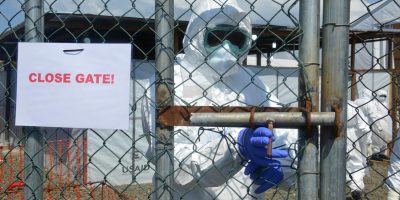
Where there is no kit and no infrastructure, there is vulnerability. Peter Redfield explores the role of medical humanitarian response in the Ebola crisis.
Evidence review
Ebola, 1995/2014
Nicholas B. King looks back at the dialectics of confidence and paranoia in the Ebola outbreaks of 1995 and 2014.
Evidence review
Frozen By the Hot Zone
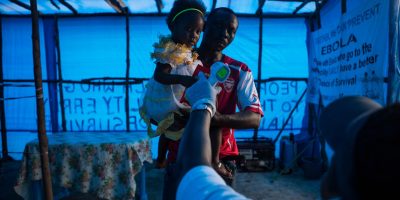
Joanna Radin explores the role of the “hot zone” in immobilizing people, blood and information.
Evidence review
Ebola, Running Ahead
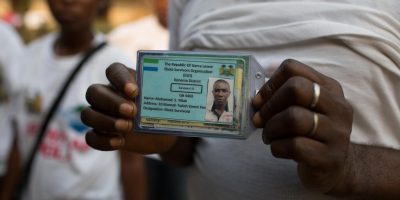
What does experimentation look like in the time of emergency? Ann H. Kelly explores the design of clinical trials amidst the Ebola crisis.

Evidence review
The Disease that Emerged
Lyle Fearnley explores how global preparedness for emerging diseases left some places unprepared.
Briefing
Ebola, Chimeras, and Unexpected Speculation
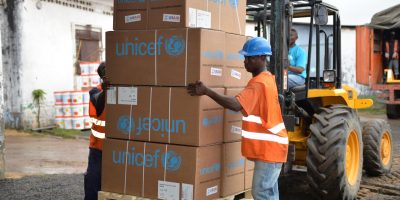
Alex Nading explains how brincidofovir’s path to the front lines of the Ebola crisis underscores the contingent, speculative, “chimeric” nature of contemporary global health.
Evidence review
Storage and Stockpiling as Techniques of Preparedness: Managing the Bottlenecks of Flu Pandemics
In the last twenty years, influenza has been considered by global health experts as a model for the emergence of new pathogens from animal reservoirs. In the logic of zoonoses, human disease is the tip of the iceberg constituted by…
Briefing
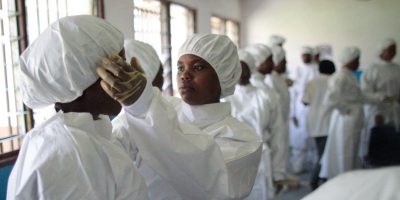
Ebola 2014: Chronicle of a Well-Prepared Disaster
The current crisis is not a nightmare unfolding in front of our eyes, as in a “disaster movie.” It is not an anomaly or an accident which has afflicted public health services unexpectedly. It is also not, to use development…
Evidence review
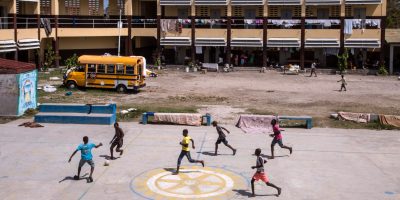
Culture and Mental Health in Haiti
This paper reviews and summarizes the available literature on Haitian mental health and mental health services. This review was conducted in light of the Haitian earthquake in January 2010. We searched Medline, Google Scholar and other available databases to gather…
Briefing
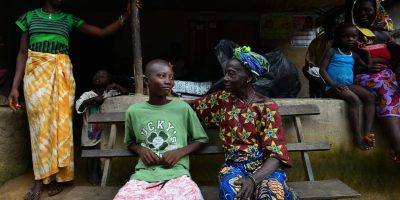
Caring as Existential Insecurity: Quarantine, Care, and Human Insecurity in the Ebola Crisis
In August of this year, when the Ebola outbreak escalated in Liberia and a state of emergency had been declared for the country, Fatu Kekula, a young Liberian nursing student, improvised personal protective equipment (PPE) to care for her father,…
Evidence review
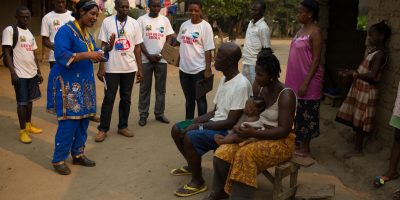
Notes from Case Zero: Anthropology in the time of Ebola
The lead for a story on the Ebola outbreak is, by now, familiar: on the 22nd of March, the Guinean Ministry of Health declared an outbreak of Ebola, the first ever in the region. The virus has since spread through…
Evidence review
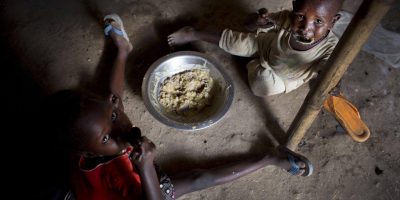
The Limits of Rations and Cash for Food Programs: Food Related Illness in The Gihembe Refugee Camp
Since the implementation of the mVisa program, refugees overwhelmingly believe malnutrition rates are as high as they have ever been in Gihembe, that the same illnesses abound, but that there is less excrement – or watery diarrhea – visible in…
Briefing
After the End of Disease: Rethinking the Epidemic Narrative
In conversations with people living with polio in Hungary, I often encountered members of the tight-knit community referring to themselves as “dinosaurs”. We are a breed that is about to die out, they said. Nobody gets polio anymore, some added,…
Briefing
Untimely Ends and the Pandemic Imaginary
“Untimely ends” can then be best approached as transformative topoi between the symbolic order of really existing epidemics and the pandemic imaginary, as a vision of the (biological and ontological) end of humanity. Rather than just bridging experience and anticipation,…
Briefing
Plotting Global Health Attention through Pandemics
In late August 2011, on the eve of the tenth anniversary of 9/11, Hurricane Irene tore northwards up the Atlantic, its projected path fixed over the U.S. East Coast. So great was the force of the tropical storm’s anticipation that…
Briefing
The Financialization of Ebola
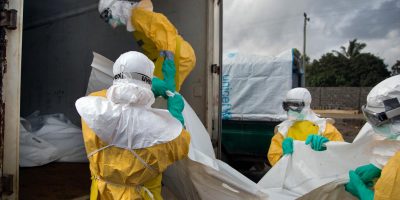
Far away from the frontlines of the Ebola outbreaks in Sierra Leone, Guinea, and Liberia, where people and their caretakers die from the disease, new forms of humanitarian aid and global health financing are being leveraged behind closed doors. In…
Briefing
Ten Things that Anthropologists Can Do to Fight the West African Ebola Epidemic
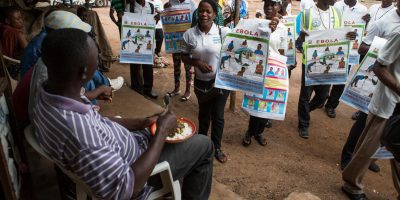
In this article, I share a 10-point list of actions that anthropologists could take, right now, to improve the global response to the West African Ebola outbreak. Take notice, global health and national and international biosecurity communities. There exists an…
Background report
What Factors Might Have Led to the Emergence of Ebola in West Africa?
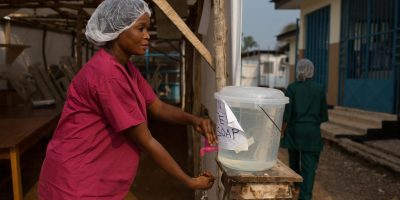
An Ebola outbreak of unprecedented scope emerged in West Africa in December 2013 and presently continues unabated in the countries of Guinea, Sierra Leone, and Liberia. Ebola is not new to Africa, and outbreaks have been confirmed as far back…
Evidence review
A Plan to Strengthen Community Resilience to Drought in Southern Africa
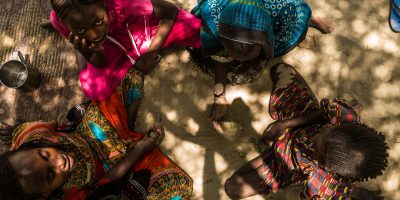
This plan aims to reinforce community resilience to food insecurity by strengthening the following areas: access to and availability of food; household food security and nutrition and livelihoods; community-based disaster risk reduction; access to safe water and hygiene, and health…
Briefing
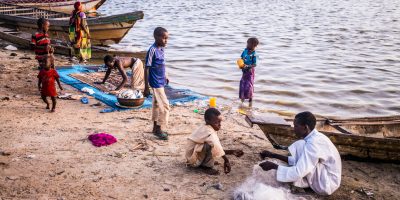
Famine in Somalia: Causes and Solutions
The UN announcement of famine in Somalia is both a wake-up call to the scale of this disaster, and a wake-up call to the solutions needed to limit death-from-hunger now and in the future. So, what is famine and how…
Briefing
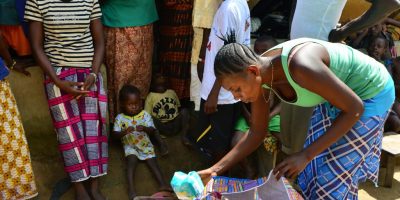
Understanding the Economic Effects of the 2014 Ebola Outbreak in West Africa
Since March 2014, over 3,000 people have died from the relentless spread of the Ebola virus throughout the West African countries of Guinea, Sierra Leone, Liberia and Nigeria. Despite the heroic efforts of the humanitarian and medical professionals in these countries, crumbling public health…
Futures thinking
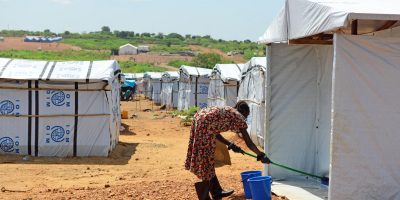
Humanitarian trends in Southern Africa: challenges and opportunities
This report gives the findings of field research, secondary data analysis and detailed interrogation of humanitarian emergencies, and proposes six broad clusters of potential threats.
Background report
Health and Climate Change: Key Linkages in Southern Africa
Climate change has major health implications for developing countries but the links are often not well understood. This report describes the current and predicted climate impacts on human health in southern Africa. It presents a view of existing health vulnerabilities…
Background report
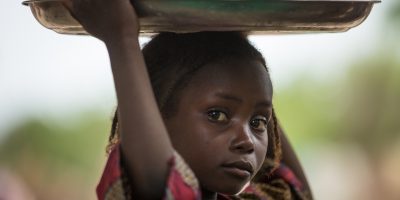
A Public Health Approach to the Impact of Climate Change on Health in Southern Africa – Identifying Priority Modifiable Risks
Anthropogenic climate change and anticipated adverse effects on human health as outlined by the Intergovernmental Panel on Climate Change (IPCC) are taken as givens. A conceptual model for thinking about the spectrum of climate-related health risks ranging from distal and…
Evidence review
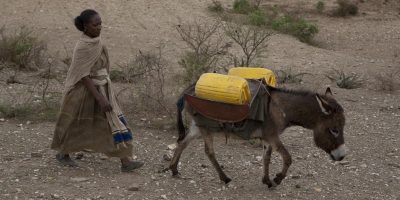
Potential Impact of Climate Change on Livestock Production and Health in East Africa: A Review
Agriculture and livestock are amongst the most climate sensitive economic sectors in the developing countries whilst the rural poor communities are more vulnerable to the adverse effects of climate change. Climate change is real and is happening now. Current knowledge…
Evidence review
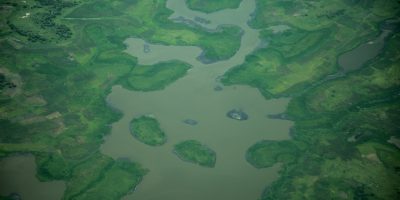
Managing Climate Extremes and Disasters in Africa: Lessons from the IPCC SREX report
The Special Report on Managing the Risks of Extreme Events and Disasters to AdvanceClimate Change Adaptation(SREX) was commissioned by the Intergovernmental Panel on Climate Change (IPCC)in response to a recognised need to provide specific advice on climate change, extreme weather…
Evidence review
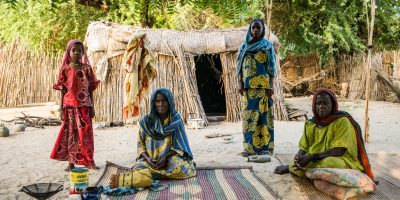
Climate Change and Health in SADC Region: Review of the Current State of Knowledge
Evidence shows that the SADC region is experiencing increasing frequency of hot days and decreasing frequency of extremely cold days. Rainfall trends are variable but evidence points to an increased inter-annual variability, with extremely wet periods and more intense droughts…

Evidence review
El Niño: Overview of Impact, Projected Humanitarian Needs and Response as of 02 June 2016
The humanitarian impact of the 2015-2016 El Niño remains deeply alarming, now affecting over 60 million people. Central America, East Africa (particularly Ethiopia), the Pacific and Southern Africa remain the most affected regions. The El Niño phenomenon is now in decline, but projections indicate the situation will worsen…
Background report
Climate Change and Health across Africa: Issues and Options
This working paper lays out the current state of knowledge regarding direct and indirect impacts of environmental factors on health across Africa. While there are many uncertainties in magnitudes of climate change, particularly with timing, the existing literature makes interesting…

Briefing
Impacts on Health of Climate Extremes
This chapter summarizes what is known about the historical effects of climate extremes on human health. The following section describes studies of infectious diseases and climate extremes related to El Niño Southern Oscillation. The next considers the impacts of short-term…
