




Search
Search within Resources
1456 results found

Background report
Global Governance and the Limits of Health Security
The Ebola outbreak in West Africa has exposed the limits of the current approach to the global governance of infectious diseases, which mixes public health and security interests. International efforts to strengthen ‘health security’ quickly faltered when confronted with weak…
Background report
Food Strategy of Batwa Pygmies in Lake Tumba Landscape, Democratic Republic of Congo
The Pygmies are knowledgeable of the virtues of the biodiversity of their environment, including the food value ofthese species. This study report on food strategy developed by the Batwa and is based on a rich biodiversity. The authors conducted a household…
Background report
Extending the “Social”: Anthropological Contributions to the Study of Viral Haemorrhagic Fevers
Emerging Viral Haemorrhagic Fevers (VHFs) offer a frontier for a “One-Health” research agenda; the joined-up, or collaborative, effort of multiple disciplines to attain optimal health for people, animals, and the environment (e.g. http://www.onehealthinitiative.com/). Multidisciplinary work on Lassa Fever and Ebola…
Background report
Evidence-Based Engagement of the Somali Pastoralists of the Horn of Africa in Polio Immunization: Overview of Tracking, Cross-Border, Operations, and Communication Strategies
Building on the experience of the 2013-2014 wild poliovirus outbreak in the Horn of Africa, this study examines applied strategies that helped to engage pastoralists of the Somali cluster (Somalia, Somali Region of Ethiopia, and North-East Kenya) in supplementary immunization activities. Aimed…
Briefing
Ethical Considerations in the Conduct of Research on Therapies for the Prevention and Treatment of Ebola Virus Disease in Developing Countries
The devastating toll of the Ebola epidemic in West Africa necessitates considerations of new approaches to research into new prevention technologies and treatments for Ebola Virus Disease (EVD). Research must be planned and delivered in consultation with civil society from…

Briefing
Ethical Challenges for International Collaborative Research Partnerships in the Context of the Zika Outbreak in the Dominican Republic: A Qualitative Case Study
The establishment of international collaborative research partnerships in times of infectious disease outbreaks of international importance has been considered an ethical imperative. Frail health research systems in low- and middle-income countries can be an obstacle to achieve the goal of…
Background report
Epidemics and the Politics of Knowledge: Contested Narratives and Pathways in H1N1 Response
This article explores the politics of knowledge involved in understanding and responding to epidemics in an era of global health governance and biosecurity. It develops and applies an approach focused on how multiple, competing narratives about epidemics are constructed, mobilized…
Epidemics and Resistance in Colonial Sierra Leone during the First World War
Regional and global disease epidemics, which followed in the wake of the First World War, became the crucial tipping point in the balance between resistance and accommodation that had been established between the British colonial administration and newly colonized people…
Background report
Epidemics (Especially Ebola)
Anthropology’s response to the West African Ebola epidemic was one of the most rapid and expansive anthropological interventions to a global health emergency in the discipline’s history. This article sets forth the size and scale of the anthropological response and…
Briefing
“We are the heroes because we are ready to die for this country”: Participants’ Decision-Making and “Grounded Ethics” in an Ebola Vaccine Clinical Trial
The 2014–2016 Ebola epidemic presented a challenging setting in which to carry out clinical trials. This paper reports findings from social science research carried out in Kambia, Northern Sierra Leone during first year of an Ebola vaccine trial (August 2015–July…
Background report
Engaging ‘Communities’: Anthropological Insights from the West African Ebola Epidemic
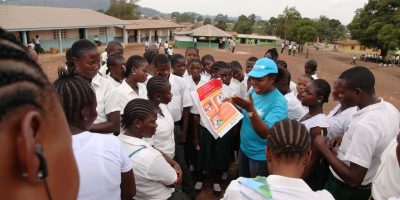
The recent Ebola epidemic in West Africa highlights how engaging with the sociocultural dimensions of epidemics is critical to mounting an effective outbreak response. Community engagement was pivotal to ending the epidemic and will be to post-Ebola recovery, health system…
Background report
Emerging Disease or Emerging Diagnosis?: Lassa Fever and Ebola in Sierra Leone
It has become routine to attribute the tragedy of the West African Ebola epidemic to inexperience and lack of knowledge. The states and citizens of Guinea, Liberia, and Sierra Leone were portrayed as entirely unfamiliar with Ebola and therefore without…
Background report
Ebola Through a Glass, Darkly: Ways of Knowing the State and Each Other
The Ebola epidemic unfolded in radically divergent manners in two neighboring villages in Sierra Leone, with one recording 40 cases and 20 deaths and the other recording zero cases, though they are located only 100 meters apart. Presented with identical…
Background report
Ebola and Lessons for Development
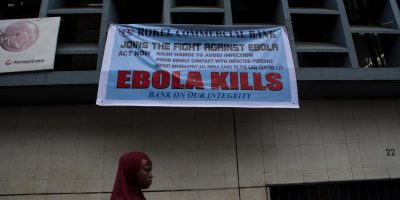
As the Ebola crisis continues to unfold across West Africa and the international community belatedly responds, broader questions arise beyond the immediate challenges on the ground. These fundamentally challenge our understanding of ‘development’ as framed and practised in past decades.…
Background report
Distinguishing Social and Cultural Features of Cholera in Urban and Rural Areas of Western Kenya: Implications for Public Health
Urban and rural areas have distinctive health problems, which require consideration. To examine sociocultural features of Cholera and its community context, a semi-structured explanatory model interview based on vignettes depicting typical clinical features of Cholera was used to interview 379…

Background report
Culture and Health
Planned and unplanned migrations, diverse social practices, and emerging disease vectors transform how health and wellbeing are understood and negotiated. Simultaneously, familiar illnesses-both communicable and non-communicable-continue to affect individual health and household, community, and state economies. Together, these forces shape…
Background report
Cultural Transmission of Traditional Ecological Knowledge among Batwa Pygmies and Ntomba Bantou in Lake Tumba Landscape, Democratic Republic of Congo
This paper is a case study which aims to examine how today’s techniques related to different livelihood activities, but also in the social field, are acquired and transmitted among Batwa (pygmies) and Ntomba (bantou) communities living in the two villages (Moheli…
Field notes
Cultural Influences Behind Cholera Transmission in the Far North Region, Republic of Cameroon: A Field Experience and Implications for Operational Level Planning of Interventions
In recent years, the Far North Region of Cameroon has experienced serious and recurrent Cholera outbreaks. Yet, understanding of cultural influences on outbreaks and spread remain poorly understood. This qualitative study explored cultural influences on Cholera exposure in this region.…
Background report
Biocommunicability and the Biopolitics of Pandemic Threats
In this article we assess accounts of the H1N1 virus or “swine flu” to draw attention to the ways in which discourse about biosecurity and global health citizenship during times of pandemic alarms supports calls for the creation of global…

Briefing
Cultural Epidemiology of Pandemic Influenza in Urban and Rural Pune, India: A Cross-Sectional, Mixed-Methods Study
The objective of this study was to identify and compare socio-cultural features of pandemic influenza with reference to illness-related experience, meaning and behaviour in urban and rural areas of India. Cross-sectional, mixed-methods, cultural epidemiological survey with vignette-based interviews. Semi-structured explanatory…
Background report
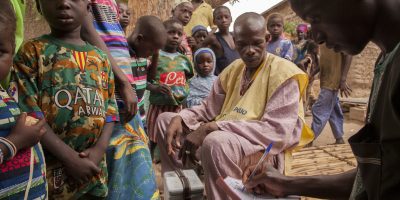
Costs for Households and Community Perception of Meningitis Epidemics in Burkina Faso
Bacterial meningitis in the African meningitis belt remains 1 of the most serious threats to health. The perceptions regarding meningitis in local populations and the cost of illness for households are not well described. We conducted an anthropologic and economic…
Briefing
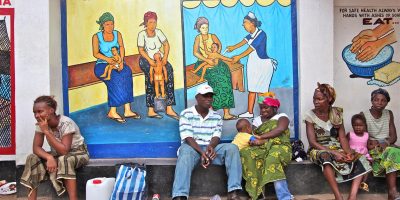
Controversial Ebola Vaccine Trials in Ghana: A Thematic Analysis of Critiques and Rebuttals in Digital News
Communication is of paramount importance in responding to health crises. The authors studied the media messages put forth by different stakeholders in two Ebola vaccine trials that became controversial in Ghana. These interactions between health authorities, political actors, and public…
Background report
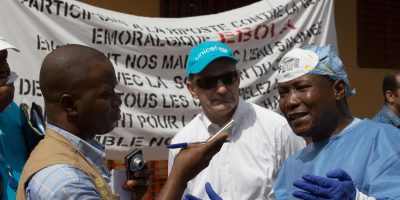
Comparison of Social Resistance to Ebola Response in Sierra Leone and Guinea Suggests Explanations Lie in Political Configurations not Culture
Instead of looking to 'culture' to explain patterns of social resistance a comparison between Sierra Leone and Guinea suggests that explanations lie in divergent political practice and lived experiences of the state.
Background report
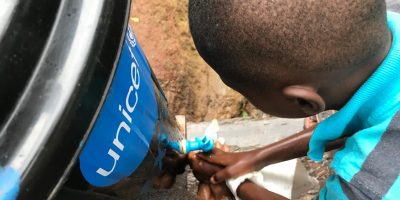
Comparing Sociocultural Features of Cholera in Three Endemic African Settings
Cholera mainly affects developing countries where safe water supply and sanitation infrastructure are often rudimentary. Sub-Saharan Africa is a Cholera hotspot. Effective Cholera control requires not only a professional assessment, but also consideration of community-based priorities. The present work compares…
Background report
Community Perception and Beliefs About Blood Draw for Clinical Research in Ghana
Clinical research participants often express concerns about blood draw because of misconceptions about the uses to which the blood will be put. Their comments can generate rumours in their communities, thereby affecting rates of recruitment to research studies and increasing…
Briefing
Communicating Risk in Public Health Emergencies
During public health emergencies, people need to know what health risks they face, and what actions they can take to protect their health and lives. Accurate information provided early, often, and in languages and channels that people understand, trust and use,…
Background report
Cholera Outbreaks in Malawi in 1998-2012: Social and Cultural Challenges in Prevention and Control
Cholera still remains a significant cause of morbidity and mortality in developing countries, although comprehensive surveillance data to inform policy and strategies are scarce. A desk review of the national Cholera database and zonal and districts reports was conducted. Interviews…
Background report
Changing Language, Remaining Pygmy
In this article the author illustrates the linguistic diversity of African Pygmy populations in order to better address their anthropological diversity and history. The author also introduces a new method, based on the analysis of specialised vocabulary, to reconstruct the…
Evidence review
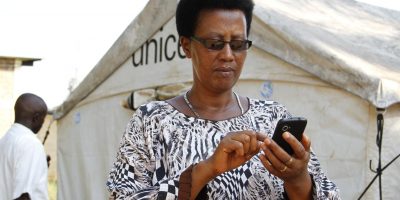
Cell Phones as an Anticipatory Technology: Behind the Hype of Big Data for Ebola Detection and Containment
This paper analyzes ethnographic and cartographic evidence from Sierra Leone that show the limitations of big data relative to the containment of Ebola. In this paper, big data is both a technology itself and also a foundation and catalyst for…

Evidence review
Camel Milk, Amoxicillin, and a Prayer: Medical Pluralism and Medical Humanitarian Aid in the Somali Region of Ethiopia
This paper details how exposure to new clinics, diagnostic technologies, and pharmaceuticals during humanitarian relief operations in the Somali Region of Ethiopia shaped local pluralistic health systems and altered the ways in which residents subsequently conceived of and treated illness…
Beating the Odds: Successful Establishment of a Phase II/III Clinical Research Trial in Resource-Poor Liberia during the Largest-Ever Ebola Outbreak
It has been argued that a country such as Liberia, not fully recovered from the devastation of decades of civil unrest, lacked the appropriate ethical and regulatory framework, basic human and health care services, and infrastructure to carry out clinical…
Background report
Attitudes towards Zika Virus Infection among Medical Doctors in Acehprovince, Indonesia
Zika virus (ZIKV) infection, a public health emergency of international concern, has recently been confirmed in Indonesia. However, to date, there has been no study to assess how prepared healthcare workers in Indonesia are to confront this emerging infectious disease.…
Evidence review
At Home with Mastomys and Rattus: Human-Rodent Interactions and Potential for Primary Transmission of Lassa Virus in Domestic Spaces
The multimammate mouse (Mastomys natalensis) is the reservoir for Lassa virus (LASV). Zoonotic transmission occurs when humans are directly or indirectly exposed to fluids of the multimammate mouse, such as urine, saliva, and blood. Housing characteristics and domestic organization affect…
Evidence review
Antibiotic Prescribing in DR Congo: a Knowledge, Attitude and Practice Survey among Medical Doctors and Students
Antibiotic resistance (ABR) particularly hits resource poor countries, and is fuelled by irrational antibiotic (AB) prescribing. The authors surveyed knowledge, attitudes and practices of AB prescribing among medical students and doctors in Kisangani, DR Congo. This data shows the need for…
An Analysis of Community Perceptions of Mosquito-Borne Disease Control and Prevention in Sint Eustatius, Caribbean Netherlands
In the Caribbean, mosquito-borne diseases are a public health threat. In Sint Eustatius, dengue, Chikungunya and Zika are now endemic. To control and prevent mosquito-borne diseases, the Sint Eustatius Public Health Department relies on the community to assist with the…
Briefing
Accomodating Dissent
Providing cures for health problems isn’t enough, if people’s personal or cultural beliefs clash with the scientific approach. Policy-makers must recognize and engage with these objections.
