




Search
Search within Resources
1456 results found
Background report
Interview with Francisco Songane: Evidence of Impact of Human Rights-Based Approaches to Health
Dr. Francisco Songane was Mozambique’s minister of health from 2000 to 2004. During his tenure, he oversaw the introduction of innovative strategies to tackle malaria and hepatitis B. In addition to ensuring the inclusion of HIV treatment in the public…
Background report
Challenging Orthodoxies: The Road Ahead for Health and Human Rights
Two decades of work delivering health care in poor communities provide a standpoint from which to challenge conventional doctrines in human rights and public health. These orthodoxies include the priority often assigned to civil and political rights over economic and…
Background report
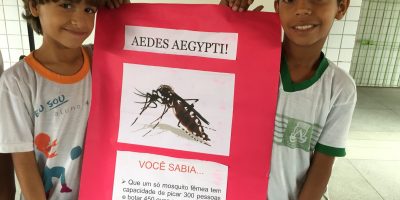
Social Justice, Climate Change, and Dengue
Climate change should be viewed fundamentally as an issue of global justice. Understanding the complex interplay of climatic and socioeconomic trends is imperative to protect human health and lessen the burden of diseases such as dengue fever. Dengue fever is…
Background report
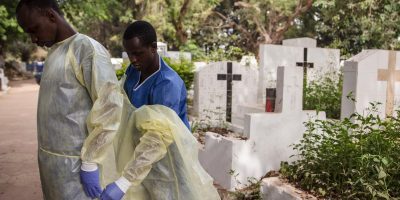
Biosocial Approaches to the 2013-2016 Ebola Pandemic
Despite more than 25 documented outbreaks of Ebola since 1976, our understanding of the disease is limited, in particular the social, political, ecological, and economic forces that promote (or limit) its spread.In the following study, we seek to provide new…
Evidence review
Cholera Outbreak Guidelines: Preparedness, Prevention and Control
This practical field guide brings together lessons learned from Oxfam’s past interventions in the prevention and control of cholera, and other related guidance. The aim is to provide a quick, step-by-step guide to inform cholera outbreak interventions and ensure public…

Evidence review
Guide to Community Engagement in WASH: A Practitioner’s Guide, Based on Lessons from Ebola
The Ebola response in Sierra Leone, Liberia and Guinea demonstrated that community engagement is critical in responding to epidemics. This was not always a guiding principle in the fight against Ebola, which initially prioritized biomedical and militarized responses. Working in…

Evidence review
Child Centred Disaster Risk Reduction and Climate Change Adaptation: Roles of Gender and Culture in Indonesia
The principle aim of this research was to investigate the roles of gender and religion in child-centred disaster risk reduction (DRR). Moreover, and through participatory research, informal conversations and direct advocacy, the project team hoped to build knowledge and awareness…
Background report
Anthropological Perspectives on Disasters and Disability: An Introduction
Natural disasters and disasters that directly derive from human actions, both evolving and sudden, trace the structural fault lines of the societies that they affect. Disaster outcomes disproportionately impact those with the least access to social and material resources: women…
Background report
Reviewing Emergencies for Swaziland – Shifting the Paradigm in a New Era
The world’s highest HIV prevalence and the increasing number of deaths due to AIDS is having unprecedented impact on Swaziland. Worryingly, with a generation of orphans and rapidly escalating poverty, this desperate situation is being accepted as ‘normal’. HIV/AIDS in…
Evidence review
Zimbabwe 2008-2009 Cholera Outbreak Crisis Review
This After Action Review (AAR) covered CARE’s responses to the Cholera Crisis in Zimbabwe from 2008 to 2009. The purpose of this AAR is to contribute to CARE’s understanding of the cholera response, and to help promote learning and accountability…
Evidence review
Public Health Risk Assessment and Interventions – The Horn of Africa: Drought and Famine Crisis
The purpose of this public health risk assessment is to provide health professionals in United Nations agencies, nongovernmental organizations, international and local organizations, donor agencies and local authorities, who are currently working with populations affected by the emergency in the…
Evidence review
Health Epidemics Evaluation Report
In 2012 Uganda experienced many disease outbreaks including Measles, Ebola, Marburg and Nodding disease. Two Ebola outbreaks and one Marburg event were in quick succession and placed the Ministry of Health and the Uganda Red Cross (URCS) as well as…
Evidence review
Evaluation of Ebola Response – Uganda
In recent months Uganda has experienced three separate Viral Hemorrhagic Fever (VHF) outbreaks. Two Ebola outbreaks in the districts of Kibaale and Luwero and one Marburg event in Kabaale. URCS responded in all three cases with assistance from the IFRC…
Background report
A dangerous divide: the state of inequality in Malawi
This report examines the sharp rise in inequality in Malawi between 2004/5 and 2010/11, and models the link between poverty, inequality and growth from 2015 to 2020.
Evidence review
The Impact of Protracted Crises on Attitudes and Aspirations
This rapid review explores the impact of protracted crises on attitudes and aspirations. It provides a general overview of what is meant by the term protracted crisis, a broad reading of the influence of different types of protracted crisis on…
Briefing
Briefing
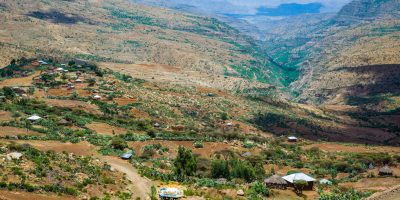
Drought and food insecurity in Ethiopia
An ACAPS Briefing note on the worst drought in Ethiopia for 50 years.
Briefing
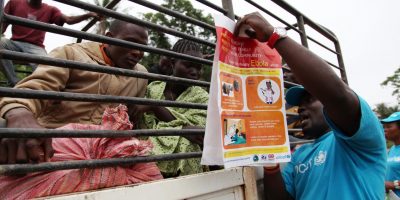
Ebola in West Africa Guinea: Resistance to the Ebola Response
Resistance to the Ebola response has been more widespread and more severe in Guinea, than in Liberia and Sierra Leone, with sometimes violent incidents. This is due to a complex interaction of many factors, including underlying causes and the nature…
Evidence review
Coordinated Assessments in Emergencies – What We Know Now: Key Lessons from Field Experience
This document uses lessons learned from recent coordinated assessments to distil key points,advice, and pitfalls in carrying out a Coordinated Assessment during the first weeks of a disaster. It provides a general introduction to what has been learned about coordinated…

Evidence review
Call Detail Records: The Use of Mobile Phone Data to Track and Predict Population Displacement in Disasters
Information about the displacement of people after disasters is crucial in determining the scale and impact of the emergency, and is vital for conducting humanitarian needs assessment on the ground. Methods to forecast or detect such migration are however very…
Briefing
Scenario Development
A scenario projects alternative ways in which a situation might evolve. It is a set of informed assumptions about a situation that may require humanitarian action. Building scenarios involves speculating about an uncertain future and envisaging different possible outcomes for…
Evidence review
How Sure Are You? Judging Quality and Usability of Data Collected during Rapid Needs Assessments
The objective of this technical brief is to provide guidance on how you could assess the quality of information used as evidence for decision making during humanitarian needs assessments. It aims to assist analysts in understanding the distinction between sources…
Evidence review
Estimation of Affected Population Figures
This Technical Brief is for assessment experts, information management officers and information analysts planning or implementing assessments in emergency contexts. It provides guidance on how to select and use suitable methods when conducting a population estimation exercise.This technical brief builds…
Evidence review
Quick and Easy Guide: Assessing Information & Communications Needs Booklet
Humanitarian needs assessments are carried out to determine the immediate needs of a population following an emergency or humanitarian crises. Once an assessment has been carried out and data has been analysed, humanitarian organisations can make key decisions about their…
Evidence review
Secondary Data Review Sudden Onset Natural Disasters
The aim of these guidelines is to describe the systematic development of an SDR during the initial days and weeks after a disaster. It is based on ACAPS’ experience in developingSecondary Data Reviews for a number of Sudden Onset Disasters…
Evidence review
Demographic Profile: Using Secondary Data
The purpose of this technical brief is to assist humanitarian workers in using secondary demographic data in emergencies. It recommends building a context specific demographic profile based on available information. It proposes some rule-of-thumb standards, which can be adapted to…
Evidence review
Rapid Humanitarian Assessment in Urban Settings
This Technical Brief is intended to be a starting point for improving coordinated needs assessments in urban areas, without which the humanitarian community will not be able to ensure the quality and accountability of urban response itself. It provides guidance…
Evidence review
Lessons Learned: Social Media Monitoring during Humanitarian Crises
Monitoring of social media conversations in the aftermath of the Nepal earthquake was found mainly to be useful in two ways: 1. Analysing public reactions to media reports: The data enabled the team and clients to see which issues were…
Briefing
Evidence review
Questionnaire Design for Needs Assessments in Humanitarian Emergencies
The brief starts with an explanation of the main purpose of a questionnaire and the principles that should be followed to reach these objectives. Afterwards, the ten steps of questionnaire development are discussed. The brief concludes with sections on what…
Evidence review
Severity Measures in Humanitarian Needs Assessments – Purpose, Measurement, Integration
Severity is a key parameter in humanitarian decision making. “Severe” is part of ordinary language; “severity” more institutional. We make absolute statements (“The patient is in asevere condition”) as well as comparative ones (“The townspeople are even more severely impacted…
Briefing
Scenario Building in Preparation for or during Humanitarian Crises
The humanitarian community often finds itself unprepared for unfolding humanitarian developments or sudden events: the 2010 cholera outbreak in Haiti and the sudden spread of Islamic State areas of control in 2013 in Syria are just two of the many…

Background report
Futures thinking
Global health architecture: current and future
A report prepared to inform DFID on the strengths and weaknesses of the current global health architecture, and of the relevance and responsive of the health architecture for the post 2015 agenda.
Evidence review
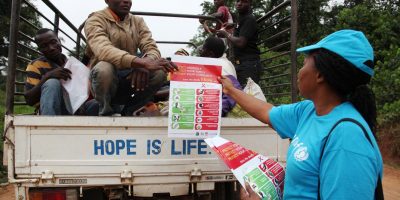
Ebola Regional Lesson Learning
The Ebola outbreak currently affecting West Africa is the most serious trans-national medical emergency in modern times. It has the potential to become a global health crisis. Many of the countries affected already have weak health systems, which are now…
Evidence review
Ebola – Traditional Healers, Witch Doctors, Burial Attendants
This helpdesk focuses on the impact of traditional healers, witch doctors and burial attendants on ebola in West Africa. It seeks to establish if there is a difference between witch doctors, herbalists and traditional healers in terms of when people…

Evidence review
Measuring the Quality and Performance of Healthcare Providers in Conflict Settings
The purpose of the review was to provide a summary of possible indicators which might be used to measure the performance and quality of healthcare in conflict-affected settings. There is considerable guidance on measuring access, availability and quantity of health…

Evidence review
A Devastating Toll: the Impact of Three Years of War on the Health of Syria’s Children
Syria’s shattered health system is forcing health workers to engage in brutal medical practices and a series of epidemics have left millions of children exposed to a plethora of deadly diseases. This report sheds light on a broken health system…
