




Search
Search within
1457 results found
Briefing
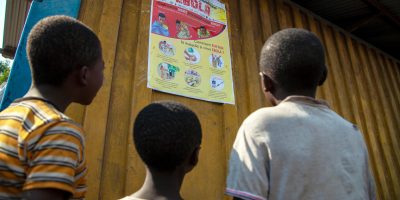
Recommandations Clés pour les Équipes de Réponse Contre la MVE en Équateur
Évidences pour soutenir le MSP et les acteurs qui répondent à la 11ème épidémie d'Ebola en RDC
Briefing
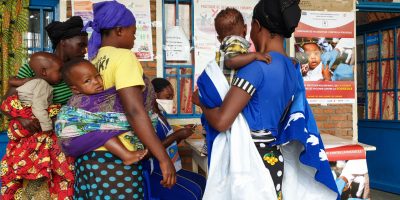
Perceptions des Mesures Barrières pour la Prévention et le Contrôle du COVID-19
Une étude sur les options de protection des personnes vulnérables à domicile
Infographic
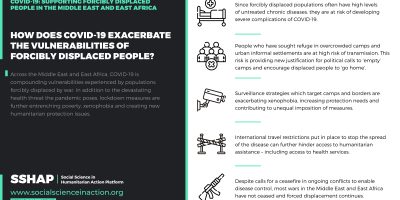
COVID-19: Supporting Forcibly Displaced People in the Middle East and East Africa
COVID-19 is compounding vulnerabilities experienced by populations forcibly displaced by war
Evidence review
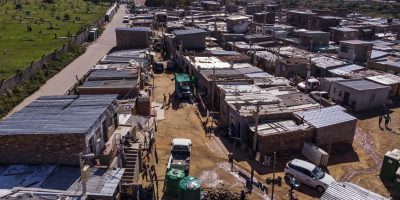
The Emerging Lessons on Urban Vulnerability and Safety from COVID-19 in Low- and Middle-Income Countries
Reflections on the socioeconomic impacts of COVID-19 in LMICs

Briefing
COVID-19 RCCE Strategies for Cross-Border Movement in Eastern and Southern Africa frpt
Key considerations for risk communication and community engagement strategies
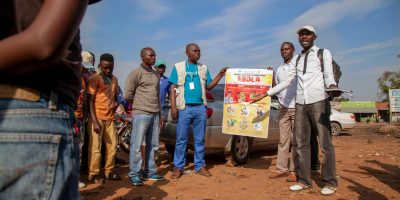
Field notes
Perceptions et Comportements Liés À Ebola
Résultats des études dans la province de l’Equateur auprès des communautés et du personnel de santé sur les perceptions et les comportements liés à Ebola.
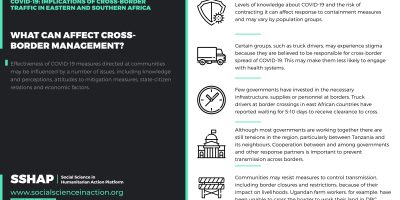
Infographic
COVID-19: Implications of Cross-Border Traffic in Eastern and Southern Africa
Most countries have restricted entry to reduce transmission of COVID-19
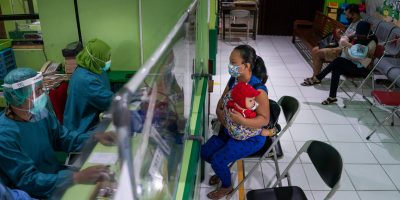
Evidence review
Broader Health Impacts of Vertical Responses to COVID-19 in Low- and Middle- Income Countries (LMICs) fres
Review of the effects of vertical responses to COVID-19 on health systems, services, and people’s access to and use of them in LMICs
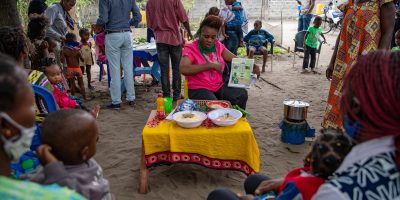
Evidence review
Impacts de la Réponse COVID-19 sur la Santé Communautaire en RDC
Analyse multidisciplinaires intégrées des épidémies
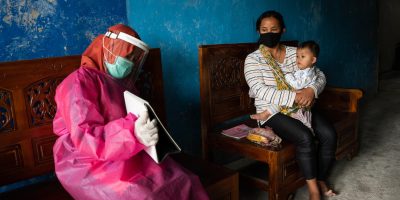
Briefing
Key Considerations: Emerging Evidence on Shielding Vulnerable Groups During COVID-19 arfres
Considerations around the social acceptability and implementation of shielding in low- and middle-income countries
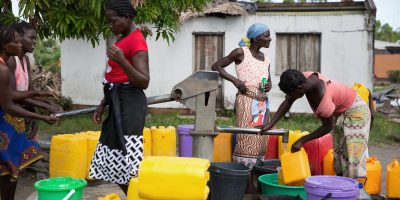
Case study
Enhancing Community Engagement Through Data Collection: Controlling the Cholera Epidemic in Mozambique fr
Case study focusing on post-cyclone cholera response activities
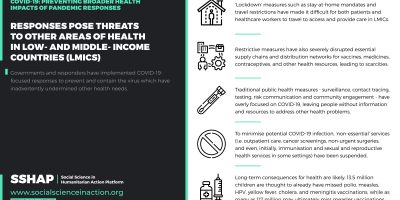
Infographic
COVID-19: Preventing Broader Health Impacts of Pandemic Responses
Review of the effects of vertical responses to COVID-19 on health systems, services, and people’s access to and use of them in LMICs
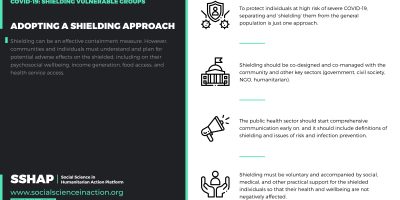
Infographic
COVID-19: Shielding Vulnerable Groups
Considerations around the social acceptability and implementation of shielding in low- and middle-income countries
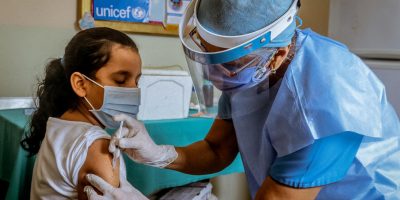
Briefing
Clinical and vaccine trials for COVID-19: Key Considerations from social science frpt
This Key Considerations brief outlines how, and in what ways, social science can contribute to ongoing and future COVID-19 clinical and vaccine trials.
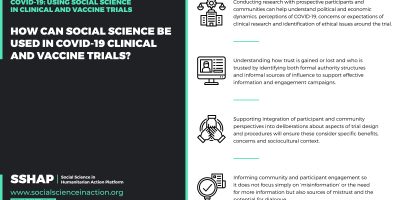
Infographic
COVID-19: Using Social Science in Clinical and Vaccine Trials
How can social science be used in COVID-19 clinical and vaccine trials?

Research paper
COVID-19 in LMICs: The Need to Place Stigma Front and Centre to its Response
This paper assesses potential driving factors of COVID-19-related stigma, and how this intersects with existing stigma fault lines and explores mechanisms through which COVID-19-related stigma may be counteracted, with a focus on LMICs
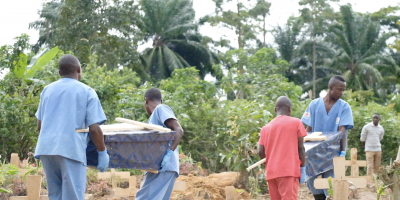
Background report
Death and Funerary Practices in the Context of Epidemics: Upholding the Rights of Religious Minorities
An exploration of the conflict between biomedical understandings of death and funerary practices within epidemic responses, and religious minorities’ freedom of belief and practice
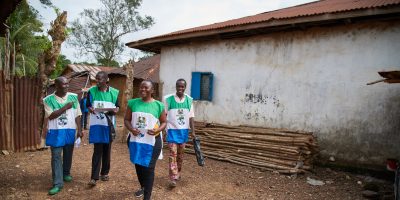
Case study
Psychological Resilience, Fragility and the Health Workforce: Lessons on Pandemic Preparedness from Liberia and Sierra Leone
Looking at evidence from Liberia and Sierra Leone, this paper shares learning on how to protect the mental health of health care workers in fragile settings.
Case study
Evidence for contact tracing (CT) analyses from the DRC Ebola outbreaks
This presentation provides discussion and evidence on contract tracing, looking at the experience of Integrated, Multidisciplinary Outbreak Analytics (IMOA) in the DRC Ebola outbreaks.
Background report
SSHAP Africa CDC Webinar: Lockdowns and easing of restrictions: What can be done to adapt to local contexts and protect those who are vulnerable?
This SSHAP-Africa CDC Webinar brought together representatives of the Member States as well as from civil society organisations, humanitarian actors and professional organisations
Briefing
COVID-19 Vaccine Deployment: Behaviour, Ethics, Misinformation and Policy Strategies
Rapid review offering policy recommendations for vaccine deployment
Research paper
Mental health research in response to the COVID-19, Ebola, and H1N1 outbreaks: A comparative bibliometric analysis
This study uses bibliometric analyses to assess the mental health research output related to the COVID-19 pandemic and compare it to that of the West Africa Ebola and H1N1 outbreaks.
Evidence review
RCCE Strategies to Overcome COVID-19 Fatigue in the Eastern Mediterranean, Middle East and North Africa arfr
This brief synthesises evidence published by UNICEF on social and cultural influences for sustained COVID-19 prevention and risk reduction behaviours in the Eastern Mediterranean / Middle East and North Africa (MENA) region.
Briefing
Rapid Review: Vaccine Hesitancy and Building Confidence in COVID-19 Vaccination arzhfres
This brief draws on social science literature and informal interviews with experts to illustrate that vaccine hesitancy is complex and context-specific, and often reflects diverse, everyday anxieties. It proposes strategies to guide actors involved in vaccine development, communication and deployment…
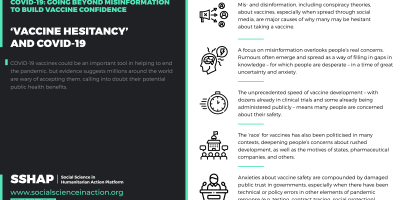
Infographic
COVID-19: Going Beyond Misinformation To Build Vaccine Confidence
Boosting vaccine confidence requires far more than simply providing information.
Evidence review
In-Focus: COVID-19, Uncertainty, Vulnerability and Recovery in India guhi
How COVID-19 has intersected with and multiplied existing uncertainties faced by different vulnerable groups and communities in India
Case study
Thematic Analysis on the Listing and Follow up of Contacts
An in-depth EPI analysis of contact tracing on the Ebola Outbreak in the Equateur Province of the DRC.
Case study
Impacts de la réponse COVID-19 sur la santé communautaire en RDC: Analyses Multidisciplinaires Intégrées des Épidémies
Analyses intégrées des impacts plus larges de la réponse COVID-19 sur la santé communautaire à Kinshasa, RDC
Evidence review
Analyses intégrées et multidisciplinaires en épidémie
Une revue des analyses intégrées menées durant les 90 premiers jours de l’épidémie d’Ebola en Equateur
Infographic
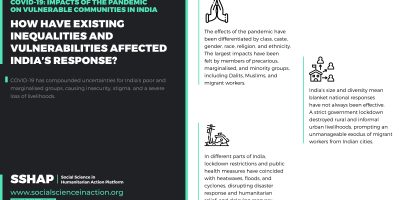
COVID-19: Impacts of the Pandemic on Vulnerable Communities in India
How have existing inequalities and vulnerabilities affected India’s response?
Case study
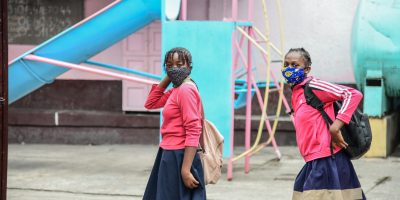
The impacts of the COVID-19 outbreak response on women and girls in the Democratic Republic of the Congo
This report presents an integrated multidisciplinary analysis of the impact of COVID-19 and its response on women and girls in the DRC
Briefing
6 ways to incorporate social context and trust in infodemic management arfr
This brief explains how social science can inform infodemiology by making it more attuned to different social, political and cultural contexts and to the relationships between people and formal institutions.
Research paper
Local response in health emergencies: key considerations for addressing the COVID-19 pandemic in informal urban settlements
This paper highlights the major challenges and considerations for addressing COVID-19 in informal settlements.
Research paper
Impact of COVID-19 public health restrictions on older people in Uganda: “hunger is really one of those problems brought by this COVID”
In Uganda, older adults (aged 60 and above) form 2.7 percent of the population and are amongst the poorest members of society without a steady income or state pension system. Most older people in Uganda (and generally in sub-Saharan Africa)…
Research paper
COVID-19 pandemic, Uganda’s story
Uganda adopted its own model taking into consideration its culture, values, environment, socio-economic activities, beliefs, previous successful epidemic experience, and appears a hybrid policy to the Norwegian model. This model of response is perhaps based on Uganda’s long experience in…
Policy document
Uganda Human Rights Commission Statement on the state of human rights and the fight against COVID-19 in Uganda
Uganda Human Rights Commission Statement on the state of human rights and the fight against COVID- 19 in Uganda, April 2020. This sets out the Commission’s support, human rights concerns and recommendations for improving the government’s Covid-19 response.
