




Search
Search within Resources
1453 results found
Evidence review
An Analysis of Migration Health in Kenya
An Analysis of Migration Health in Kenya was commissioned by theMinistry of Public Health and Sanitation (MoPHS) and the InternationalOrganization for Migration (IOM) to provide an overview of the issue of migration health in Kenya. Information was derived from an…
Background report
Perceived Risk Factors and Risk Pathways of Rift Valley Fever in Cattle in Ijara District, Kenya
Ijara district in Kenya was one of the hotspots of Rift Valley fever (RVF) during the 2006/2007 outbreak, which led to human and animal deaths causing major economic losses. The main constraint for the control and prevention of RVF is…
Background report
Recent Outbreaks of Rift Valley Fever in East Africa and the Middle East
Rift Valley fever (RVF) is an important neglected, emerging, mosquito-borne disease with severe negative impact on human and animal health. Mosquitoes in the Aedes genus have been considered as the reservoir, as well as vectors, since their transovarially infected eggs…
Background report
Sociocultural and Economic Dimensions of Rift Valley Fever
Health researchers have advocated for a cross-disciplinary approach to the study and prevention of infectious zoonotic diseases, such as Rift Valley Fever. It is believed that this approach can help bring out the social determinants and effects of the zoonotic…
Background report
The Implications of Climate Change for Health in Africa
The interactions between health and climate change are clearly recognised; the Intergovernmental Panel on Climate Change includes a chapter on health issues in all its publications. But we still need to better understand all the possible impacts of climate change…
Background report
Ebola in the Context of Conflict Affected States and Health Systems: Case Studies of Northern Uganda and Sierra Leone
Ebola seems to be a particular risk in conflict affected contexts. All three of the countries most affected by the 2014-15 outbreak have a complex conflict-affected recent history. Other major outbreaks in the recent past, inNorthern Uganda and in the…
Background report
Historical Parallels, Ebola Virus Disease and Cholera: Understanding Community Distrust and Social Violence with Epidemics
In the three West African countries most affected by the recent Ebola virus disease (EVD) outbreak,resistance to public health measures contributed to the startling speed and persistence of this epidemic in the region. But how do we explain this resistance,…
Futures thinking
Infectious diseases: preparing for the future Africa
This Foresight Report looks looks ahead 10–25 years to assess the future threat of diseases in plants, animals and humans.
Background report
Human Health Impacts in a Changing South African Climate
Climate change is projected to lead to warmer temperatures, especially in southern Africa, where the warming is predicted to be 2°C higher than the global increase. Given the high burden of disease already associated with environmental factors in this region,…
Background report
Fuzzy Expert Systems and GIS for Cholera Health Risk Prediction in Southern Africa
Cholera (Vibrio cholerae) is endemic in southern Africa and frequently breaks out in epidemics along the eastern seaboard. Extensive resources are directed at combating cholera yet it remains a significant problem. Limited resources could better be directed to prevent outbreaks…
Background report
Addressing Rural Health and Poverty Through Water Sanitation and Hygiene: Gender Perspectives
Women play a crucial role in providing care and support, and also in the use and management of the water resources and sanitation at the household level. In addition, voluntary community care work is done mostly by women, rather than…
Futures thinking
Scenarios for the South African water sector in 2025
A paper reporting on a project to build knowledge about key drivers and uncertainties related to the future of the South African water sector.
Evidence review
A Practitioner’s Guide for Facilitating People Centred Adaptation: Participatory Adaptation Handbook
This book has been compiled by a group of practitioners from South Africa, Ethiopia and Germany, and draws on our collective experiences in supporting local communities in adapting to increasing climatic variability and change. The authors have written this book…
Background report
Seasonality of Cholera from 1974 to 2005: A Review of Global Patterns
The seasonality of cholera is described in various study areas throughout the world. However, no study examines how temporal cycles of the disease vary around the world or reviews its hypothesized causes. This paper reviews the literature on the seasonality…
Background report
The Case of Cholera Preparedness, Response and Prevention in the SADC Region: A Need for Proactive and Multi-Level Communication and Co-ordination
In this paper the authors seek to identify the most appropriate model for a regional co-ordination mechanism for cholera preparedness, response and prevention. The qualitative mixed-method data collection approach that was followed revealed the need for alternative solutions, including a…
Background report
Interaction between Climatic, Environmental, and Demographic Factors on Cholera Outbreaks in Kenya
Cholera remains an important public health concern in developing countries including Kenya where 11,769 cases and 274 deaths were reported in 2009 according to the World Health Organization (WHO). This ecological study investigates the impact of various climatic, environmental, and…
Background report
Environmental Determinants of Cholera Outbreaks in Inland Africa: A Systematic Review of Main Transmission Foci and Propagation Routes
Cholera is generally regarded as the prototypical waterborne and environmental disease. In Africa, available studies are scarce, and the relevance of this disease paradigm is questionable. Cholera outbreaks have been repeatedly reported far from the coasts: from 2009 through 2011,…
Briefing
Sexual Health Gets Little Attention in a Crisis, with Devastating Results
About 125 million people are affected by crises. A quarter of those people are female and of reproductive age – and women are 14 times more likely than men to die in a crisis.
Briefing
Healers Cure Mistrust in Guinea’s Health System after Horrors of Ebola
Practitioners of traditional medicine – the first port of call for 80% of Guineans – could be invaluable in helping fight other killer diseases, such as malaria.
Briefing
We Cannot Learn the Lessons of Ebola If We Continue to Undervalue Local Efforts
Reports into the Ebola outbreak overemphasise the role of the World Health Organisation while neglecting the importance of local community responses.
Briefing
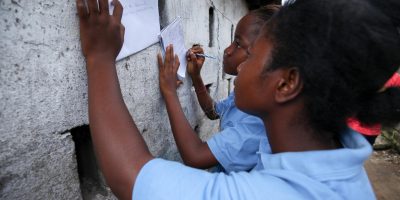
Young People Played a Game-Changing Role in the Battle Against Ebola in Liberia
An Ebola survivor reports on a pioneering community initiative in Monrovia that could save lives in the fight against other infectious diseases.
Briefing
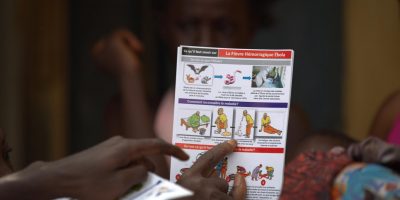
Sierra Leone’s Young Community Leaders Are Best Weapon Against Ebola
Foreign leaders discussing solutions to the Ebola epidemic must acknowledge the contribution made by local workers to reduce infection rates.
Briefing
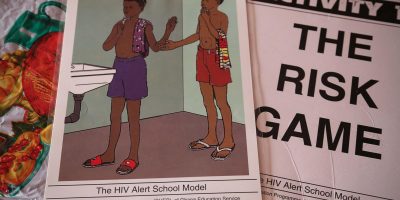
It Isn’t Lack of Drugs Preventing Us Eradicating AIDS, But Inequality
To tackle HIV rates we must give a voice to people prevented from accessing treatment due to social stigma.
Briefing
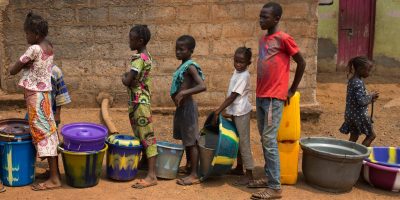
Social Stigma Compounds Desperate Poverty of Guinea’s Ebola Survivors
Shunned by their communities and unable to work, female survivors of Ebola in Guinea face profound hardship as they try to care for their families.
Article
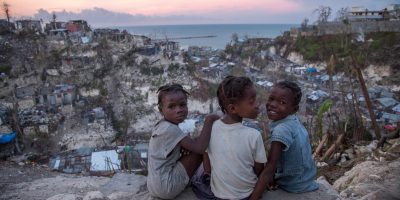
Hurricane Matthew: Haiti Needs Vaccines to Stop Deadly Cholera Spreading
9,000 people died in Haiti’s last cholera outbreak. We must act fast in disaster-affected hotspots to help prevent history repeating itself.
Briefing
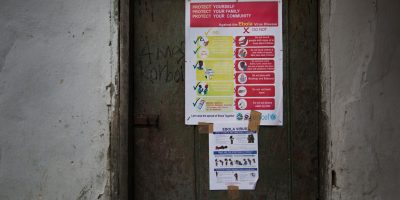
Ebola Vaccine Trial in Sierra Leone Battles Against Fear and Logistics
Health workers face suspicion and a lack of cold storage as they test the Ebola vaccine and also try to reach children who have missed inoculations against other diseases.
Briefing
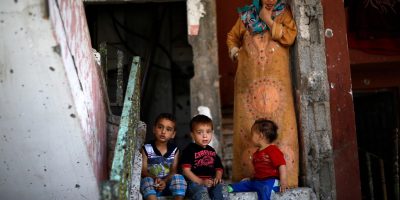
Disability in Conflict Zones: ‘I told my wife to take the children and run’
Being caught in a humanitarian crisis with a disability can lead to abandonment and neglect. How can we make humanitarian response more inclusive? hen the shooting started Simplice Lenguy told his wife to take their children and run. It was…
Briefing
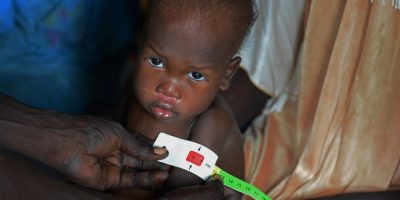
Healthcare Innovations Won’t Cure Global Health Inequality – Political Action Will
Boosting developing nations’ access to medical advances is top of the agenda at Berlin’s World Health Summit, but will it improve healthcare for the poorest?
Briefing
Evidence review
Zoonoses From Panic to Planning
This Rapid Response briefing from the Dynamic Drivers of Disease in Africa Consortium sets out recommendations for a new, integrated ‘One Health’ approach to zoonoses that moves away from top-down disease-focused intervention to putting people first.Over two thirds of all…

Briefing
Swine Flu: What Went Wrong?
Although the H1N1 ‘swine flu’ pandemic of 2009-10 was less severe than anticipated, the event revealed weaknesses in the world’s current configuration of planning for and responding to pandemic influenza, according to new research outlined in this briefing. Science, public…
Background report
The Political Economy of Avian Influenza in Thailand
Thailand is centrally located relative to the Avian Influenza epidemic and her response to the disease has important implications for disease control efforts both regionally and globally. A middle income country with a large and economically significant export oriented poultry…

Background report
The Political Economy of Avian Influenza in Indonesia
Why is the response to H5N1 highly pathogenic avian influenza (HPAI) so challenged in Indonesia? Why did the virus spread so fast, and why has the disease persisted? Are there features of the country and its culture that encourage or…
Background report
HIV/AIDS, Forests and Futures in sub-Saharan Africa
Throughout Sub-Saharan Africa, the human immunodeficiency virus/acquired immunodeficiency syndrome (HIV/AIDS) pandemic is having devastating and tragic social, economic, and political impacts. HIV/AIDS is both a health issue and a development problem, with complex links to rural livelihoods, human capacity, and…
Background report
Haemorrhagic Fevers in Africa: Narratives, Politics and Pathways of Disease and Response
Outbreak narratives have justified rapid and sometimes draconian international policy responses and control measures. Yet there is a variety of other ways of framing haemorrhagic fevers. There present different views concerning who is at risk, and how? Is the ‘system’…
Briefing
The Lessons of Swine Flu
As the swine flu outbreak backstory seeps out, there are some vitally important lessons that can be learned. Huge investment in pandemic preparedness and contingency plans, improvements in surveillance and response systems and stockpiling of drugs and vaccines have followed recent avian…
Briefing
Beyond Risk Factors: The All-Too-Human World of Zoonotic Pandemics
While we might enjoy the entertainment, in real life people prefer their experts to be optimists – which, fortunately, characterises most of us working in the world of global health, even when working in very adverse and trying circumstances. We…
