

Search
Search within Central and East Africa, Epidemic preparedness and response,
159 results found
Question Bank
Tools
Mpox question bank: Qualitative questions for community-level data collection frpt
A Question Bank for use by field teams and local research teams working in communities with mpox transmission and those at risk of transmission with the aim of supporting the collection and use of consistent and high-quality social and behavioural…
Case study
SSHAP learning note: Building a localised approach
This learning note shares insights, experiences and lessons from SSHAP's approach to the localisation of its operational responses in sub-Saharan Africa.
Briefing
Social, structural and community dynamics of cholera transmission and mortality in Ethiopia am
This key considerations brief was developed to support response efforts by exploring the social and structural determinants and community dynamics of cholera infection and mortality in Ethiopia.
Briefing
Child engagement in the context of disease outbreaks in Eastern and Southern Africa arfrptessw
This brief explores why, when and how to engage children in the prevention, response and recovery stages of disease outbreaks.
Infographic
Child engagement in the context of disease outbreaks in Eastern and Southern Africa
This infographic, in Arabic, French, Portuguese, Spanish and Swahili as well as English, summarises insights from a recent key considerations brief exploring why, when and how to engage children in the prevention, response and recovery stages of disease outbreak in…
Report
Roundtable Report: Discussion on mpox in DRC and social science considerations for operational response fr
This report synthesises the discussions at a SSHAP-organised roundtable on the mpox outbreak in the Democratic Republic of the Congo held in May 2024 to appraise the situation, with a focus on social science insights for informing context-sensitive risk communication…
Report
How can epidemic preparedness and response be improved in the Central and East African Borderlands? fr
This workshop report offers recommendations and reflects on discussions from a workshop attended by social scientists, policymakers, and humanitarian and public health practitioners from Uganda, the Democratic Republic of the Congo and South Sudan that was facilitated and hosted by…
Briefing
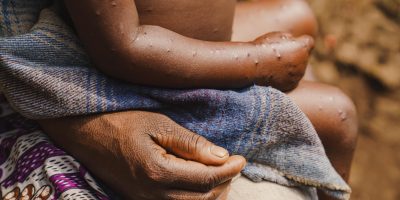
Mpox, mining, and vulnerabilities of women and children in eastern DRC fr
This Key Considerations brief presents considerations for contextualising and responding to the mpox outbreak in the Democratic Republic of the Congo, focusing on women and children living and working in artisanal and small-scale mining areas.
Briefing
Balancing epidemic preparedness and response with humanitarian protection in Ugandan refugee settlements
This brief presents considerations for preparedness and response, focusing on refugee settlements in north Uganda and drawing on ethnographic data collected during COVID-19.
Report
Meeting report: Mpox and discrimination in African settings fr
This report summarises contributions from speakers and participants at a Social Science in Humanitarian Action Platform (SSHAP)-organised online meeting to discuss mpox and discrimination issues in African settings, and operational responses to mpox that are contextually sensitive.
Briefing
Outbreak of Marburg virus disease in Rwanda, October 2024 frsw
Key Considerations regarding the outbreak of Marburg virus disease in Rwanda, including national response capabilities, local governance structures, and regional and economic implications.
Research paper
Exploring the effects of COVID-19 on family planning: results from a qualitative study in rural Uganda following COVID-19 lockdown
The COVID-19 pandemic has likely affected the already high unmet need for family planning in low- and middle-income countries. This qualitative study used Andersen’s Behavioral Model of Health Service Use as a theoretical framework to explore the possible ways in…
Policy document
Monthly Humanitarian Situation Report South Sudan
This Situation Report from the WHO on South Sudan offers an overview of the humanitarian situation in January 2023, including the state of measles transmission and vaccination response, Covid-19 vaccination, cholera and the distribution of health emergency kits.
Briefing
Socio-behavioural insight for community-centred cholera preparedness and response In Mozambique, 2023 pt
This brief explores socio-behavioural determinants including local knowledge, perceptions, practices, and structural factors influencing cholera transmission dynamics. The brief has been developed to support response actors develop prevention and control strategies to rapidly contain the outbreak and prepare for a…
Briefing
Guidance Note on community engagement for cholera outbreak response in the East and Southern Africa region frpt
The purpose of this guidance note is to support Ministries of Health, UNICEF, and other response partners to design and implement effective, community-centred, and data-driven community engagement for cholera outbreak response.
Briefing
Community-Based Surveillance in Public Health arfr
Recent large-scale epidemics and pandemics have demonstrated the importance of engaging communities as partners in preventing, detecting and responding to public health emergencies. Community-based surveillance (CBS), which relies on communities to report public health information, can be an important part…
Case study
Strengthening health information surveillance: Implementing community-based surveillance in Sudan ar
This case study explores the 2018–22 implementation of a national community-based surveillance programme in Sudan designed to meet critical needs of the existing health surveillance system.
Briefing
Key Considerations: Adherence to COVID-19 Preventive Measures in Greater Kampala, Uganda
This brief sets out key considerations for risk communications and community engagement (RCCE) to promote adherence to COVID-19 preventive measures in greater Kampala, Uganda. It looks at adherence to COVID-19 preventive measures, assesses the challenges to their adoption and outlines…
Briefing
Key Considerations: Improving Uptake of the COVID-19 Vaccine Amongst Women in South Sudan
This brief explores some of the reasons behind the low COVID-19 vaccine uptake amongst women in South Sudan during the initial phases of the roll-out. This brief draws on evidence from academic and grey literature, dashboards and datasets on COVID19…
Briefing
Using social science in response to the 2022 Ebola outbreak in Uganda
This briefing draws on previous outbreaks to highlight how social science can make an effective contribution across the response to the outbreak of Ebola disease caused by the Sudan virus in Uganda.
Briefing
RCCE in the 2022 Ebola Outbreak Response in Greater Kampala, Uganda
This brief details how Risk Communication and Community Engagement (RCCE) activities and approaches can be adapted to reach people living in Greater Kampala to increase adoption of preventive behaviours and practices, early recognition of symptoms, care seeking and case reporting.
Briefing
Cross-border dynamics between Uganda and Rwanda in the context of the outbreak of Ebola, 2022
This Key Considerations brief summarises cross-border dynamics between Uganda and Rwanda in the context of the 2022 outbreak of Ebola (Sudan virus disease, SVD) in Uganda.
Briefing
Cross-Border Dynamics Between Uganda and South Sudan in the Context of the Outbreak of Ebola, 2022
This Key Considerations brief looks at cross-border dynamics between South Sudan and Uganda in the context of the 2022 outbreak of Ebola in Uganda, and the risk of the spread of the virus into South Sudan.
Briefing
Cross-Border Dynamics Between Uganda and Kenya in the Context of the Outbreak of Ebola, 2022
This brief summarises key considerations concerning cross-border dynamics between Uganda and Kenya in the context of the outbreak of Ebola (Sudan Virus Disease, SVD) in Uganda. It is part of a series focusing on at-risk border areas between Uganda and…
Briefing
Cross-Border Dynamics Between Uganda and Tanzania in the Context of the Outbreak of Ebola, 2022
This brief summarises key considerations concerning cross-border dynamics between Tanzania and Uganda in the context of the outbreak of Ebola (Sudan Virus Disease, SVD) in Uganda. It is part of a series focusing on at-risk border areas between Uganda and…
Research paper
Going viral – capacity strengthening in the context of pandemic(s)
The COVID-19 pandemic has renewed focus on the importance of increasing momentum in addressing global health challenges, including the unacceptable burden of avoidable foetal and newborn mortality and morbidity in low- and middle-income countries (LMICs). The National Institute for Health…
Policy document
Ebola Virus Disease (EVD) Preparedness and Readiness Update for South Sudan Update: #003
Government of South Sudan/WHO-produced weekly summary of changes in the situation regarding EVD case incidence, public health preparedness and readiness, challenges/gaps and recommendations.
Policy document
Ebola Virus Disease (EVD) Preparedness and Readiness Update for South Sudan Update: #004 (27 November 2022)
Government of South Sudan/WHO-produced weekly summary of changes in the situation regarding EVD case incidence, public health preparedness and readiness, challenges/gaps and recommendations.
Policy document
Ebola Virus Disease (EVD) Preparedness and Readiness Update for South Sudan Update: #002 (13 November 2022)
Government of South Sudan/WHO-produced weekly summary of changes in the situation regarding EVD case incidence, public health preparedness and readiness, challenges/gaps and recommendations.
Research paper
Assessment of infection prevention and control readiness for Ebola virus and other diseases outbreaks in a humanitarian crisis setting: a cross-sectional study of health facilities in six high-risk States of South Sudan
This study uses data from a structured questionnaire to assess the readiness and capacity of 151 health facilities across six states in Couth Sudan. It found that facilities most lacked a coordination committee structure (13.19%), guidelines and SOPs (21.85%), vector…
Background report
Protecting South Sudan from the Ebola Virus Disease: Policy Implications
This Weekly Review, from October 25, 2022, draws from the Second Round of the EVD Knowledge, Attitudes, and Practices (KAP) assessment conducted in South Sudan in 2019 to highlight the implications of the recent Ebola Virus Disease events in Uganda…
Research paper
A Qualitative Evaluation of COVID-19 Preventative Response Activities in South Kivu, Democratic Republic of the Congo
Objective: In this evaluation of COVID-19 preventative response programs in South Kivu, Democratic Republic of the Congo (DRC), we aimed to explore community understandings of COVID-19, assess operational successes and challenges of COVID response activities, and identify barriers to practicing…
Research paper
“Are You Sure It’s Not the Corona Vaccine?” An Ebola Vaccine Trial During COVID-19 in DRC
The COVID-19 pandemic began as an Ebola epidemic was unfolding in the Democratic Republic of the Congo. In this article, we examine how COVID-19 influenced experiences of an Ebola vaccine trial and attitudes towards medical research in Goma. First, critical…
Research paper
Epidemics and the Military: Responding to COVID-19 in Uganda
The UN Security Council’s response to Ebola in 2014 legitimised militarised responses. It also influenced responses to COVID-19 in some African countries. Yet, little is known about the day-to-day impacts for ordinary citizens of mobilising armies for epidemic control. Drawing…
Research paper
Negotiating Intersecting Precarities: COVID-19, Pandemic Preparedness and Response in Africa
This article shares findings on COVID-19 in Africa across 2020 to examine concepts and practices of epidemic preparedness and response. Amidst uncertainties about the trajectory of COVID-19, the stages of emergency response emerge in practice as interconnected. We illustrate how…
Research paper
“There are many fevers”: Communities’ perception and management of Febrile illness and its relationship with human animal interactions in South-Western Uganda
We conducted a focused ethnographic study in Western Uganda among communities with high human livestock interaction to describe communities’ behaviors, exposures, and attitudes toward fever. Perceptions of illness and associated risk factors were heavily influenced by predominant livelihood activities. As…