




Search
Search within
1456 results found
Briefing
Key Considerations: Indigenous Peoples in COVID-19 Response and Recovery ptes
Key considerations for COVID-19 response and recovery in indigenous populations, with a particular focus on the Amazon region of South America
Evidence review
Lessons Learned from 2014–2016 Ebola Outbreak in Guinea: A Review of RCCE Related Publications
A review of 46 published reports of Ebola-related activities undertaken during the 2013–2016 outbreak in Guinea
Evidence review
Rapid Review: Perceptions of COVID-19 vaccines in South Africa
This review draws on multiple secondary data sources to inform RCCE strategies and policies and provides examples of successful practice
Research paper
COVID-19 response: mitigating negative impacts on other areas of health
This analysis highlights the drivers and evidence of the negative impact of 'vertical’ responses focused primarily on preventing and containing COVID-19
Research paper
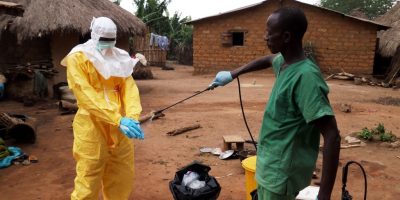
One size does not fit all: adapt and localise for effective, proportionate and equitable responses to COVID-19 in Africa
A critical part of adaptation and proportionality is a localisation of response that builds on people’s own inventiveness and the knowledge and experience of local organisations.
Research paper
Spillover or endemic? Reconsidering the origins of Ebola virus disease outbreaks by revisiting local accounts in light of new evidence from Guinea
New research has found that the 2021 outbreak of EVD in Guinea originated in viral resurgence of a persistently infected survivor of the 2013–2016 epidemic
Evidence review
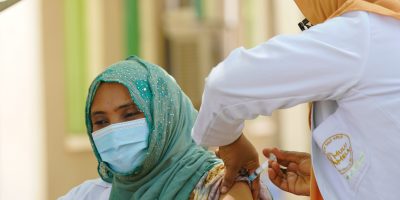
Data Synthesis: COVID-19 Vaccine Perceptions in Africa: Social and Behavioural Science Data, March 2020 – March 2021 fr
This synthesis brings together data related to public perceptions about COVID-19 vaccines collected in 22 countries in Africa

Case study
COVID-19 school closures in the DRC: impact on the health, protection and education of children and youth
This report presents an analysis of the impact of school closures as a COVID-19 response measure in the DRC, and is intended to inform evidence-based programming to mitigate the short- and long-term consequences to health, protection, and education of children…

Field notes
Responding to COVID-19 in Africa: Using data to find a balance – Part III Calls to Action
This report distills key insights from The Partnership for Evidence-Based Response to COVID-19 (PERC)’s third survey conducted in February 2021
Case study
Learning about COVID-19-related stigma, quarantine and isolation experiences in Finland
This study explores the forms and outcomes of coronavirus and COVID-19-related social stigma and the experiences of people who were home quarantined or isolated in Finland during the spring 2020
Briefing
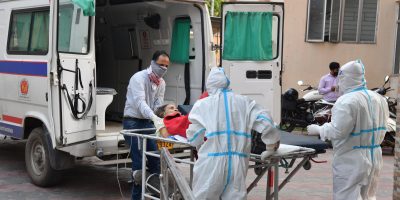
India’s Deadly Second COVID-19 Wave: Addressing Impacts and Building Preparedness Against Future Waves hi
This Key Consideratins briefing examines the second wave of COVID-19 in India and recommends measures to further arrest the spread of infection and to prevent and prepare against future waves.
Evidence review
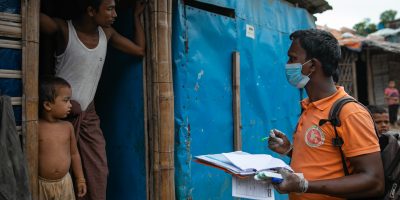
Review of the Evidence Landscape on the Risk Communication and Community Engagement Interventions Among the Rohingya Refugees to Enhance Healthcare Seeking Behaviours in Cox’s Bazar
This review paper synthesises and assesses the quality of the evidence landscape available and how the Rohingya seek and access healthcare services in Cox’s Bazar
Briefing
Key Considerations for Epidemic Response and Preparedness in Côte d’Ivoire fr
This technical brief was prepared by IDS in July 2021 to support the embedding of social science and anthropological perspectives in UK AID-supported Tackling Deadly Diseases in Africa (TDDA) technical assistance and its Early Response Mechanism. It draws on a…
Research paper
How to Improve Outbreak Response: A Case Study of Integrated Outbreak Analytics from Ebola in Eastern Democratic Republic of the Congo
The emerging field of outbreak analytics calls attention to the need for data from multiple sources to inform evidence-based decision making in managing infectious diseases outbreaks. To date, these approaches have not systematically integrated evidence from social and behavioural sciences.…
Briefing
Exploring community dynamics around the plague outbreak in Ituri province, DRC
In April 2021, the Social Sciences Analytics Cell (CASS), in collaboration with UNICEF and the Provincial Health Division (DPS) in Bunia conducted exploratory research applying the Integrated Outbreak Analytics (IOA) approach in three health zones affected by a suspected plague…
Briefing
Key Considerations for Outbreak and Epidemic Preparedness Response in Côte d’Ivoire
This brief draws on the technical paper for the Tackling Deadly Diseases in Africa (TDDA) programme (July 2021), to present key social science considerations for epidemic response and preparedness in Côte d’Ivoire, with relevance to the first Ebola case in…
Briefing
Key Considerations for Epidemic Response and Preparedness in Cameroon fr
This technical brief was prepared by IDS in July 2021 to support the embedding of social science and anthropological perspectives in UK AID-supported Tackling Deadly Diseases in Africa (TDDA) technical assistance and its Early Response Mechanism. It draws on a…
Briefing
Key Considerations for Epidemic Response and Preparedness in Chad fr
This technical brief was prepared by IDS in December 2020 to support the embedding of social science and anthropological perspectives in UK AID-supported Tackling Deadly Diseases in Africa (TDDA) technical assistance and its Early Response Mechanism. It draws on a…
Briefing
Key Considerations for Epidemic Response and Preparedness in Mali fr
This technical brief was prepared by IDS in July 2021 to support the embedding of social science and anthropological perspectives in UK AID-supported Tackling Deadly Diseases in Africa (TDDA) technical assistance and its Early Response Mechanism. It draws on a…
Briefing
Key Considerations for Epidemic Response and Preparedness in Niger fr
This technical brief was prepared by IDS in December 2020 to support the embedding of social science and anthropological perspectives in UK AID-supported Tackling Deadly Diseases in Africa (TDDA) technical assistance and its Early Response Mechanism. It draws on a…
Briefing
Key Considerations for Epidemic Response and Preparedness in Uganda
This technical brief was prepared by IDS in December 2020 to support the embedding of social science and anthropological perspectives in UK AID-supported Tackling Deadly Diseases in Africa (TDDA) technical assistance and its Early Response Mechanism. It draws on a…
Evidence review
Evidence Review: Religious Marginality and COVID-19 Vaccination – Access & Hesitancy fr
This evidence review explores how religious minority affiliation or status shapes experiences of vaccine access and uptake and how this relates to COVID-19, and how vaccine hesitancy can be addressed.
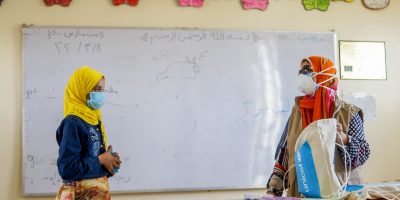
Evidence review
Evidence Review: COVID-19 Vaccine Acceptance by Key Influencers in the MENA Region – Teachers and Healthworkers
This review synthesises evidence on vaccine acceptance among two key groups in the Middle East and North Africa (MENA) region: teachers and health workers. It draws from academic studies, most of which were cross-sectional studies, largely conducted between February 2020…
Briefing
Key Considerations: Achieving COVID-19 Vaccine and Health Equity in Ealing and North West London
This brief illustrates how COVID-19 vaccine (in)equity has played out on the ground and offers key considerations for how it can be improved in the North West London (NWL) borough of Ealing.
Evidence review
Evidence Review: Achieving COVID-19 Vaccine Equity in Ealing and North West London
This review sets out key considerations for improving vaccine equity – as well as broader health equity – in the North West London (NWL) borough of Ealing.
Briefing
10 Ways Local Governments in Multicultural Urban Settings can Support Vaccine Equity in Pandemics fr
This brief investigates these disparities through the lens of “vaccine (in)equity”, focusing on the role of local actors. It builds on ethnographic and qualitative research carried out in the Northern Districts of Marseille and ongoing research engagement around vaccine equity…
Briefing
Social Science Considerations for Building Trust in Epidemic Response
This briefing provides practical recommendations for improving community trust prior to, during and after Ebola outbreaks.
Briefing
Social Science Considerations for Improving Communication in Epidemic Response
This briefing looks at how to utilise communication when responding to Ebola and COVID-19 in Uganda.
Briefing
Social Science Considerations on Human-wildlife Interactions in the Context of Epidemic Response
This briefing also reports on current hunting behaviours and rationales, and assesses the risk of further pathogen spillover events as a result of COVID-19.
Briefing
Social Science Considerations for Health-seeking in Epidemic Response
This briefing outlines the operational recommendations related to healthcare seeking for communities living in Ugandan border districts during the Ebola Virus Disease (EVD) epidemics and the current COVID-19 pandemic, with lessons for future infectious disease outbreaks.
Briefing
Social Science Considerations for Epidemic Response Based on Cross-border Population Movement
This briefing outlines the operational recommendations for transport drivers living in Ugandan border districts during the Ebola Virus Disease (EVD) epidemics and the current COVID-19 pandemic.
Briefing
Social Science Considerations for Epidemic Response on Power and Authority in the Western Border Region
This briefing outlines the operational recommendations related to power and authority for communities living in Ugandan border districts during the Ebola Virus Disease (EVD) epidemics and the current COVID-19 pandemic.
Research paper
Anxiety, Anger and Depression Amongst Low-Income Earners in Southwestern Uganda During the COVID-19 Total Lockdown
On 18th March 2020, the President of Uganda announced the first total national lockdown which included the international border closures; the closing of schools, private offices and banned public gatherings at places of worships/social events, initially for a period of…
Research paper
Wartime Captivity and Homecoming: Culture, Stigma and Coping Strategies of Formerly Abducted Women in Post-conflict Northern Uganda
The women formerly abducted by the Lord’s Resistance Army (LRA) in northern Uganda find that achieving meaningful reintegration into their communities is a distant prospect despite being the home culture they once shared. The stigmatisation of formerly abducted persons by…
Research paper
Changing perceptions about COVID-19 risk and adherence to preventive strategies in Uganda: Evidence from an online mixed-methods survey
As the pandemic drags on and prevention policies double down in the more deadly second and third waves, change in risk perceptions will be expected as economic and social anxiety increase. This study assesses the determinants of changes in perceptions…
Research paper
Family dynamics and implications for young people’s ‘struggles’ in rural areas of post-conflict northern Uganda
The Acholi region in northern Uganda experienced two decades of armed conflict and forced displacement. Based on qualitative field research, this article analyses the role of family dynamics for the educational and livelihood trajectories of Acholi youth in rural areas,…
